The recent news regarding the Ukraine War has been that various countries have promised battle tanks to help Kyiv fight Russia. The Ukrainian army will soon get its hands on thirty-one state-of-the-art M1 Abrams from Washington and fourteen German-made Leopard 2 tanks from Berlin. Military analysts warned that the augmented firepower might not necessarily move Ukraine closer to decisive victory soon. In other words, there is no end in sight yet.
Meanwhile, another piece of news about the war emerged in the fringe media. Reports suggested Kyiv was forcefully conscripting Hungarians residing in the Transcarpathia region to fight the war. Hungarian online publication, PestiSracok, reported from inside Ukraine that the government is taking extreme steps to replenish its forces that have suffered massive casualties.
According to Kyiv, since the 2022 February invasion till 1 December 2022, 10,000 to 13,000 Ukrainian soldiers have been killed. Another three thousand have been captured. President Zelenskyy’s government leveraged powers conferred by martial law and forbade Ukrainian men between 18-60 years from leaving the country at the beginning of the conflict.
PestiSracok reported that at least half of the 128th ‘Mukachevo’ mountain brigade, an elite unit of the Ukrainian army, had been killed in battle in Soledar, near Donetsk. Reports suggest that Kyiv plans to conscript 10,000 people from Transcarpathia by spring, though there has been no official word.
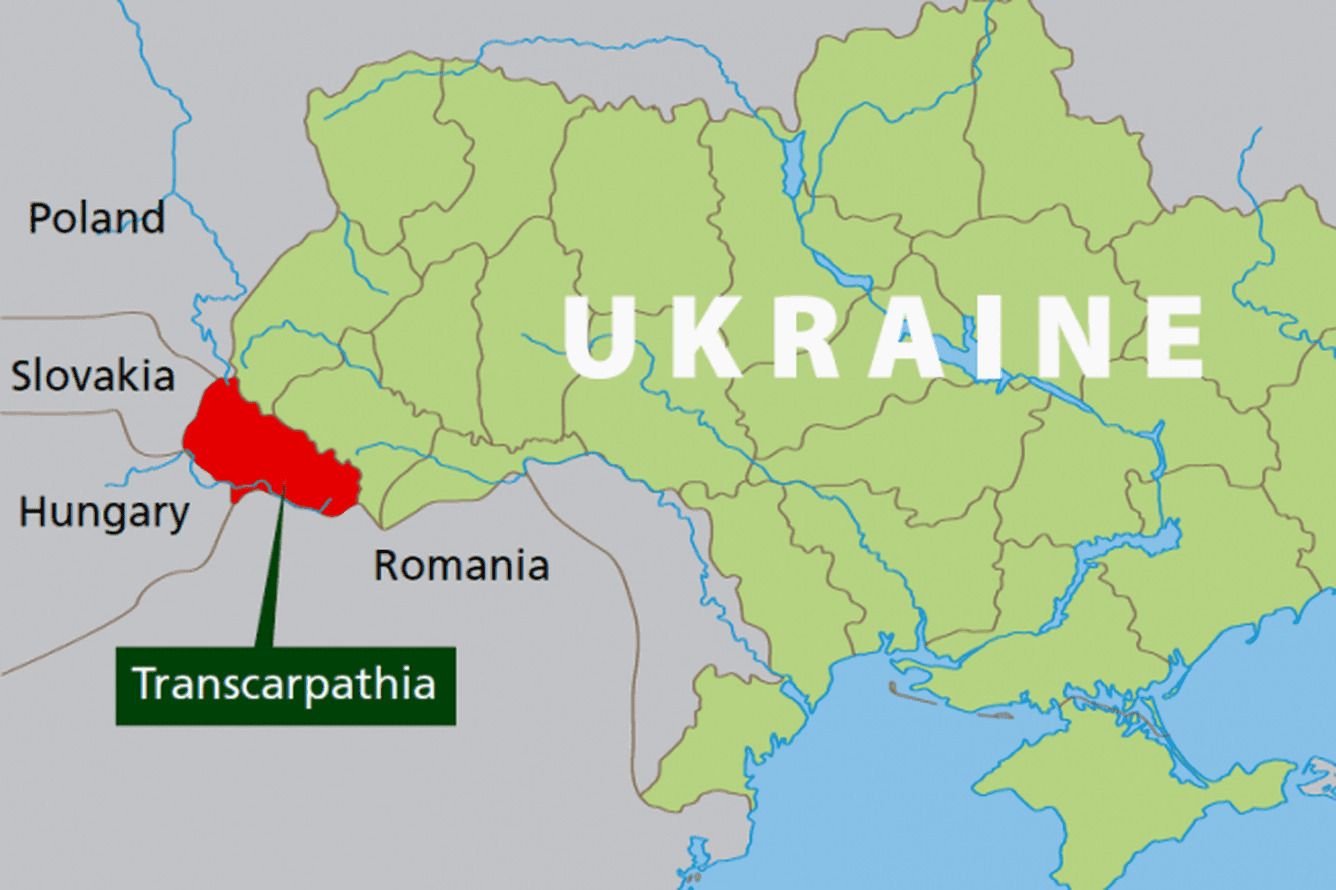
The Transcarpathia region/Zakarpattia Oblast is located in southwestern Ukraine. The historical-geographic region encompasses the southern slopes of the Carpathian Mountains and some areas beyond the range. Numerous mountain passes connect the territory to the rest of the country.
As per the latest available data, more than three-quarters of the population identified as Ukrainian. Russians formed the most prominent minority before the outbreak of the war at 17%. Ethnic minorities such as Crimean Tatars, Bulgarians, Hungarians, Jews, and Roma each accounted for less than one percent of the population.
Reports of the extensive mobilization of the minority Hungarians are slowly emerging from the region. Transcarpathia is home to nearly 150,000 Hungarians. The police and military personnel in the area are said to be conscripting every able-bodied person, including members of the Roma gypsies.
There are fears that Ukraine is carrying out an ethnic cleansing and settling scores under the guise of army recruitment. There have been accusations that the Hungarian soldiers are being used as “cannon fodder” in the ongoing war’s “bloodiest battles.”
The relations between Ukrainians and Hungarians have been fraught with tension over the years. The Ukrainian regime had restricted the minority community from speaking their mother tongue and targeted their cultural institutions. Arson attacks against the ethnic Hungarian population by the Ukrainian nationalists have also been documented.
The mass conscription drive is said to facilitate the formation of a new brigade. The country’s largest unit is said to have suffered massive losses on the eastern war front. Videos of people being taken from their homes in the Transcarpathia region are doing the rounds on the internet. Unverified reports suggest that even those as young as sixteen are being taken away by the Ukrainian police and military personnel.
The war is taking its toll. 30,000- 40,000 civilians are estimated to have been killed since the Russian tanks rolled into Ukrainian territory. Kyiv is doing all it can to withstand the Russian invasion that began eleven months ago. University admissions stipulate documents proving that the applicant is registered with the army. A new regulation is being implemented wherein marriage and divorce will be subject to the authorization of the military headquarters. This is to plug the loophole that exempts single fathers raising children alone from having to join the military.
Hungarians view their mass conscription as akin to kidnapping. Hungary is opposed to the war. For now, the mainstream media has remained mum on the issue. As the war drags on, the safety of minorities in a war-ravaged country is now in question.
TIPP Takes
Geopolitics And Geoeconomics
#1. Blasts Near Ukraine Nuclear Plant, Says U.N. Watchdog; Russia Calls It Provocation – Reuters
The U.N.’s nuclear watchdog reported powerful explosions near Ukraine’s Russian-occupied Zaporizhzhia nuclear power station and renewed calls for a security zone around the plant.

A Russian official dismissed the comments by Rafael Grossi, head of the International Atomic Energy Agency (IAEA), saying they suggested Moscow could not uphold nuclear safety.
“Yesterday, eight strong detonations were heard at around 10 a.m. local time, causing office windows at the plant to vibrate, and more were audible today,” Rafael Grossi said.
But Renat Karchaa, an adviser to the head of Rosenergoatom, the company operating Russia’s nuclear plants, said Grossi’s comments were unfounded.
#2. U.S. Lists Russian Wagner Mercenary Group As ‘Transnational Criminal Organization’ – RFE/RL
The U.S. has designated the Wagner Group a “significant transnational criminal organization” and targeted individuals and entities within the Russian mercenary enterprise’s global network .

Ukrainian and Western officials have blamed Wagner troops for atrocities against civilians in Russia’s invasion, which is now in its 12th month.
The Treasury said Wagner personnel “have engaged in an ongoing pattern of serious criminal activity, including mass executions, rape, child abductions, and physical abuse in the Central African Republic (CAR) and Mali.”
#3. U.S. Sanctions Chinese Firm Helping Russia’s Wagner Group – BBC
The U.S. has sanctioned a Chinese company for allegedly providing satellite imagery of Ukraine to support the mercenary Wagner Group’s combat operations for Russia.

Changsha Tianyi Space Science and Technology Research Institute, also known as Spacety China, is among 16 entities slapped with curbs by the Treasury Department.
Spacety China had provided Terra Tech, a Russia-based technology firm, with synthetic aperture radar satellite images of locations in Ukraine, the U.S. Treasury Department’s Office of Foreign Assets Control said in a statement.
#4. Russia Outlaws Meduza News Website – D.W.
Russian prosecutors banned Meduza, an independent Russian-language news website, accused of posing a security “threat” to the country.

Moscow has upped its media censorship since invading Ukraine last year.
The Latvia-based website was deemed an “undesirable” entity inside Russia, which effectively outlaws it in the country. Set up in 2014, the website’s Latvian location was an effort to circumvent Russian censorship.
In 2021, Moscow branded Meduza a “foreign agent.” But declaring it an “undesirable” entity takes things one step further, as any Russians who maintain ties with the website can now be subject to fines or even prison terms of up to six years. This could include sources the news site speaks to report the news.
#5. Japan Adds Targets For Russia Sanctions Over War In Ukraine – Kyodo News
Japan decided to add 36 individuals and 52 organizations linked to Russia to its list of sanctions imposed over Moscow’s invasion of Ukraine.

The sanctions, including asset freezes and bans on exports by Japanese firms, target politicians, military officers, businesspeople, companies in Russia and eastern and southern Ukraine regions, and others.
The move came as Prime Minister Fumio Kishida’s government aims to put more pressure on Russia this year, with Japan chairing the Group of Seven industrialized nations that have led international efforts to maintain and reinforce punitive measures against Moscow.
#6. Russia’s Path To 2024 Olympics Takes Shape, Ukraine Objects – A.P.
The International Olympic Committee indicated on Wednesday it favors officially neutral teams from Russia and its ally Belarus at the 2024 Olympics.

A day later, Russia and Belarus were invited to compete at the Asian Games, a key Olympic qualifier.
Russia normally competes as part of Europe but has a tense relationship with many countries set to host qualifying events there. Russia and Belarus have been barred from almost all international competitions in Olympic sports following the invasion of Ukraine.
Ukrainian President Volodymyr Zelenskyy pleaded to exclude them entirely.
#7. With U.S. Efforts, The Netherlands, Japan Close To Limit Chip Exports To China: Report – WION
Japan and the Netherlands are set to join the United States-led efforts in chip export controls on China.

The talks between the U.S., Denmark, and Japan on chip co
ntrol are reportedly private. The Bloomberg report added there is no plan for a public announcement of restrictions that will likely be implemented.
The U.S. has limited American-made machinery exports and restricted U.S. citizens from working with Chinese chip-maker companies.
The report says that while Japan and the Netherlands may not go as far as the U.S. restrictions against China, it will still make Beijing even more, cut off from the technology to build the most advanced kinds of semiconductors once all three countries act in coordination.
#8. Taiwan Leader: War With China ‘Not An Option’ – A.P.
Taiwan’s leader Tsai Ing-wen told Pope Francis in a letter that war with China is “not an option” and said constructive interaction with Beijing, depends on respecting Taipei’s democracy.

Vatican City is the last European government to have diplomatic relations with Taiwan instead of Beijing, although the United States and other Western nations maintain extensive informal ties.
Taiwanese leaders are uneasy about Vatican’s efforts to develop relations with Beijing.
#9. Israel Air Attacks Hit Gaza After 9 Palestinians Killed In Jenin – Al Jazeera
Israel launched multiple air attacks on the Gaza strip a day after Israeli forces killed nine Palestinians – including an elderly woman – in the Jenin refugee camp.

It is one of the deadliest raids in the occupied West Bank by Israel’s military in years.
Security sources in Gaza said there had been 15 strikes. Witnesses and local media reported that Israeli drones fired two missiles at targets in Gaza before fighter jets struck, causing four large explosions.
There were no immediate reports of casualties.
The Israeli army said the air attacks on Gaza – one of the most densely populated areas in the world with 2.1 million residents – followed after two rockets were fired towards Israel at about midnight.
#10. France Demands Release Of Citizen In Iran As Health Worsens – Reuters
France’s foreign ministry demanded the immediate release of Bernard Phelan, a Franco-Irish citizen detained in Iran, whose health has worsened. Paris said he has been denied urgent medical care.

Phelan, 64, a tourism consultant, was detained in early October as anti-government protests spread across the country. Diplomats said he had recently ended a hunger strike that had hit his health, but he remains fragile.
Ties between France and Iran have deteriorated in recent months, with Tehran detaining seven of its nationals in what Paris has said are arbitrary arrests equivalent to state hostage-taking.
#11. Iranian Hackers Increasingly Targeting Politicians And Journalists, UK Warns – Middle East Eye
The U.K. National Cyber Security Centre (NCSC) said actors like Iran continue to “successfully use spear-phishing attacks against targeted organizations and individuals in the U.K., and other areas of interest, for information-gathering activity.”

The NCSC said that cyber-attacks mainly target academia, defense, governmental organizations, NGOs, think tanks, politicians, journalists, and activists.
According to the report, the Iranian group – known as Charming Kitten – is not working alongside its Russian equivalent.
#12. North Korea Likely To Continue Provocations, Threats In 2023: U.S. Intelligence Official – Yonhap
North Korea is expected to continue making provocations and nuclear threats this year as it seeks to leverage its military capabilities diplomatically, a U.S. intelligence official insisted.

Sydney Seiler, top intelligence official for North Korea at the National Intelligence Council, also noted that Pyongyang would likely conduct its much anticipated nuclear test if and when it sees the need to.
Seiler spoke in a webinar hosted by the Center for Strategic and Intelligence Studies, a think tank based in Washington.
#13. Opium Production In Myanmar Surges – Tippinsights
The production of opium increased sharply in Myanmar, rising to a nine-year high due to the political and economic turmoil since the military took power in a coup nearly two years ago, the U.N. says.

The United Nations Office on Drugs and Crime (UNODC) believes the growth was “directly connected” to Myanmar’s political and economic turmoil.
Myanmar is the world’s second-largest producer of opium after Afghanistan. The two countries are the source of most of the heroin sold worldwide.
Please email [email protected]
Republished with permission from TIPP Insights