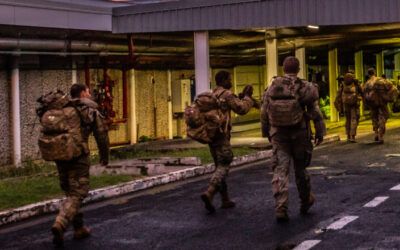
Reports that China is in talks with Cuba to set up a new joint military training facility on the island have justifiably heightened alertness across the military and political brass in the United States. Chinese troops or military hardware within less than a hundred miles off the Florida coast is a cause for concern.
Though few details are available and few clarifications will be forthcoming, there is much speculation about what the facility could be used for. It is widely believed that the Chinese have been eavesdropping on American communications from the base in Lourdes near Havana and three other Cuban locations since 2019.
According to the Wall Street Journal, Chinese telecommunications hardware makers Huawei Technologies and ZTE workers were seen at these facilities raising suspicion that the tech giants could have helped to upgrade the intelligence gathering stations. Communications and electronic emissions from southern and eastern U.S. military bases may be monitored and used to gather intel. As usual, China has vehemently denied the existence of such facilities and stated that it is not spying on America.
Security Implications For The U.S.
The latest proposed facility in Cuba could be used to house and deploy anti-ship cruise missiles, which could affect the movement of American naval vessels. The location of the upcoming port also puts U.S. naval bases in Florida within striking range.
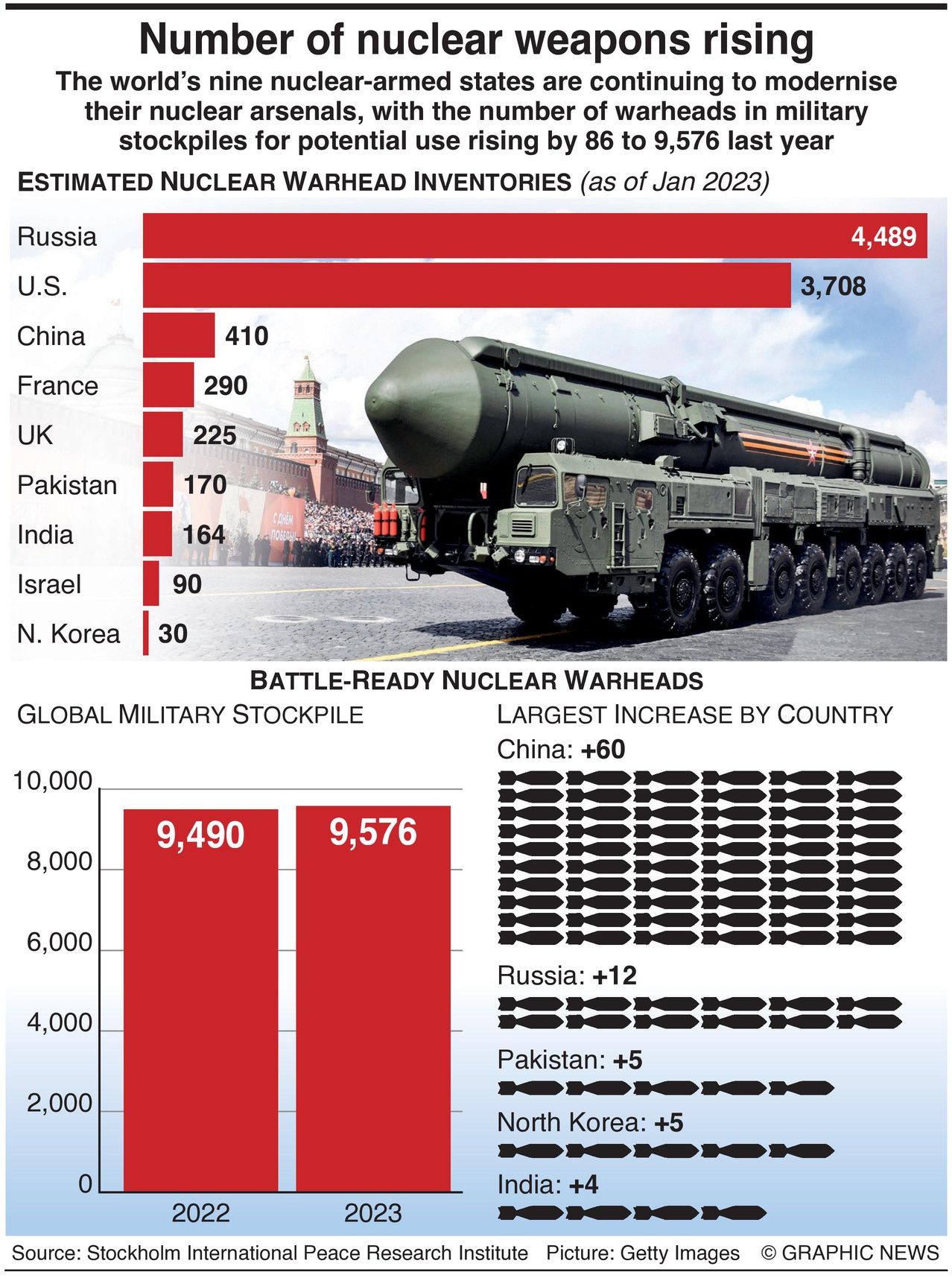
Seen in conjunction with Beijing’s nuclear arsenal expansion and aggressive stance on multiple issues, the recent development does raise eyebrows. According to the Pentagon, China is expected to quadruple its warheads by 2035. The current guesstimate is that the country has close to 400 warheads. The apparent shift in Beijing’s thinking from nuclear weapons as a defense mechanism to deter attacks to upping their offensive strike capabilities bodes ill for world peace.
This is not Beijing’s first foray into the western hemisphere either. Reports have emerged that an agreement has been reached with a Chinese company to build a multipurpose port in the most populated city of Tierra del Fuego, Rio Grande, in Argentina. Already, China operates an “alleged satellite tracking station in Neuquen province, with the Chinese military and civilian personnel and to which Argentines are rarely allowed to visit.” Once commissioned, the naval facility will bring China closer to Antarctica and allow Beijing to have more influence on the passage between the Atlantic and Pacific oceans.
Besides this, the Freeport Container Port in the Bahamas, located about 90 miles from Palm Beach, Florida, is financed by Hong Kong-based Hutchison Ports. There are fears that its fate could parallel Sri Lanka’s Hambantota port, and the strategic maritime facility could fall into Chinese hands. The deep-water Freeport could also be used by Chinese naval vessels at a future date. The Pentagon has also reported that China could have made similar overtures to other countries, including the Solomon Islands and Vanuatu.
The People’s Republic of China and the Republic of Cuba have much in common. Beyond shared ideological roots, Beijing has stepped in to fill the vacuum left by the collapse of the USSR, Cuba’s one-time main ally. Diplomatic and trade relations between the two have been steadily growing over the past six decades. In recent years, trade and commercial relations have blossomed between the island nation and the Asian giant. Today, China is Cuba’s second-largest trading partner, and cooperation extends to various sectors, including infrastructure development, telecommunications, energy, and tourism.
Geopolitical Strategies And U.S. Response
With Beijing escalating tensions with Taiwan, military and security strategy experts believe that China could gain strategic geopolitical leverage with a base in Cuba. Too close to the U.S. mainland for comfort, the Cuban facility could distract or tie up strategic military resources down south. Should President Xi use military force to “re-unite” Taiwan, a Chinese naval facility within a hundred miles of America could become a bargaining chip in the battle.
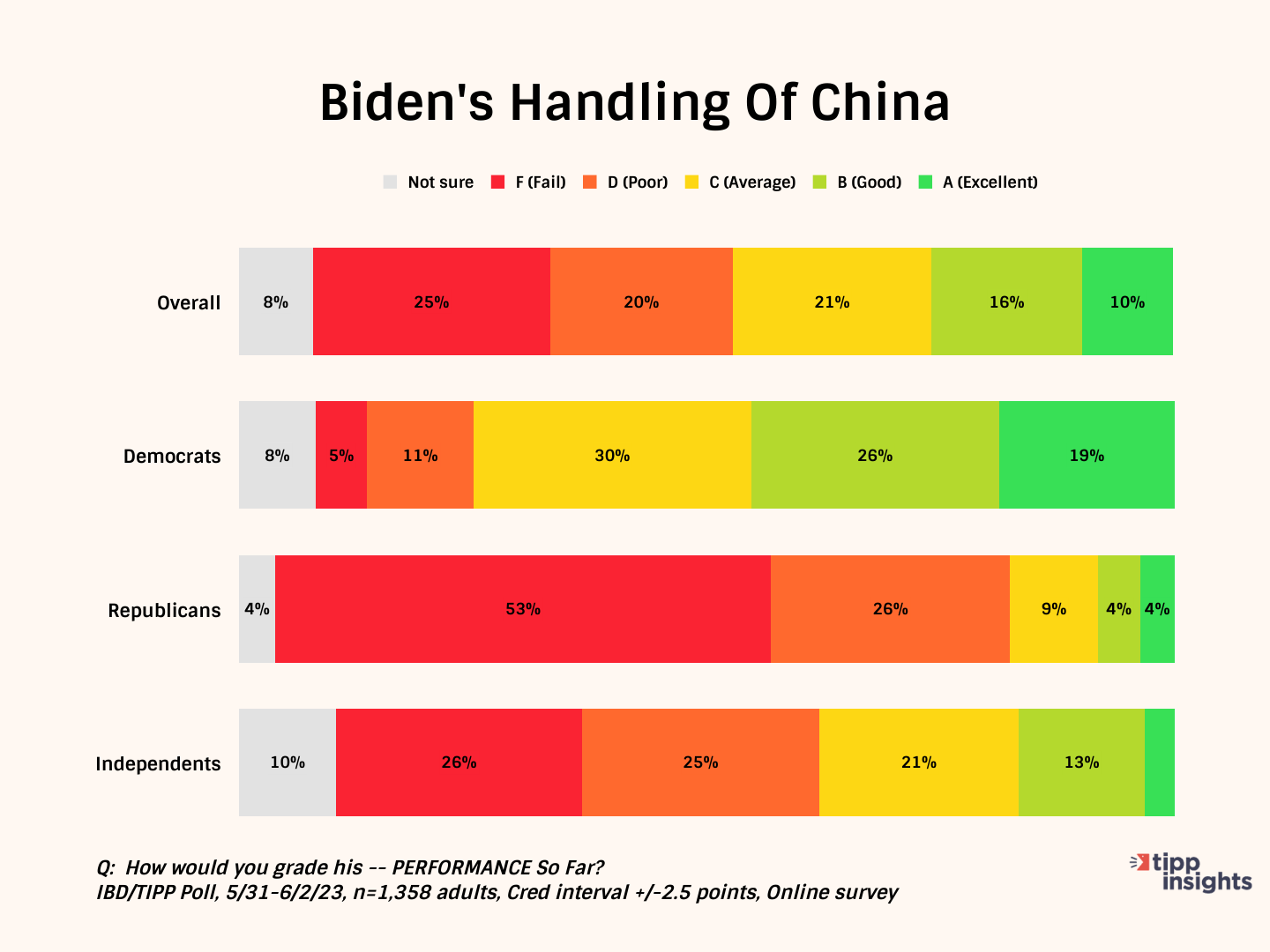
Even as the White House attempts to establish better relations and communications with its Beijing counterparts, its efforts leave much to be desired. President Biden’s gaffes, referring to the Chinese President Xi as a ‘dictator,’ only serve to muddy the murky waters.
The brazen spy balloon incident earlier in the year has made it clear that Beijing’s audacity knows no bounds. With much of Latin America leaning towards the Left and the U.S. committed to a “however long it takes” war in Ukraine, Beijing is making moves that will have long-term repercussions.
Related Data/Infographics/Video
Watch: The Cuban Missile Crisis: At The Brink (PBS, 1992)
Like our insights? Show your support by becoming a paid subscriber!
TIPP Takes
Geopolitics And Geoeconomics
1. Ukraine War: Countdown Has Begun To End Of Putin, Say Kyiv Officials – BBC
The drama over the border in Russia has hardened the view in Kyiv that Mr. Putin’s time as Russia’s president is ending.

“I think the countdown has started,” said Andriy Yermak, President Zelensky’s closest adviser.
Senior Ukrainian officials who spoke to the BBC in Kyiv argued that President Putin could not ride out a catastrophic loss of authority.
2. U.S. Announces $500 Mln In Weapons For Ukraine, Days After Foiled Wagner Rebellion – Al Arabiya
The latest package will be the 41st drawdown of weapons and equipment from the Pentagon’s stockpiles.

Washington will deliver more munitions for the Patriot air defense systems deployed inside Ukraine and more ammo for the High Mobility Artillery Rocket Systems (HIMARS).
3. Belarus’ Lukashenko Confirms Wagner Chief Is In Belarus, Belta Reports – Reuters
Under a deal mediated by Belarusian leader Alexander Lukashenko to halt a mutiny by Yevgeny Prigozhin’s mercenary fighters, Prigozhin is meant to move to Belarus.

Kremlin spokesman Dmitry Peskov said he did not have information about Prigozhin’s location, though he said he hoped all parties to the deal which ended the mutiny would keep to their agreements.
4. NATO Will Defend Members From Threat Of Wagner Forces In Belarus – Al Jazeera
NATO Secretary-General Jens Stoltenberg has said the Western military alliance is ready to defend itself against any threat posed by the move of Russia’s Wagner mercenary force to Belarus.

There are fears the relocation of the private army could create instability for NATO’s Eastern European members.
5. U.S. Targets Wagner Group Over Gold Smuggling In Africa, UAE Firm Sanctioned – Middle East Eye
The U.S. unveiled fresh sanctions on the Wagner Group to disrupt its African gold mining activities.

The measures against Wagner had been previously planned. Still, they were briefly put on hold as U.S. officials sought to avoid appearing to favor a side in a power struggle between the mercenaries’ chief, Yevgeny Prigozhin, and Russian President Vladimir Putin.
6. ‘Don’t See Why Not’: China Envoy On Backing Ukraine’s ’91 Borders – Al Jazeera
China’s envoy to the EU has suggested that Beijing could back Ukraine’s aims of reclaiming its 1991 territorial integrity, which includes Crimea – the peninsula annexed by Russia in 2014.

In an interview, China’s EU envoy, Fu Cong, says Beijing respects the territorial integrity of all countries and stands for peace.
7. U.S. Looking To Impose Tougher Restrictions On AI Chips Exports To China: Report – WION
According to the Wall Street Journal (WSJ) newspaper, the U.S. commerce department is looking to update existing export controls introduced in October last year.

If implemented, it would make it harder for companies such as Nvidia and Advanced Micro Devices, and AMD to sell advanced chips to China, the WSJ reported.
8. New Zealand Signs Range Of Pacts With China – Reuters
New Zealand said it had signed various cooperative arrangements with China on trade, agriculture, forestry, education, and science and innovation.

New Zealand Prime Minister Chris Hipkins and Chinese Premier Li Qiang also discussed the Indo-Pacific region, tensions in the South China Sea, and Taiwan Strait, Wellington said in a statement.
9. China Denies Compensation For Tibetans Displaced By World’s Largest Hydro-Solar Plant – RFA
The Chinese government has denied compensation for residents, including Tibetan nomads, affected by the construction of the world’s largest hydro-solar plant, said residents living near the plant.

Chinese state media reported that the Kela mega hydro-photovoltaic complementary power station began full operation on Jun 25.
10. China Crackdown Pushes LGBT Groups Into The Shadows – BBC
While celebrations were held worldwide for Pride month, there were no major LGBT events in China. The country’s largest Pride event has been suspended since 2021.

11. India To Host Virtual SCO Summit With Putin And Lukashenko In Attendance – WION
Russian President Vladimir Putin and Belarus President Aleksandr Lukashenko will attend the Shanghai Cooperation Organisation (SCO) summit India will host virtually next week.

Indian PM Narendra Modi will chair the summit on 4th July, focusing on the “Secure” theme. This acronym stands for ‘Security, Economy and Trade, Connectivity, Unity, Respect for Sovereignty and Territorial Integrity, and Environment.’
12. South Koreans Get Younger As Traditional Age System Dropped – AFP
South Korea is the last East Asian country to officially use a method of calculating age that determines babies are aged one at birth, counting their months in the womb as their first year of life.

Under that system, everyone gets a year older with the turn of the year rather than on their actual birthday, meaning a baby born on December 31 would be considered two years old on January 1 in Korean age.
From Wednesday, South Korea will use the international system that calculates age according to a person’s actual date of birth, meaning everyone will officially become a year or two younger.
13. Saudi Arabia: Neom Will ‘Compete With Miami,’ Promises Mohammed Bin Salman – Middle East Eye
Saudi Crown Prince Mohammed bin Salman has promised to confound critics of the country’s flagship Neom megaproject, which he said, once completed, would “compete with Miami.”

Since it was announced in 2017, the $500bn prospective megacity, which organizers claim will be 33 times the size of New York City, has been widely derided as unfeasible. Its plans include a 170km straight-line city called “The Line.”
14. Sudan: Over 1 Million May Flee Conflict By October, UN Says – D.W.
The UN refugee agency UNHCR said Arab militias are attacking Black people in Darfur. Because of this, the number of refugees fleeing the Sudan conflict is now set to exceed initial projections.

The civil war has again taken on an ethnic dimension in Darfur, where local rights groups and the UN say that the Rapid Support Forces paramilitary (RSF) and other ethnic Arab militias are targeting non-Arab tribes.
We welcome readers’ letters via email.
Please email [email protected]
Republished with permission from TIPP Insights