Beijing has a long-term plan. Its goal is to become a superpower by 2049, around the 100th anniversary of the founding of the People’s Republic of China.
The Government of China, in effect, the Communist Party of China (CCP), is well aware that to achieve these fantastic goals, it is necessary to do away with obstacles before they become roadblocks. Iron control over its citizens and thwarting every attempt to express dissent is seen as the only way to ensure that they remain in power without opposition.
Adapting an ancient belief, the CCP perceives five major threats to the continued hold over mainland China. The “five poisons,” as they are referred to, are Taiwanese independence, Tibetan independence, Xinjiang separatists, the Falun Gong, and the Chinese democracy movement.
A quick check of the facts will highlight Beijing’s audacity.
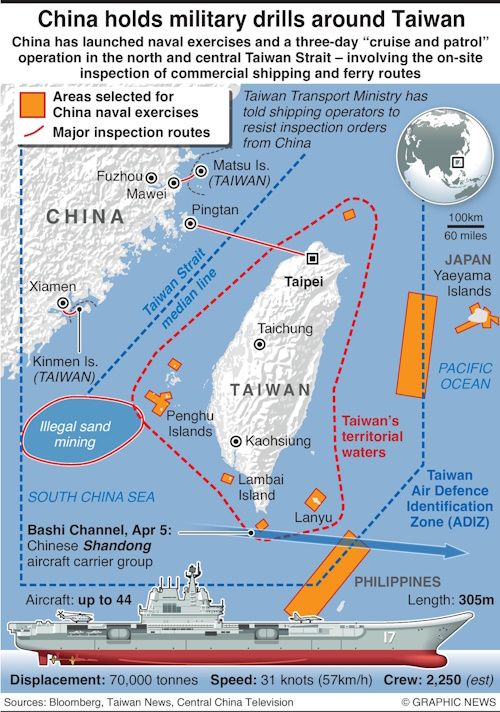
While Taiwan has never been under the CCP before, the leadership of the mainland has long portrayed the island as breakaway territory and has undertaken “a historic mission” to “reunify” it to the fold. The Taiwanese are less than happy at the thought and want to remain autonomous and independent.
The ancient Kingdom of Tibet was annexed in 1951 and granted autonomous status. Over the years, the Communist regime has eroded the culture, language, arts, and religious beliefs of the ethnic population.
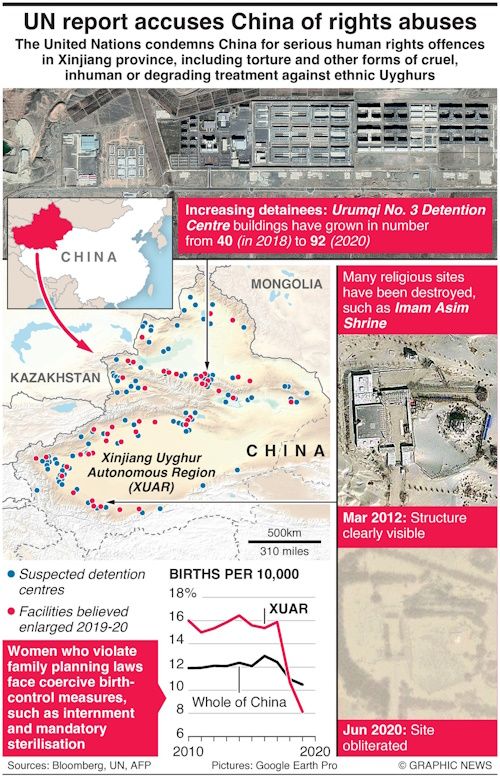
Beijing’s oppression of the 12 million Uyghur Muslims of Xinjiang, a northwestern province, has been termed “genocide.” These minority people are subject to mass surveillance, forced labor, and other forms of repression. While stripping the natural resource-rich region of its stores, the Government is carrying out forced integration and “re-education.”
Besides demands to protect ethnic identity and political sovereignty, the CCP also fears the power of faith, as evident in Falun Gong’s ban. Threatened by its rapid growth in the 1990s, the religious group was labeled a “heretical cult,” and followers were persecuted.
And, of course, what could be more dangerous than fostering democracy in a Communist country? Any attempt to criticize or question the Government is seen as dissent that should be nipped in the bud.
To counter these five threats, the Chinese Government has built a colossal intelligence network that spans the world. The detailed report by the British intelligence service details how Beijing is, directly and indirectly, employing a ‘whole-of-state’ approach to gather information and quell dissent worldwide.
The report states: “The nature and scale of the Chinese Intelligence Services are – like many aspects of China’s government – hard to grasp for the outsider, due to the size of the bureaucracy, the blurring of lines of accountability between party and state officials, a partially decentralized system, and a lack of verifiable information.”
Most of the tens of thousands recruited by Beijing are believed to work for three civilian and military agencies. The most powerful is the Ministry of State Security, a civilian organization with executive powers. They gather intelligence and run counterintelligence operations to trap foreign spies and double agents.
Another civilian agency entrusted with counterintelligence and law-enforcement duties is the Ministry of Public Security. The Strategic Support Force of the Chinese military runs the electronics and signals intelligence, spying on computer networks and internet activity.
The CCP’s strategy that “co-opts every state institution, company, and citizen” adds to the complexity of the problem, making “the scale of the activity more difficult to detect.”
To expand China’s “global reach and influence,” technological prowess and robust economic growth and stability have been chosen as the most suitable vehicles. Once these have been achieved, other countries will rely on Beijing’s goodwill, bestowing the CCP with the stature it craves.
The internal security apparatus is believed to get the lion’s share of the spending, at almost 20% more than on external defense. It is well known that Beijing is investing in state-of-the-art surveillance tools and leveraging loopholes in modern technology.
The report mentions, “While understanding has clearly improved in recent years, China has a highly capable cyber – and increasingly sophisticated cyber-espionage – operation: however, this is an area where the ‘known unknowns’ are concerning.”
China is looking to catch up with other developed nations. It is resorting to unethical practices like intellectual-property theft, disreputable collaborations, and funding agenda to gain access to sensitive military and cyber technology.
Beijing is leaving no stone unturned to reach its goals. The ISC reports highlight the CCP’s unholy nexus with domestic corporations (so-called private enterprises) and foreign diplomats and leaders.
“Decision-makers – from serving politicians to former political figures, senior government officials, and the military – are, inevitably, key targets. China employs a range of tactics, including seeking to recruit them into lucrative roles in Chinese companies – to the extent that we questioned whether there was a revolving door between the Government and certain Chinese companies, with those involved in awarding contracts being ‘rewarded’ with jobs,” writes the report.
Beijing is more than willing to step on toes, gag dissent, and violate countless laws to remain in power. The Ancient Chinese believed that the only way to combat poison was with poison, which is what Beijing is doing.
Related Infographics
Like our insights? Show your support by becoming a paid subscriber!
TIPP Takes
Geopolitics And Geoeconomics
1. Ukraine Struggles To Retake Bakhmut From Dogged Russian Fighters – The Wall Street Journal
Some of Ukraine’s biggest gains in its counteroffensive have come around Bakhmut, which Russia seized in May after months of bloody fighting.

But soldiers near Bakhmut say advances have slowed in recent days amid stiff Russian defense and counterattacks, denting hopes that Kyiv could soon retake the city.
2. Kremlin Says It Only Wants Ukrainian Territories Included In Russian Constitution – Al Arabiya
Russia only wants to control those Ukrainian territories that are Russian under its constitution, Kremlin spokesman Dmitry Peskov said.

Referendums of the accession to Russia were conducted in the Donetsk and Lugansk People’s Republics (DPR and LPR), as well as in the Zaporizhzhia and Kherson Regions from September 23 to 27, 2022. Russian state news agency TASS claims that most residents supported the move.
Crimea is a region historically associated with Russia but was transferred to Ukraine in 1954 during the Soviet era.
3. Russia Accidentally Reveals At Least 8,500 Paratroopers Were Wounded In Ukraine – UPI
British Defense Ministry said that Gen. Col. Mikhail Teplinsky, the commander of the Russian Airborne Forces, admitted in a recorded video address to celebrate VDV Day – a day to honor the blue berets.

The video has since been deleted.
The Defense Ministry said that its intelligence analysts believe this revelation can be used to conclude that at least 50% of the 30,000 paratroopers deployed to Ukraine in 2022 have been killed or wounded.
4. Why China Is Crucial To What Happens In The War In Ukraine – Slate.Com
If U.S.-China relations were better, it could have helped toward jointly imposing an end to the fighting—Biden pressuring Ukrainian President Volodymyr Zelensky and Chinese President Xi Jinping doing the same with Russian President Vladimir Putin.

However, there are signs that Chinese officials are growing weary of this war. They see it as dragging on for a long time to come, and they see their support for Russia as harming their image in Europe, where they would like to make economic and political inroads.
5. China Not Expected To Push Russian Return To Black Sea Grain Deal – Nikkei Asia
China is likely hurting economically from the collapse of the Black Sea Grain Initiative, but experts say Beijing appears content not to pressure Russia to return to the deal.

Under the initiative, launched in July last year, from which Russia withdrew a year later, Moscow lifted a wartime blockade to allow some 32.9 million tonnes of Ukrainian agricultural products, including wheat, barley, and corn, to be exported globally.
6. Saudia Launches New Direct Flights Connecting Riyadh And Jeddah To Beijing – Al Arabiya
In collaboration with the Air Connectivity Program (ACP), this move is seen as a testament to Saudi Arabia’s and China’s commitment to deepen their cooperation, the Saudi Press Agency (SPA) said.

7. UK Govt To Forge Alliance With Tech Giants – AFP
The government announced a new partnership between law enforcement and social media to crack down on online content encouraging migrants to arrive in the UK illegally using small boats.

The Conservative government, struggling in the polls a year before the general election, has promised to end dangerous cross-Channel journeys from northern France in small boats but experienced several setbacks in delivering its plans.
8. Four Syrian Soldiers Killed In Israeli Missile Attack: Report – Al Jazeera
Citing a military source, the official SANA news agency said the attack near Syria’s capital, Damascus, occurred early Monday.

Israel has for years been carrying out attacks against what it has described as Iran-linked targets in Syria.
Iran’s influence has grown in Syria since it began supporting President Bashar al-Assad in the civil war that started in 2011.
9. Israel’s Ben Gvir Defends Settlers Suspected Of Killing Palestinian As ‘Heroes’ – Middle East Eye
Israel’s National Security Minister Itamar Ben Gvir praised settlers suspected of killing a 19-year-old Palestinian in the occupied West Bank as “heroes.”

The far-right minister said anyone defending themselves against “stone-throwing” should “receive a commendation.” His statement referred to two Israeli settlers accused of being involved in the fatal shooting of Qusai Jamal Maatan in the Palestinian village of Burqa on Friday.
10. Expert Warns Nuclear Proliferation Could “Spiral” Out Of Control – Kyodo News
Director of the Stockholm International Peace Research Institute warned that nations such as the U.S., China, and Russia are on the brink of an “uncontrolled nuclear arms race spiral” similar to the Cold War against the backdrop of conflict in Ukraine and Taiwan.

He noted that security guarantees based on nuclear deterrence are inherently destabilizing to the international order. Instead, constructive dialogue between nuclear powers like the United States and China is possible.
11. South Korean Jamboree To End Early Over Typhoon Warning – AFP
The World Scout Jamboree in South Korea will end early due to an approaching typhoon. Organizers called for the government to “urgently” help to send tens of thousands of children home.

About 43,000 people joined the jamboree that kicked off in North Jeolla province last week, but an extreme heatwave caused hundreds of scouts to fall ill. American and British scout groups withdrew at the weekend, citing concerns over the extreme weather.
12. Niger coup: Divisions As ECOWAS Military Threat Fails To Play Out – Al Jazeera
The deadline for the threat of force involving troops from the Economic Community of West African States (ECOWAS) was Sunday. By late evening, no sign of military intervention in Niger was apparent.

As the threat of a regional war dangles, countries have scrambled to pick a side in what is shaping up to be a major showdown – with wealthier coastal economies on the one side and their landlocked, military-led counterparts on the other.
Please email [email protected]
Republished with permission from TIPP Insights