- The IBD/TIPP Financial Stress Index reached its highest level since December 2008, with all 36 demographic groups experiencing elevated stress
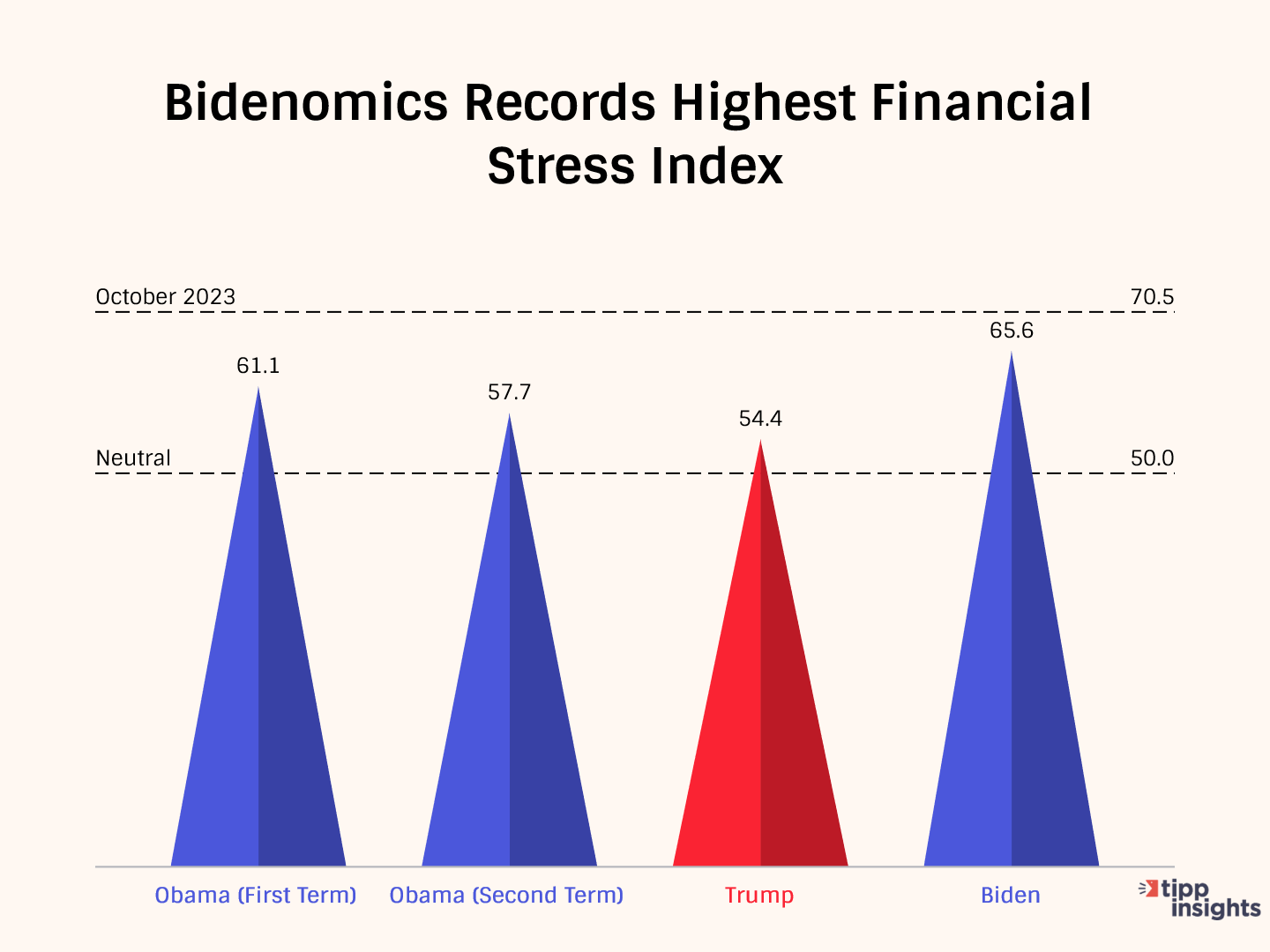
- Under Biden’s policies, the average financial stress level stands at 65.6, higher than during the first and second terms of Obama and Trump’s presidencies
- Multiple factors contribute to financial stress, including Bidenflation at 16.7%
- Financial stress impacts Americans across party lines
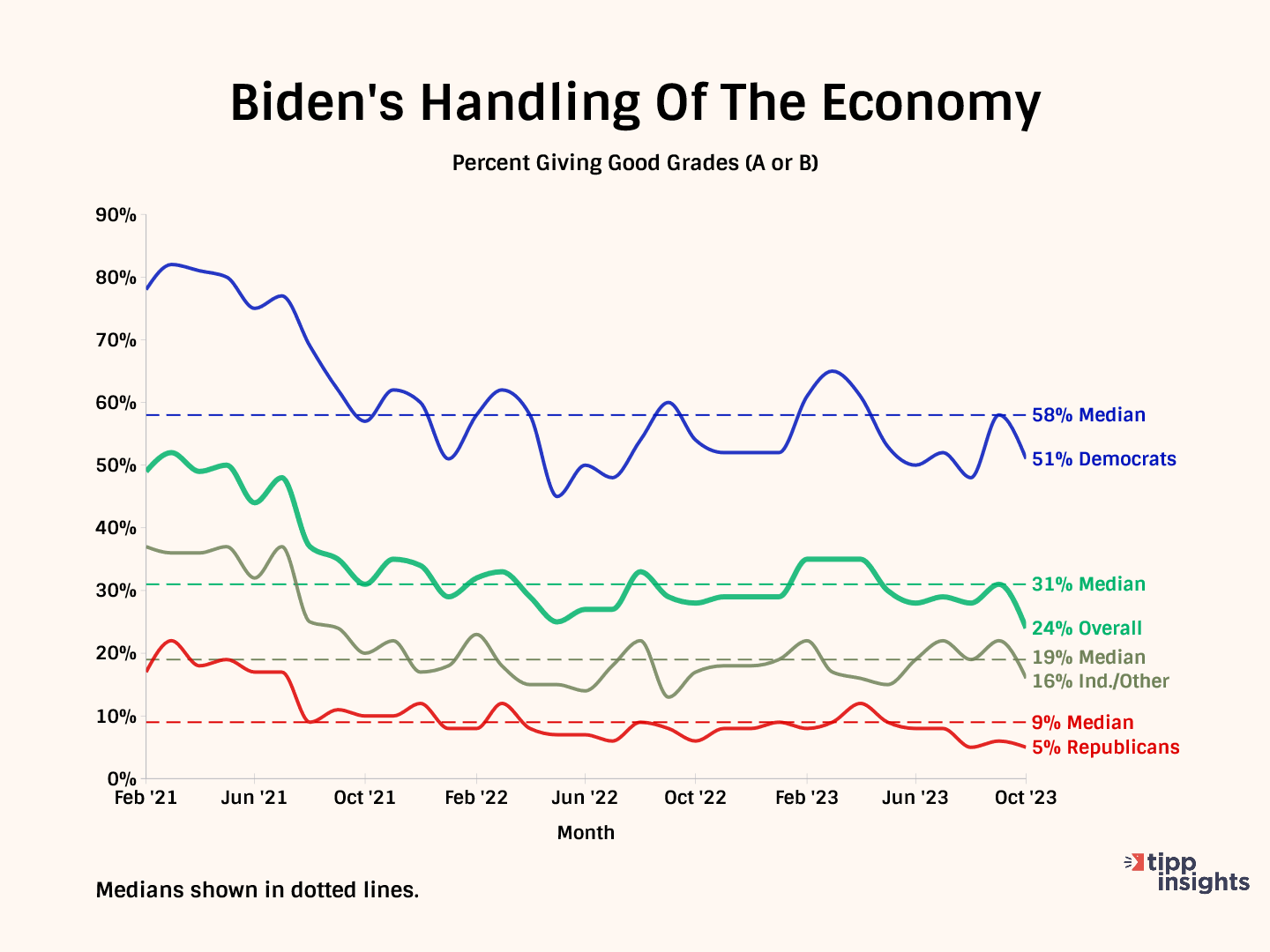
- Public dissatisfaction with President Biden’s handling of the economy is widespread, with 56% giving him failing grades
The IBD/TIPP Financial Stress Index increased for the fourth consecutive month in October, rising from September’s reading of 68.1 to 70.5 this month, a 0.7% increase. It is the highest reading on this index since December 2008.
Every demographic group we track is in the “stress zone,” leading us to label the current period as a financial epidemic. Of the 36 demographic categories, 27 (75%) experience elevated stress, 15% higher than their historical average.
Here’s further evidence that Bidenomics is an utter failure: the average financial stress level under President Biden’s policies is the highest at 65.6, compared to the past two presidents. During Obama’s first term, it was 61.1; during his second term, it stood at 57.7. The current level is also significantly higher than the financial stress level of 54.4 recorded during Trump’s presidency.
Multiple factors are intensifying stress. We enumerated them in a recent editorial. To summarize, Bidenflation, as measured by the TIPP CPI, is 16.7%, leading to higher costs for Americans and increased financial stress. Many struggle to make ends meet as wages lag behind inflation, with six in ten Americans living paycheck to paycheck. Gasoline prices surpassing $3.50 per gallon further strain finances, while the return of student loan payments and concerns about government spending contribute to economic uncertainties. Additionally, the Fed’s rate hikes and the ongoing Russia-Ukraine conflict compound fears of a recession, with widespread disapproval of President Biden’s handling of the economy, even among Democrats.
The IBD/TIPP Financial Stress Index is a one-of-a-kind financial stress metric. In December 2007, we began using it to track financial stress. The index accurately indicates Americans’ financial concerns about paying bills and making ends meet. Consumer spending drives two-thirds of the economy. When people are financially stressed, they generally hesitate to spend money.
There is another aspect too. Financial stress can lead to insomnia, weight gain (or loss), depression, anxiety, relationship difficulties, social withdrawal, and physical ailments such as headaches, gastrointestinal problems, diabetes, high blood pressure, and heart disease.
We computed the stress index from responses to the questions: Thinking of your personal finances, compared to the past three months, do you feel more stressed these days, less stressed these days, or feel the same level of stress?
The index ranges from 0 to 100; the higher the number, the more stress. A reading of 50.0 is the neutral point.
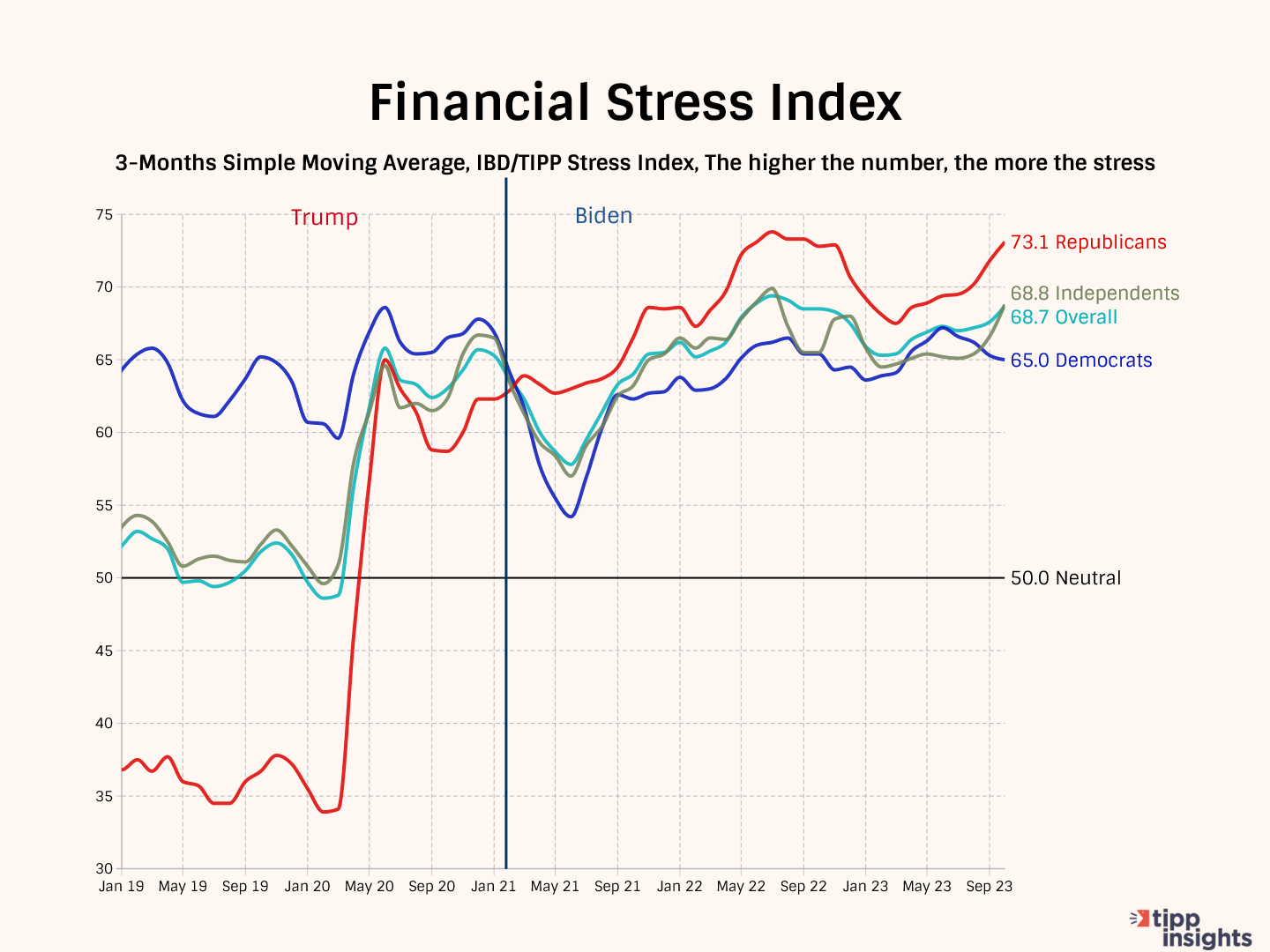
The chart below shows that financial stress affects all Americans, regardless of their party affiliation. Republicans experience the highest stress levels at 73.1, 4.4 points higher than the overall level of 68.7. In contrast, Democrats’ stress level is 65.0, 3.7 points lower than the overall 68.7. Independents, at 68.8, are the closest to the overall level of 68.7
By The Numbers
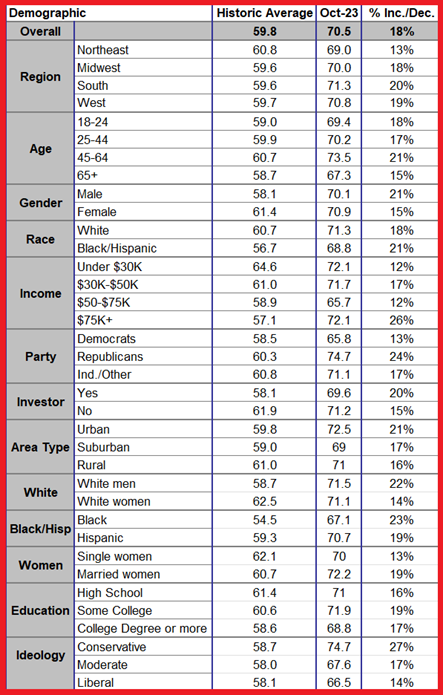
The table below displays historical averages of the index, October readings, and the percentage increase or decrease for 36 demographic groups. All 36 demographic groups exhibit stress levels above the neutral level of 50.0. Out of these 36 demographic categories, 27 (75%) are experiencing stress levels that are 15% higher than their historical averages.
For conservatives this month, the stress index posted 74.7, 27% higher than their historical average of 58.7. Similarly, Republicans recorded a stress index of 74.7, which represents a 24% increase compared to their historical average of 60.3
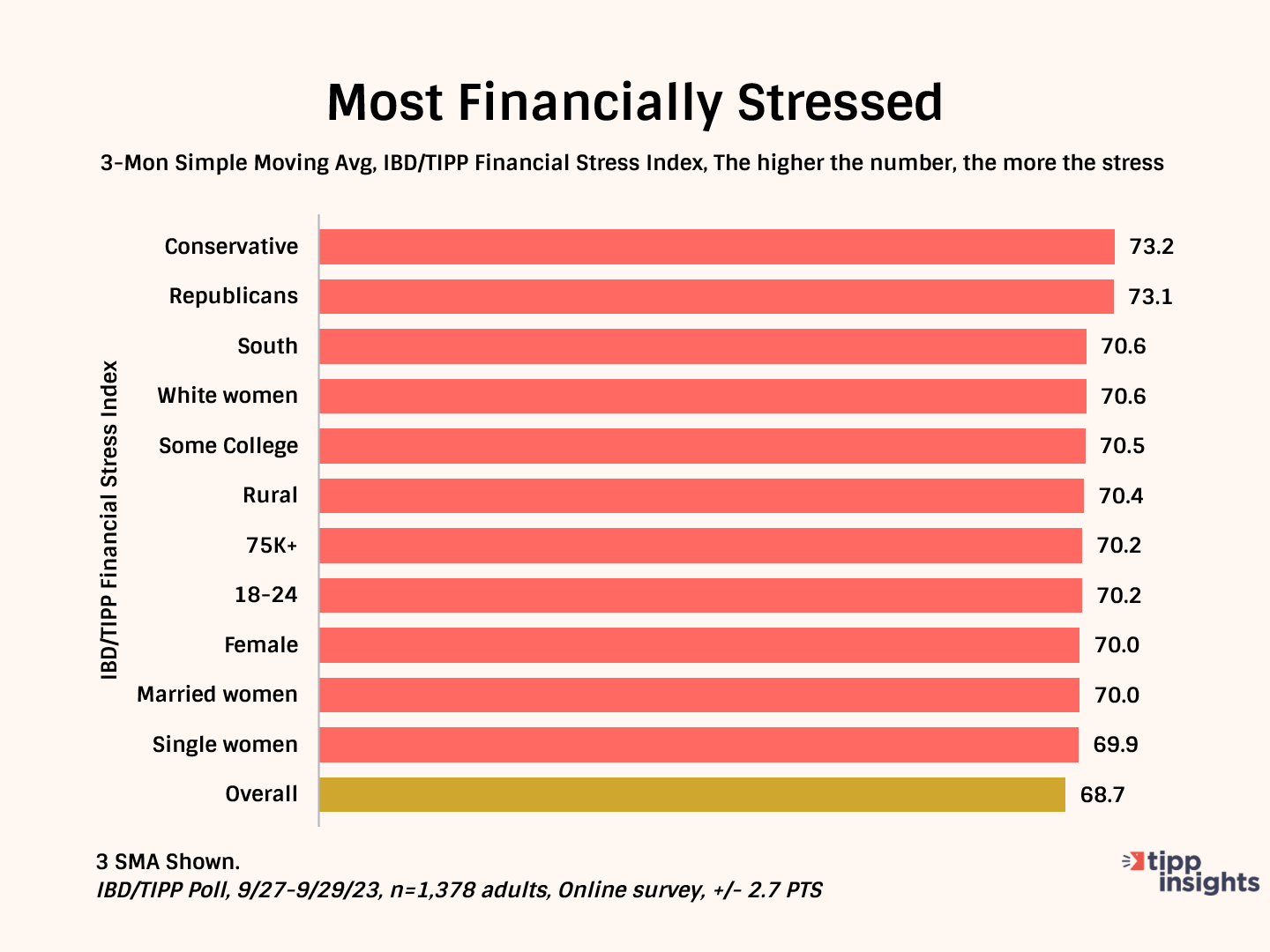
Here are the eleven demographic groups with the highest stress levels based on a three-month simple moving average. Conservatives are the most stressed group, followed by Republicans and Southerners.
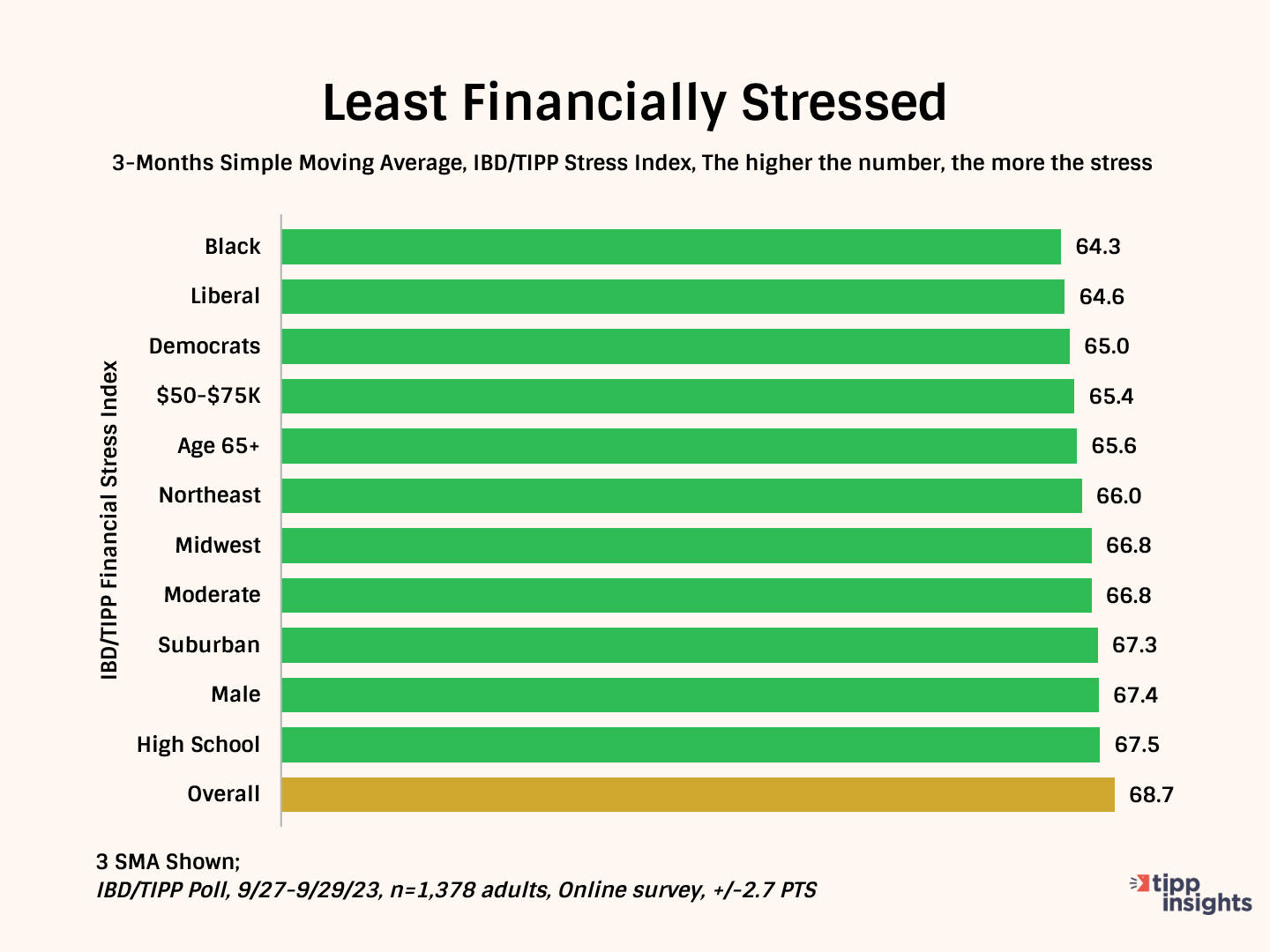
The chart below shows the eleven demographic groups with the least stress. The least stressed groups are Blacks, liberals, Democrats, those in the $50K–$75K income bracket, and those aged 65+.
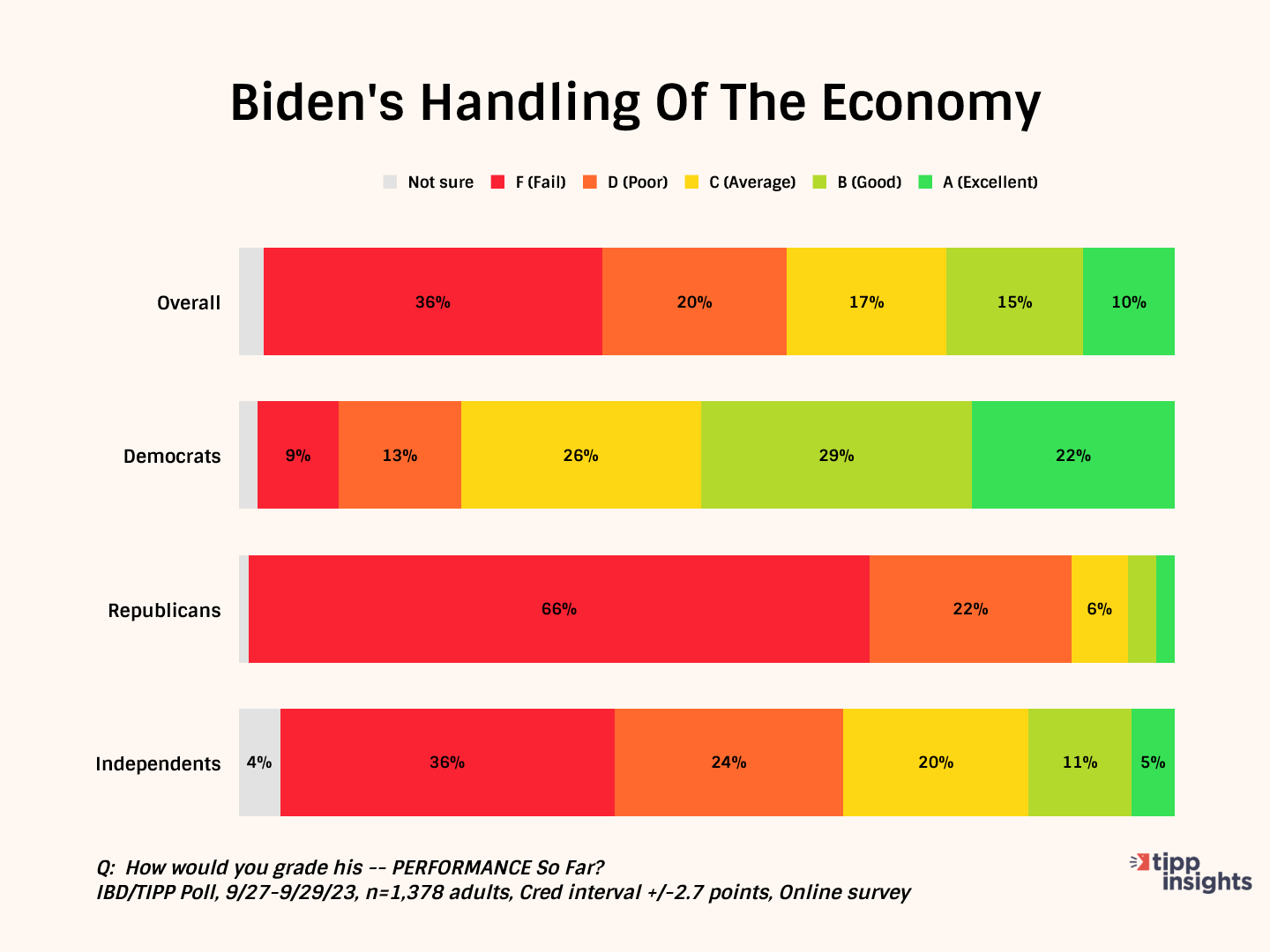
Biden’s Handling Of The Economy
In our latest poll, most Americans (56%) give Biden a failing grade (D or F) regarding his handling of the economy. Only 25% give him an A or B.
Among Democrats, half (51%) give him positive grades, 22% believe he deserves failing grades, and another 26% rate his performance as average (C).
In contrast, Republicans are much more critical, with 88% expressing dissatisfaction with Biden’s handling of the economy.
Furthermore, independents are also disappointed, with 60% giving failing grades, 16% giving good grades, and 20% rating Biden’s performance as average.
Americans are grappling with intense financial stress as wage growth fails to keep pace with rising prices. Persistent inflation will likely continue fueling this financial stress in the foreseeable future, and there are no easy answers or clear solutions.
Like our insights? Show your support by becoming a paid subscriber!
TIPP Takes
Geopolitics And Geoeconomics
1. Follow “Rules Of War”: Joe Biden Urges Israel – AFP
The remarks were the first time Biden had called for restraint over Israel’s response to what he called the “sheer evil” of the Hamas attacks on Saturday.
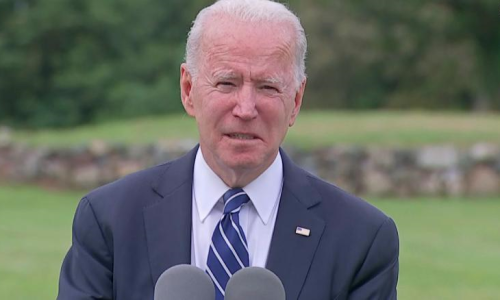
But Biden also had a stern warning for Iran, which backs Hamas and Lebanon’s Hezbollah and is a long-term foe of both Israel and the United States.
2. Israel’s Benjamin Netanyahu Forms Wartime Unity Government With Critic Benny Gantz – UPI
Israeli Prime Minister Benjamin Netanyahu and Israeli opposition politician Benny Gantz formed an emergency unity government to address the ongoing conflict with Palestinian Hamas.
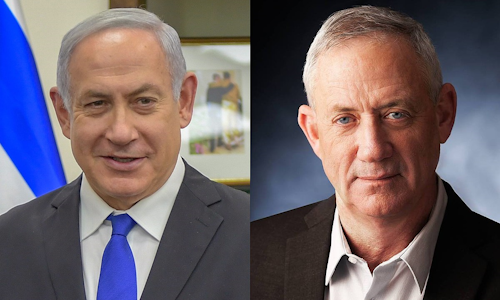
Gantz and Netanyahu were bitter political rivals during Netanyahu’s attempted judicial reform, and Gantz is a vocal critic of Netanyahu’s efforts to reduce the judiciary’s power. Current Defense Minister Yoav Gallant will join the war cabinet, as will the National Unity party’s Gadi Eisenkot, who previously served as IDF chief of staff.
3. Signs That Israel Planning “Something Big,” Weighing Gaza Ground Assault – Bloomberg
Developments on the ground suggest Israel is planning something big. It’s bombarding Gaza from the air, land and sea.
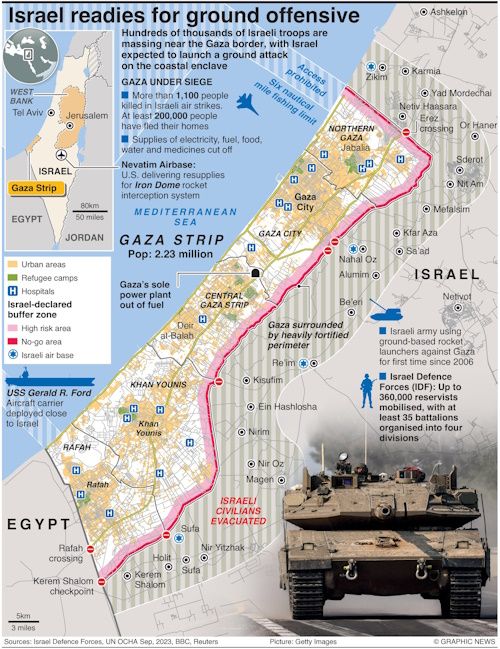
Its military is building a base next to the Gaza Strip to accommodate tens of thousands of soldiers as columns of Israeli tanks move toward the region. The country has already mobilized 300,000 reservists — the most in its history.
4. Egypt Warned Israel Days Before Hamas Struck, U.S. Committee Chairman Says – BBC
Egypt warned Israel of potential violence three days before Hamas’ deadly cross-border raid, a U.S. House of Representatives Foreign Affairs Committee head, Michael McCaul, told reporters.
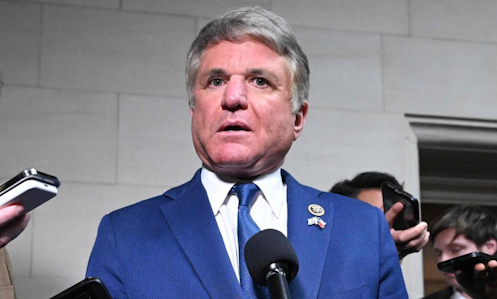
Israeli PM Benjamin Netanyahu described the reports as “absolutely false.” Israeli intelligence services are under scrutiny for failing to prevent the deadliest attack by Palestinian militants in Israel’s 75-year history.
5. Situation In Gaza ‘Catastrophic’ As Food, Water Supplies Dwindle: UN WFP – Al Arabiya
“Gaza is on the brink of running out of food, water, and electricity,” said Alia Zaki, the Head of Communications and Information Management at the Palestine Country Office for the UN’s World Food Program.
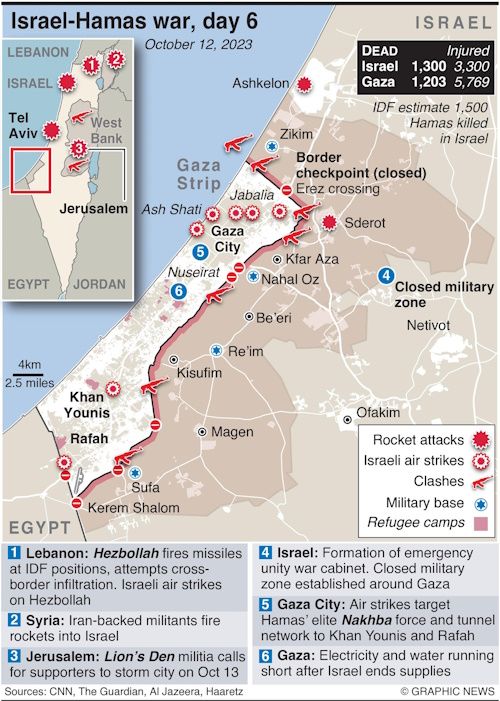
Israel has been carrying out air strikes on Gaza for five consecutive days, turning entire neighborhoods in the city to rubble, leaving most of its 2.3 million people with no shelter and no access to food or water.
6. ‘Netanyahu Let Us Down,’ Donald Trump Blasts Israeli PM Amidst War With Hamas – WION
Speaking at West Palm Beach, Trump shot Netanyahu for backtracking from assisting the U.S. in killing Iran’s top security and intelligence commander, Maj. Gen. Qassim Suleimani in 2020.
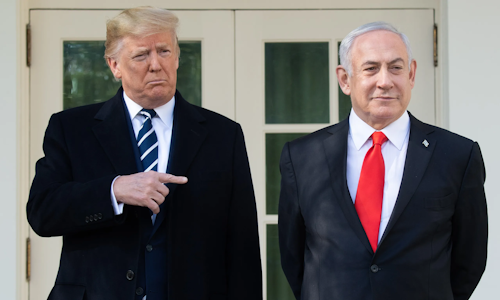
Trump claimed he received a call shortly beforehand to inform him that Israel would not take part in the drone strike, but the U.S. proceeded anyway.
7. Russia Loses Bid To Regain Seat On UN Rights Body – AFP
The United Nations General Assembly rejected a bid by Russia to regain a seat on the Human Rights Council, from which it was ousted after invading Ukraine.
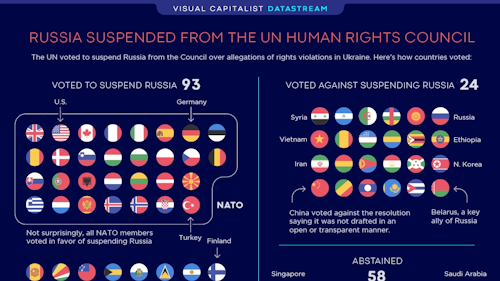
Russia, competing with Bulgaria and Albania for two open spots allocated to their region, nonetheless received 83 votes in its favor from the General Assembly’s 193 members.
The election for the council’s 2024–2026 term had been viewed as a test of what Moscow contended was quiet support despite fierce Western-led criticism over its invasion of Ukraine.
8. Kim Jong Un Exchange Letters With Putin, Wishes Victory Over “Imperialists” – Reuters
The letters marked the 75th anniversary of bilateral relations and came about a month after Kim’s rare trip to Russia.

In his letter, Kim said he was extremely satisfied with their “candid, comprehensive” discussions during the visit. He pledged to further develop relations to a “new height” and wished Putin good luck resisting Western pressure over Ukraine.
9. China Benefits From Sanctioned Oil Imports, Saves Billions In Fuel Costs – WION
China’s savings have arisen from oil purchases from Russia, Iran, and Venezuela, all countries subjected to sanctions by the United States and other Western nations.

According to calculations based on data from traders and ship trackers, these savings have inadvertently lowered the cost of oil imports for Chinese refiners, amounting to nearly $10 billion.
10. Taiwan Studies Israel-Hamas War To Learn Lessons, Avoid Similar Conflict With China – WION
Taiwan has set up a task force to draw lessons from the surprise attack by Hamas on Israel.
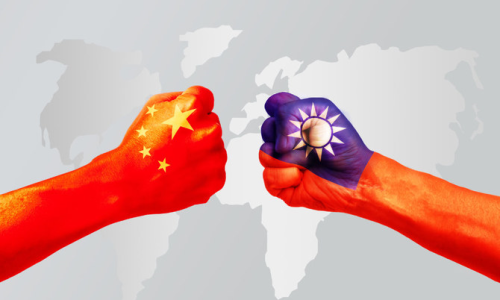
The Taiwanese Defense Minister Chiu Kuo-cheng said, “the initial (lesson) is that intelligence work is very important. With intelligence, many countermeasures can be made. A war can even be avoided.”
11. EU Foreign Policy Chief Heads For China In Attempt To Mend Fences – RFI
The EU’s foreign policy chief, Josep Borrell, will pay a three-day visit to China to defuse tensions between Brussels and Beijing and to put the relationship back on track after years of friction.
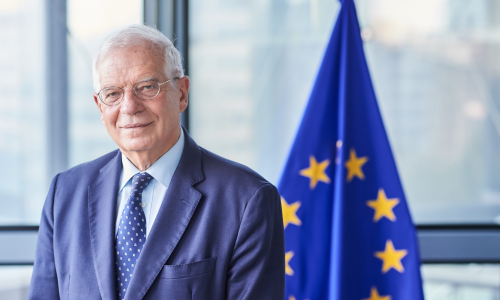
“China is ready to work with the EU to enhance mutual trust, expand cooperation, overcome interference,” Chinese Spokesperson Wang Wenbin said.
12. Serbia Relies On China For Weapons As Tensions With Kosovo Rise – Nikkei Asia
Serbia’s military relies on Chinese arms suppliers as tensions ratchet up with its smaller neighbor Kosovo, seeking to fill the void left by Russian defense companies that are tooling up their army against Ukraine.
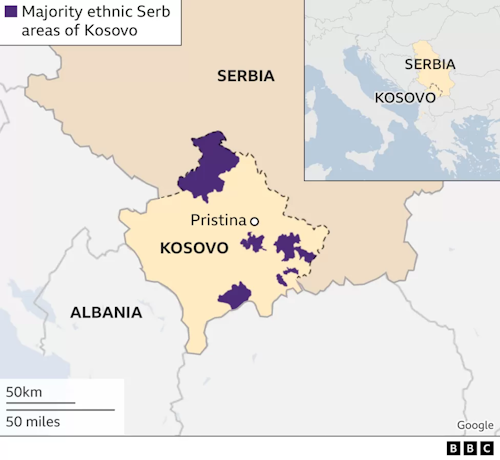
Serbia’s main Western arms suppliers – France, Germany, and the U.S. – were surprised by an unprecedented military buildup along its border with Kosovo in late September. Serbia’s move was triggered by an attack on the Kosovan police by local ethnic Serb armed groups.
13. China Forcibly Repatriates Some 600 N. Korean Defectors This Week: Civic Group – Yonhap
China sent back around 600 North Korean defectors earlier this week right after the end of the Asian Games in Hangzhou, a local human rights group claimed, despite Seoul’s repeated calls against forced repatriation.
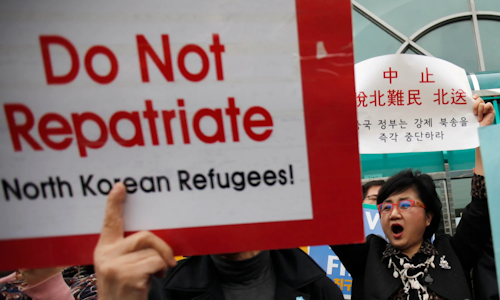
According to the group Justice For North Korea, China has begun sending back around 90 North Korean defectors on two buses since late August and completed the forced repatriation of around 2,600 defectors.
14. All Canadian Diplomats Still Remain In India; Ottawa, New Delhi Talking Privately: Report – WION
Canadian Foreign Minister Mélanie Joly emphasized, “Diplomacy is always better when conversations remain private.”
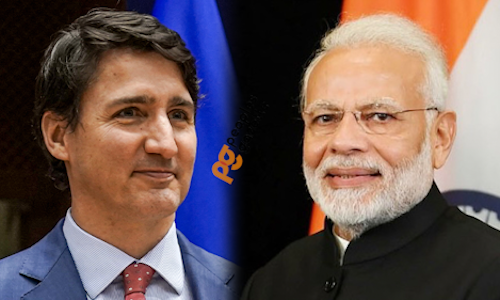
Joly’s statement followed a report in the Financial Times (FT), which indicated that Canada and India were in ongoing discussions regarding removing 41 diplomats from India.
Canadian media has reported that “almost all” Canadian diplomats are still posted in India even after the Oct 10 deadline.
Please email [email protected]