Noting that “approximately half of U.S. adults reported experiencing measurable levels of loneliness” even before COVID-19 hit, the U.S. Surgeon General Dr. Vivek Murthy stated in an advisory issued in May that “loneliness and isolation increase the risk for individuals to develop mental health challenges in their lives.”
In the past decade, there has been a marked shift towards a more holistic approach to health; physical well-being is no longer the only criterion. Mental well-being and practices promoting the same are getting increased attention, supported by increasing research and data.
In an exclusive Newsmax/TIPP Poll of 1,464 American adults taken in December 2023, 86% agreed that the U.S. is currently facing a mental health crisis. Only a tiny minority, 8%, disagreed, while the rest were unsure about the situation.

Acknowledging the prevalence of mental health issues has prompted healthcare workers, policymakers, and other stakeholders to begin addressing the crisis. The increased awareness is causing the historic and deeply entrenched stigma and shame surrounding psychological and behavioral issues to slowly give way to devising social and medical infrastructure to deal with the problems.
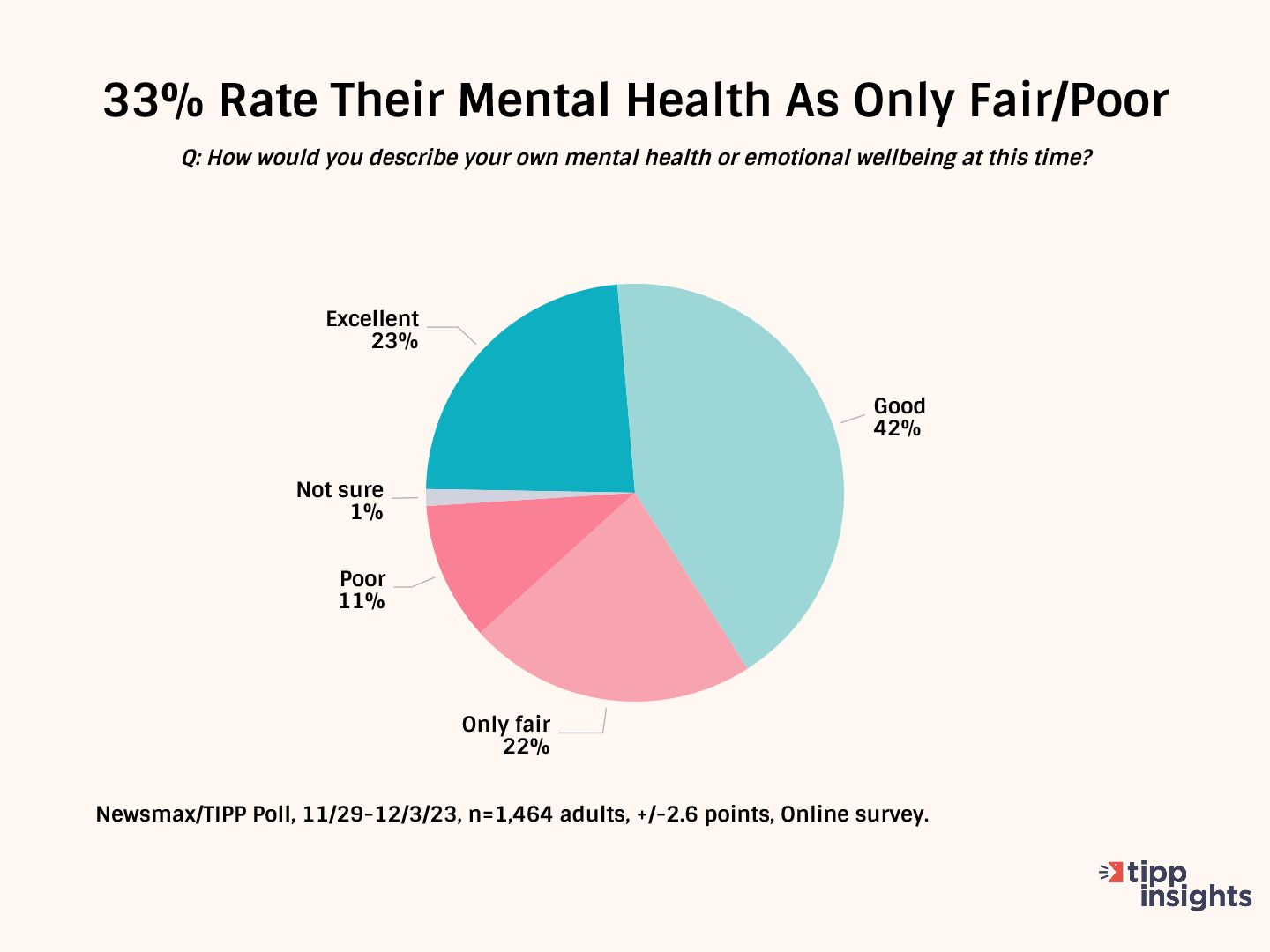
While nine out of ten people believe that the country is facing a crisis, the survey found that two-thirds (65%) describe their mental health as Excellent/Good, with the remaining third considering it Only fair or Poor. Breaking it down, less than a quarter of Americans feel their mental health is Excellent, while 42% say it is Good. More than a fifth, 22%, rate their state as Only fair, and 11% acknowledge that it is Poor.

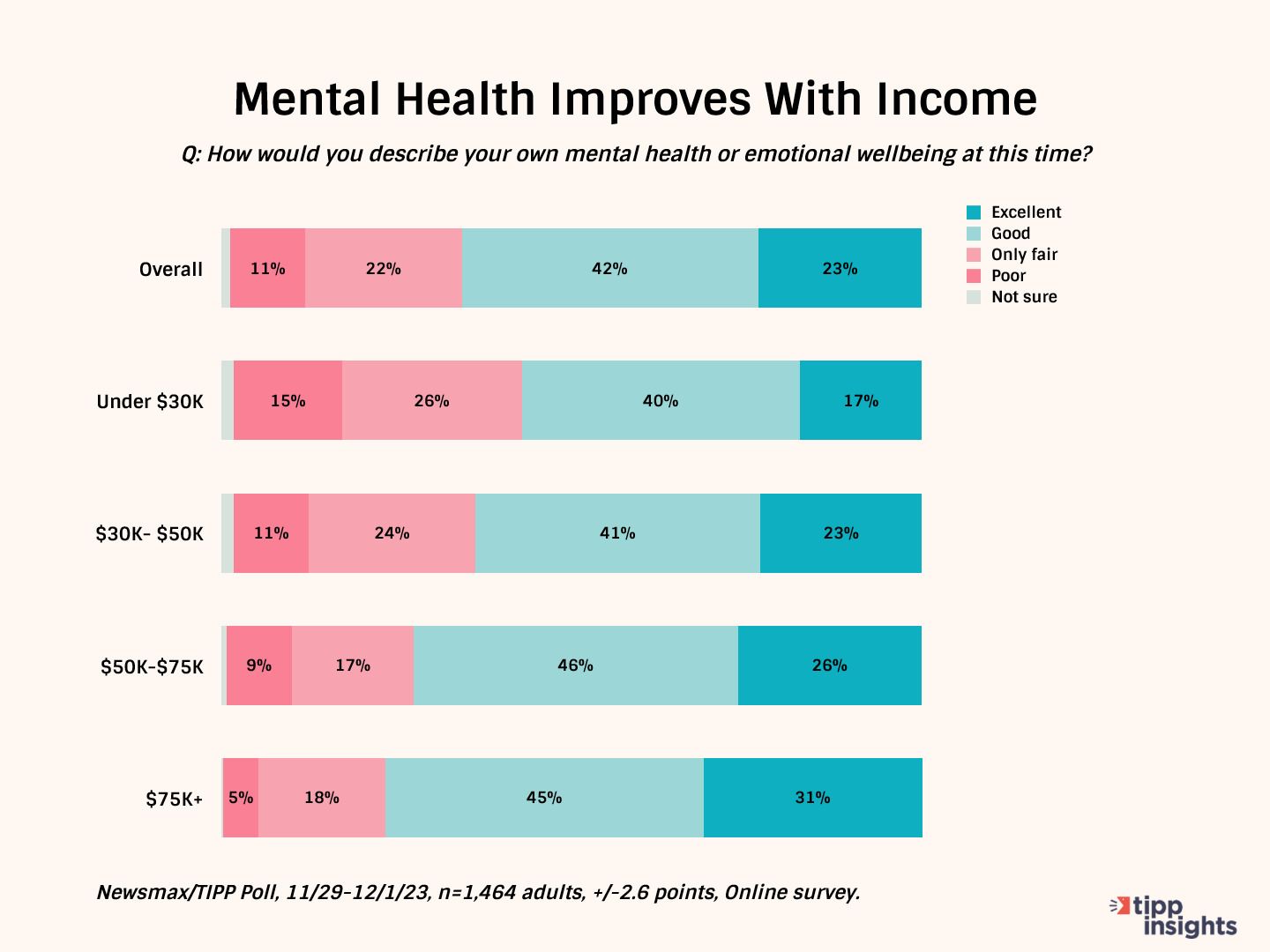
Mental health is a complex and multifaceted phenomenon requiring comprehensive and holistic understanding. It is deeply influenced by numerous interconnected factors ranging from biology to financial stability. Everything from environmental influences, lifestyle choices, healthcare access, work-life balance, psychological factors, and many others positively or negatively impact one’s mental state.
Mental health struggles can lead to a range of problems as individuals lacking robust familial/social connections and access to proper healthcare may turn to harmful methods to cope.
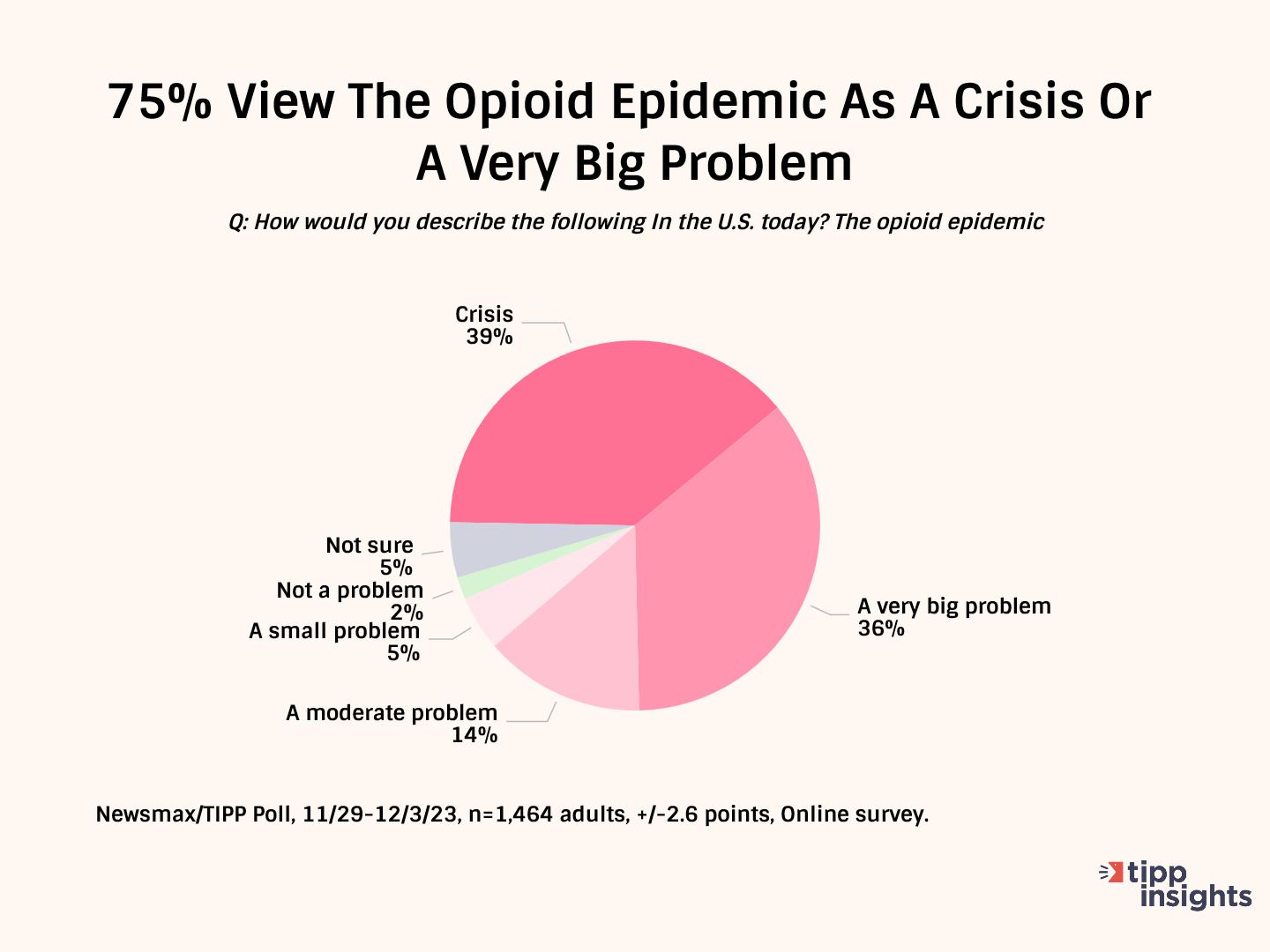
The undeniable connection between mental health troubles and drug abuse is well documented. Some start experimenting with drugs in their efforts to cope with stress or to relax, unaware that healthy stress management is a vital facet of mental health. Individuals struggling with chronic depression, anxiety, or post-traumatic stress disorder (PTSD) are at a higher risk of abusing drugs, which could lead to addiction. The complex issue has become a challenging public health crisis in the U.S., with the administration terming it an “opioid epidemic.”
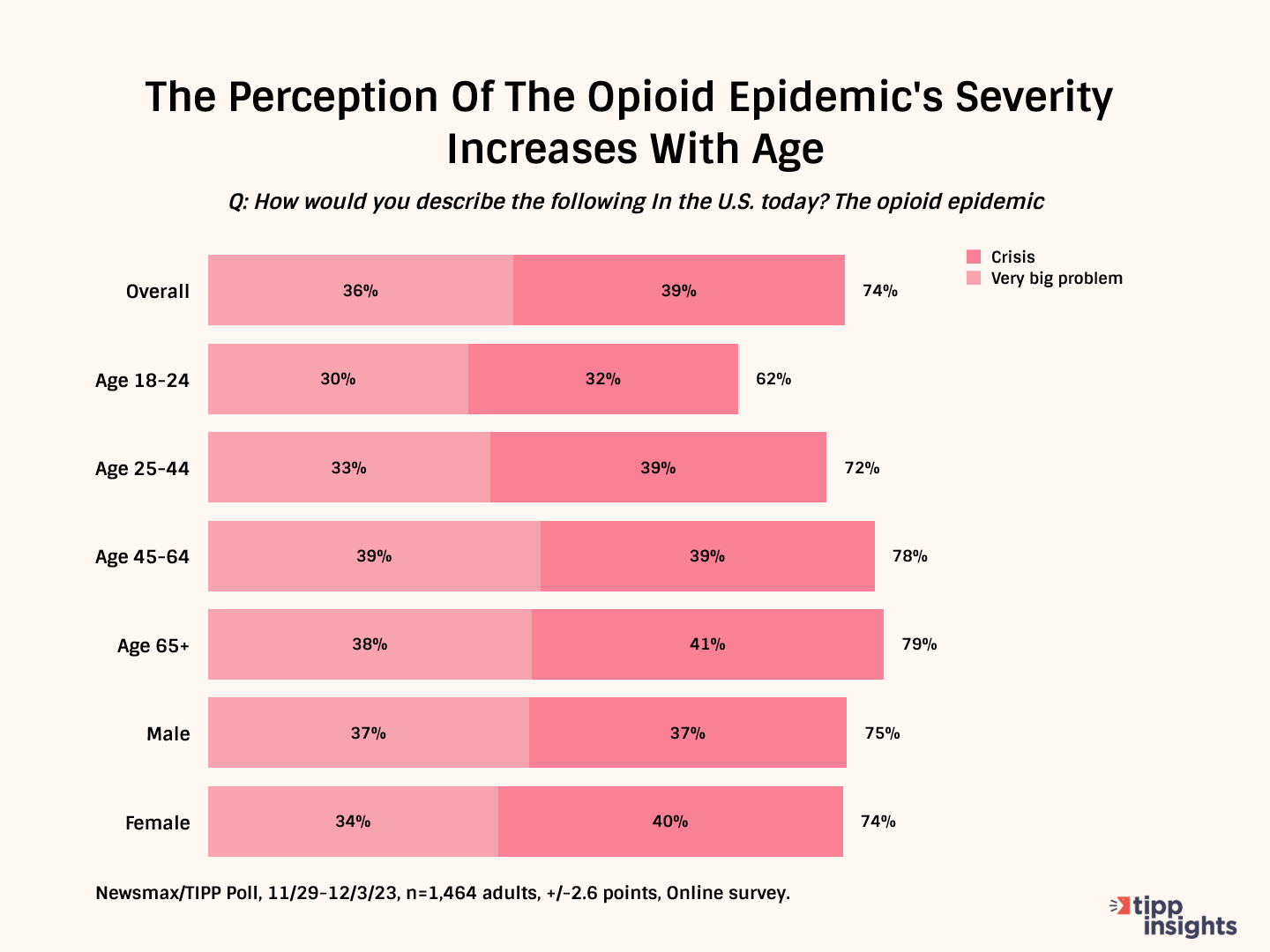
Three-fourths of Americans, 75%, consider the drug epidemic prevalent in the country a worrying issue. Almost two-fifths, 39%, described it as a “crisis.” Over a third, 36%, said it was a “very big problem.” Slightly more than a tenth, 14%, viewed the issue as a “moderate problem,” 5% said it was a “small problem,” and 2% felt it was not a problem.
Though a vast majority of those with mental health conditions do not cause violence to others, access to weapons compounded by a lack of support systems and safe channels may cause individuals to cause harm to others. While the unacceptably high rate of gun violence in the country requires a nuanced and comprehensive approach, it cannot be denied that mental health struggles contribute to such behavior.
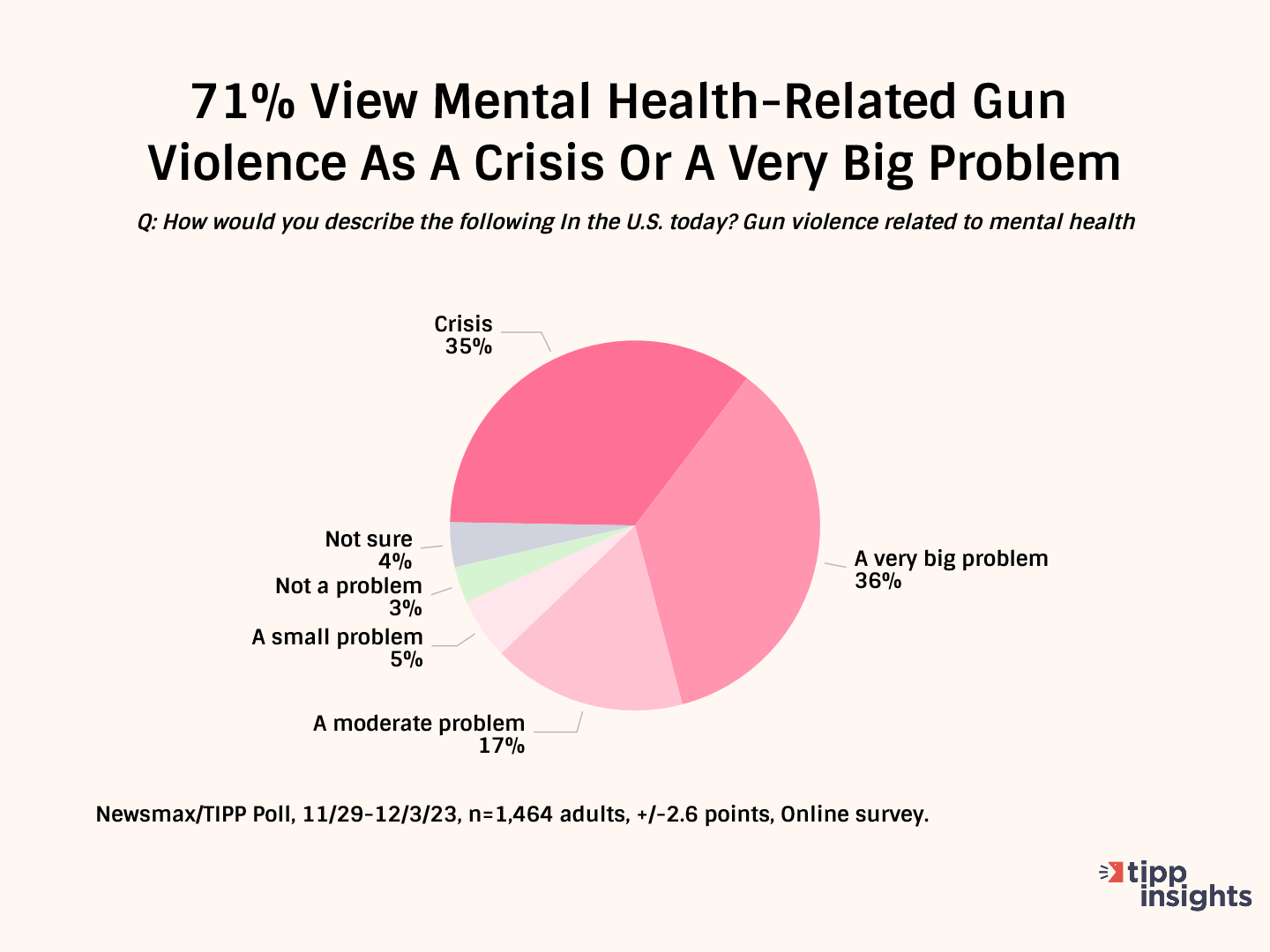
The Newsmax/TIPP Poll found that seven in ten find gun violence related to mental health in the country as a deeply concerning issue. More than a third, 36%, see it as a “very big problem,” and another 35% describe it as a “crisis.” Close to a fifth, 17%, chose to view it as a “moderate problem,” while a handful, 5%, did not consider it troublesome.
Mental health is a personal and unique experience. But it is necessary to remember that individuals create a society, and the collective largely reflects the state of the majority. Addressing mental health concerns is vital to building healthy and more resilient communities for the future.
TIPP Picks
Content selected by tippinsights
 TIPP Staff
TIPP Staff
TIPP Staff
TIPP Staff
TIPP Takes
Geopolitics, Geoeconomics, And More
1. Israel’s Army Chief Says Deadly Strike Killing Aid Workers Was ‘Grave Mistake’ – AFP
Israel’s defense chief said that a strike that killed seven aid workers in Gaza was a “grave mistake” after the incident prompted a chorus of international condemnation.
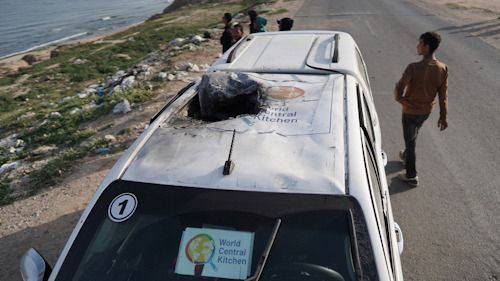
“This incident was a grave mistake,” IDF chief Herzi Halevi said on the strike that hit a World Central Kitchen (WCK) convoy on Monday.
“It shouldn’t have happened,” Halevi said, as he blamed the strike on a “misidentification – at night during a war in very complex conditions.”
2. World Central Kitchen Founder José Andrés Says Israel Targeted Staff In Gaza ‘Car By Car’ – BBC
World Central Kitchen (WCK) founder José Andrés said Monday’s strike, which killed seven members of his staff, was not a mistake, he said, repeating that Israeli forces had been told of their movements.

The convoy comprised three vehicles, including two armored ones, which displayed the charity’s logo. All three were hit during the strike. Israel says the strike was a “grave mistake” and has apologized.
3. ‘Lavender’: The AI Machine Directing Israel’s Bombing Spree In Gaza – +972
A new investigation by +972 Magazine and Local Call reveals that the Israeli army has developed an artificial intelligence-based program called “Lavender.”

According to Israeli intelligence officers, who have all served in the army during the current war on the Gaza Strip and had first-hand involvement with the use of AI to generate targets for assassination, Lavender has played a central role in the unprecedented bombing of Palestinians, especially during the early stages of the war.
In fact, according to the sources, its influence on the military’s operations was such that they essentially treated the AI machine’s output “as if it were a human decision.”
4. U.S. Warning To Russia Reportedly Named Crocus Concert Hall – RFE/RL
A U.S. intelligence warning to Moscow two weeks ahead of a deadly March 22 terrorist attack included a specific reference to the Crocus City Hall concert venue that was targeted, The Washington Post reported.

The warning did not include specifics about the timing of the attack but said it could come within days, intelligence sources told the two newspapers.
Kremlin spokesman Dmitry Peskov said on April 3 that the presidential administration was unaware of the U.S. warning.
“This is not our area of expertise,” Peskov said, “as such information exchange usually takes place through the channels of the special services.”
5. Russia Shakes Up Navy Command Amid Ukrainian Successes In Black Sea – RFE/RL
President Vladimir Putin signed an order naming Admiral Aleksandr Moiseyev as acting overall naval commander.
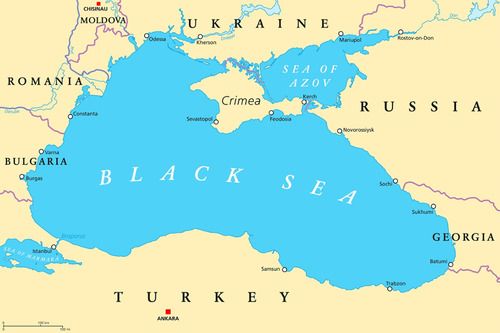
Vice Admiral Konstantin Kabantsov replaced Moiseyev as head of the Northern Fleet, while Vice Admiral Sergei Pinchuk was named commander of the Black Sea Fleet.
Since the full-scale Russian invasion in February 2022, Ukraine has sunk five major Black Sea Fleet vessels, including the flagship cruiser Moskva, as well as numerous smaller ships.
6. “Unfriendly”: Russia After Sanctions By South Korea – Reuters
Russia considers South Korea’s decision to impose sanctions against Russian individuals and entities as an “unfriendly” move and will respond in due course, Russian FM spokeswoman Maria Zakharova said.

South Korea has imposed sanctions against two Russian vessels which it says were carrying military cargo to North Korea. Seoul said it had also sanctioned two Russian organizations and two Russian citizens linked to Pyongyang’s nuclear and missile programs.
7. U.S. Treasury’s Yellen En Route To China, Aiming To Stem Green Tech Glut – Nikkei Asia
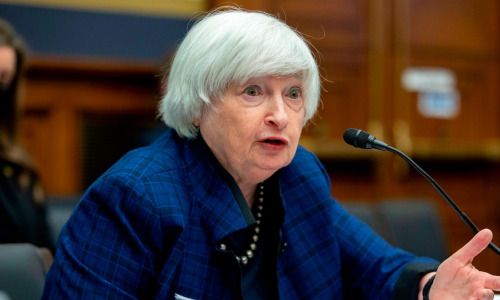
Treasury Secretary Janet Yellen is due to arrive Thursday in Guangzhou. She is on a mission to stabilize ties with China while pressing officials on industrial overcapacity that threatens the global economy.
The U.S. and Europe are increasingly wary of Chinese policies that fuel cheap exports of surplus industrial products, from electric cars to solar panels, undercutting their own companies. The latest official data from China shows that outstanding loans to the industrial sector have surged since June 2020, reaching 21.83 trillion yuan ($3 trillion) in December 2023. According to the central bank, that figure was up 28% in the year.
8. Arab Politicians Praise China’s Policies In Xinjiang – RFA
A delegation of Palestinian and other Arab politicians praised China’s policies in Xinjiang during a visit there, sparking criticism from experts and Uyghur rights advocates for not highlighting the plight of fellow Muslims living in the region.
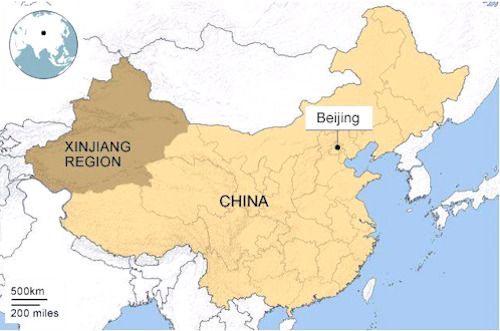
According to reports, the delegation’s goal was to present a comprehensive understanding of the situation and convey a narrative of a peaceful and vibrant region to the international community.
That’s in sharp contrast with the United States and some Western parliaments, which have accused China of carrying out a genocide against the 11-million-strong Uyghurs who live in Xinjiang.
9. Cyber Board Says Chinese Hack Of U.S. Officials Was “Preventable” – Reuters
The U.S. Cyber Safety Review Board said a targeted Chinese hack of top government officials’ emails last year was “preventable,” faulting technology giant Microsoft for its cybersecurity lapses and a deliberate lack of transparency.

In its report, the board said it identified a series of Microsoft decisions that had decreased enterprise security, risk management, and customers’ trust in Microsoft to protect their data and operations.
The intrusion, which stemmed from the compromise of a Microsoft engineer’s corporate account, was done by Storm-0558, a hacking group affiliated with the People’s Republic of China.
10. Houthis May Be Running Low On Weapons Stocks As Attacks On Ships Slow: U.S. Commander – A.P.
Lt. Gen. Alexus Grynkewich, who heads U.S. Air Forces Central, said that the persistent American retaliatory strikes on the Iran-backed militia group have “certainly affected their behavior. Their pace of operations is not what it was.”

Grynkewich said it’s difficult to know exactly how much the U.S. strikes have eroded the Houthis’ weapons supplies because officials didn’t have a detailed intelligence assessment of their capabilities before the attacks began.
“The other complicating factor is Iranian resupply.”
11. Iran Unlikely To Strike Israel Directly After Syria Consulate Attack, Experts Say – Al Arabiya
Despite enduring the loss of several high-ranking military figures since the start of the Gaza war in October, Iran has refrained from direct attacks on Israel.
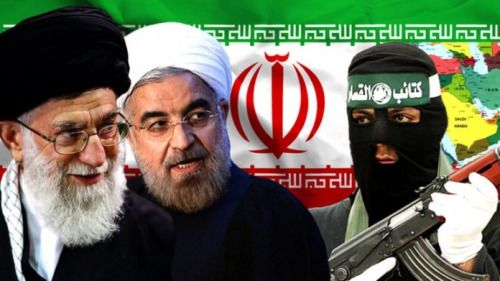
This restraint likely stems from the Islamic Republic’s core focus on self-preservation since its establishment in 1979. An outright war with Israel and its primary supporter, the U.S., would pose a major threat to the regime’s survival.
Monday’s Israeli airstrike flattened the consulate, killing 13 people, including two high-ranking commanders of Iran’s Islamic Revolutionary Guard Corps (IRGC).
12. Palestinian Fatah Group Accuses Iran Of Trying To Spread Chaos In West Bank – Reuters
Fatah, the movement that controls the Palestinian Authority, said it would not allow “our sacred cause and the blood of our people to be exploited” and said it would act against any interference from outside aimed at harming security forces or national institutions.

The statement from Fatah came as the Palestinian Authority has asked the United Nations Security Council to vote this month to make it a full UN member. This move would add to mounting global pressure for a two-state solution with Israel.
13. BofA Sees Summer Oil Price Peak At $95 Per Barrel – Oilprice.Com
Bank of America energy analysts have boosted their price forecast for this year to average $86 per barrel and peak this summer at $95 per barrel.

The predicted summer peak of $95 for Brent is hinged on expectations for a summer driving season against the backdrop of tighter-than-expected supply.
Low inventories across the oil complex, OPEC+ output cuts, geopolitical tensions, and robust economic growth figures have flipped price trends and now point to a tighter-than-expected summer driving season, supporting firm backwardation in crude and products.
14. Tesla Sends Scouts Across India To Find Ideal EV Factory Location – Oilprice.Com
The Financial Times has reported, citing unnamed sources in the know, that Tesla has sent scouts across India to select a location for a new EV factory that would cost between $2 billion and $3 billion.

According to the FT sources, priority will be given to states with already established and well-developed car manufacturing infrastructure.
The report follows the Indian government’s move to lower import tariffs on electric vehicles, but only for companies that commit to manufacturing the vehicles in India within three years of making the commitment.
15. Schools In North Korean Province Remain Closed Amid Respiratory Outbreak – RFA
A resurgence of a respiratory illness believed to be caused by coronavirus has caused some elementary schools and childcare facilities in North Korea to remain closed past April 1, residents in the country told Radio Free Asia.

RFA reported that in early March, at least five children in the northern province of Ryanggang had died of a respiratory disease that had symptoms similar to COVID-19.
16. Ugandan Court Rejects Legal Challenge, Upholds Harsh Anti-Gay Law – UPI
Uganda’s Constitutional Court upheld the East African nation’s anti-gay law that imposes long prison sentences and, in certain cases, the death penalty as activists brace for violence.

The Anti-Homosexuality Act was signed into law last year by President Yoweri Museveni despite worldwide condemnation. The United States imposed sanctions and visa restrictions on top Ugandan officials as activists vowed to challenge the law for violating their international human rights.
17. How Exercise Strengthens Your Brain – The New York Times
Exercise offers short-term boosts in cognition. Studies show that immediately after a bout of physical activity, people perform better on tests of working memory and other executive functions.

The experts emphasize that any exercise is good, and the type of activity doesn’t seem to matter, though most research has involved aerobic exercise. But, they added, higher-intensity workouts do appear to confer a bigger benefit for the brain.
Republished with permission from TIPP Insights