Speaker Mike Johnson, having caved on Ukraine, scheduled a House vote on Saturday to push through a $60 billion aid package for the beleaguered country. For months, Beltway politicians have been repeating the same old mantra: the war is at a critical stage, and unless America funds Ukraine, Russia will win and take its pursuits to neighboring countries, including NATO nations.
But news from the battlefront raised questions about a structural problem that American funds cannot solve. Are Ukrainians ready to fight and sacrifice their lives in a war that has now gone on for nearly 26 months? Are Ukrainians united in their mission to defeat the Russians?
Ukrainian politicians know that the idea of a 100% volunteer fighting force – the gold standard in all democracies – will get them nowhere. Against all democratic norms, all men in Ukraine above a certain age are forbidden to leave Ukraine, period. The government has been operating checkpoints and employing border guards to catch men trying to escape the country. The tactics are reminiscent of the East German Stasi (the Secret Police) that monitored the flow of citizens out of East Germany into West Berlin through gates like Checkpoint Charlie. The Stasi used landmines and watch towers with machine guns to watch for dodgers. The Ukrainian border guards are using infrared cameras, motion, and foot sensors to catch the “bad guys,” those leaving their country so that they can live rather than be forced to fight.
Despite these forced efforts—and because of the extraordinary toll that Ukrainian men have taken on life and limb—the average age of a frontline fighter is 42. Facing a 1:5 disadvantage in troop strength against the Russians, soon to be 1:10 when Russia mobilizes its armed forces, Ukrainian President Zelenskyy recently pushed through a controversial law that would lower the military draft age from 27 to 25. The idea was to demand unity through force.
As Reuters reported, the compromise legislation was watered down significantly to lower punishments for draft dodgers to civilian penalties – like confiscating vehicles or canceling driver’s licenses – and increase incentives, such as offering financial perks for people who volunteer to fight in the army and sign an army contract.
But the perks and the lowered penalties haven’t resulted in young men signing up. Hidden in the law is a provision that says that once drafted, a soldier is forever committed to fighting for Ukraine and will not be released from service even after three years in the armed forces. A long story in the New York Times last week cataloged the stories of several dodgers who play cat and mouse with draft patrols and escape into neighboring countries like Poland, Slovakia, Hungary, and Romania – rather than enlist to fight.
The story is a sad commentary on the hidden side of war. Politicians with around-the-clock security sit in safe government buildings, debate policy, and make decisions that can harm people in the field. Adding to the hypocrisy, these government officials do not serve themselves – but force others, by government mandate with the power to prosecute, to make the ultimate sacrifice.
Worse, some officials, although of draft age, escape the draft altogether either because of their connections or by tailoring documents that can get them an exemption. Many American political leaders, including Mitt Romney, former President George W. Bush, and former President Bill Clinton, avidly support American funds to go to Ukraine to prolong the fight. But they are alleged to have dodged the draft when they were called upon to serve during the Vietnam War.
The new Ukrainian draft law has few exceptions for drafting beyond the bare minimum. Men who are the sole breadwinners for their families or who have a certain level of education or skill set may be exempt from military service. Additionally, men who have already served in the military or have some health conditions that prevent them from serving may also be exempt. The law is strict in its enforcement, and many men are still being drafted despite their attempts to claim exemptions.
The Biden administration and the Washington Neocons are fond of reminding us that the brave Ukrainians are willing to fight – and if the American military-industrial complex gives Ukraine weapons, training, and logistical support, Ukraine can defeat Russia. In a recent commentary, lifelong NeoCons who serve on the Congressional National Defense Strategy Commission – former Congresswoman Jane Harman, Mara Radman, and Roger Zakheim – wrote: “Only the combination of the Ukrainian will to fight with the aid of U.S. military platforms will defeat Vladimir Putin.”
But, tens of thousands of Ukrainians are not willing to fight and would instead take a chance drowning in a river crossing the border than die in battle. If Kyiv were to revoke the draft law so that there is no forced conscription, allow rotations so that current fighters can go home after serving for two years and let men freely leave the country, troop strength in the Ukrainian Armed Forces would plummet dangerously.
Ukrainian opposition MP Inna Sovsun, whose partner has been on the front lines of the war since Day 1, revealed the truth to CBC Radio. Sovsun, who did not vote for the draft law, said: “So I understand that those people are extremely tired. Their families deserve to get them back. That is why I understand the needs of those 500,000 families and soldiers to get people back. And that is why I had to abstain.”
Zelensky’s presidential term ends on May 19, 2024. Had he called for elections, millions of Ukrainians and the 12 million refugees who are unhappily resettled abroad would probably have voted him out of office. America is now in the undesirable position of sending billions to advocate for war under a democratic leader who, by government mandate, extended his term because “Ukraine is united in its fight against Russia.” We are not so sure.
TIPP Takes
Geopolitics, Geoeconomics, And More
1. Israel Reserves “Right To Protect Itself”: Benjamin Netanyahu – AFP
Israel’s Prime Minister Benjamin Netanyahu said his country reserved the right to protect itself after Iran’s unprecedented attack and that it alone would decide how to do so.
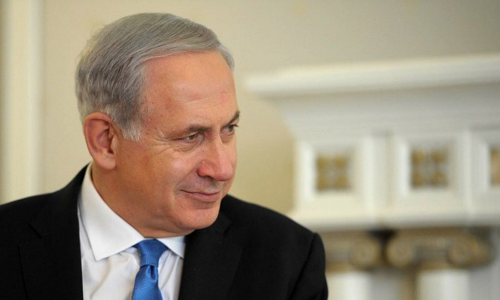
Israel’s allies in Washington and Brussels have pledged to ramp up sanctions against Iran, while British Foreign Secretary David Cameron and his German counterpart Annalena Baerbock became the first Western envoys to visit Israel since the attack.
2. Israel Mulls Response To Iranian Drone And Missile Attack – tippinsights
Israeli retaliation for Iran’s missile attack will focus on reestablishing deterrence and preventing similar attacks, but any response risks pushing the Middle East further toward all-out war.
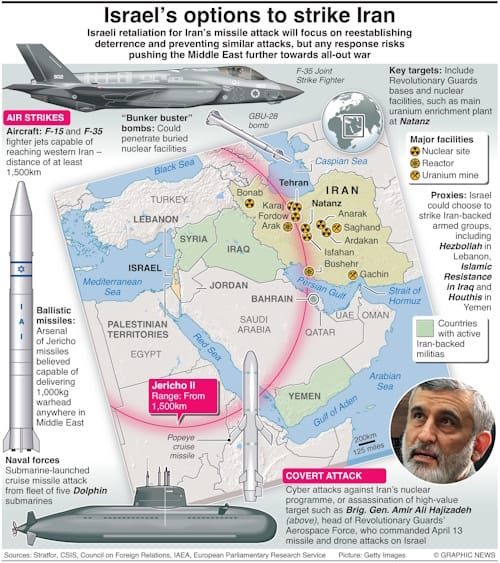
Allies, including the United States, have urged Israel not to risk igniting a wider regional conflict, and President Joe Biden has made clear U.S. forces would not join any retaliatory attack on Iran.
3. Iran-Israel Military Strength Compared – tippinsights
While the two countries do not share a common border, each has missile, aerial, and naval forces that can cause each other serious harm if tensions turn hot.
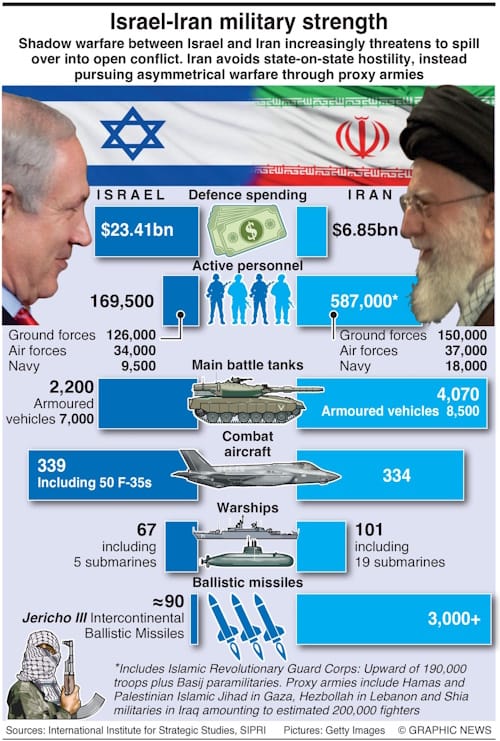
According to the London-based International Institute for Strategic Studies (IISS), the Iranian Armed Forces has around 587,000 active personnel and 200,000 reservists. Meanwhile, Israel has 169,500 active personnel and 465,000 reservists, around two-thirds of whom have been stationed near the Gaza Strip since Hamas’ attacks of October 7.
4. Qatar Says Reassessing Its Role As Mediator Between Israel And Hamas Due To Criticism – Reuters
Qatar cited concerns that its efforts are being undermined by politicians seeking to score points, its prime minister said.
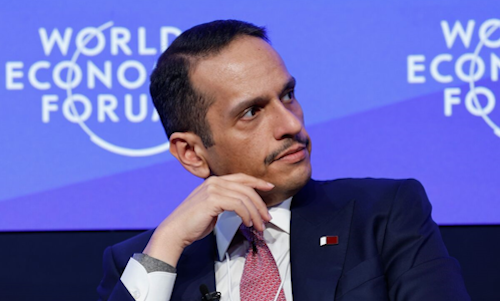
Qatari Prime Minister Sheikh Mohammed bin Abdulrahman al-Thani, who is also foreign minister, said there was a “misuse of this mediation for narrow political interests, and this necessitated Qatar to undertake a full evaluation of this role.”
Although Sheikh Mohammed did not identify any politicians by name, Qatar’s embassy in Washington criticized comments made by U.S. Democratic congressman Steny Hoyer, in which he called on the U.S. to “reevaluate” its relationship with Qatar.
5. The Talks That Could Have Ended the War In Ukraine – Foreign Affairs
By the end of the first month of the war in March 2022, a series of in-person meetings in Belarus and Turkey and virtual engagements over video conference had produced the so-called Istanbul Communiqué, which described a framework for a settlement.

Ukrainian and Russian negotiators began working on the text of a treaty, making substantial progress toward an agreement. But in May, the talks broke off.
Some observers and officials (including, most prominently, Russian President Vladimir Putin) have claimed that there was a deal on the table that would have ended the war but that the Ukrainians walked away from it because of a combination of pressure from their Western patrons and Kyiv’s hubristic assumptions about Russian military weakness.
6. U.S. Envoy On Ukraine’s Economic Recovery Says Reconstruction Process Already Under Way – RFE/RL
The U.S. and Ukraine’s other partners have already started working on Ukraine’s economic recovery because both Kyiv and its partners know that “part of Putin’s war strategy is to try and destroy Ukraine’s economy,” said the U.S. special envoy for Ukraine’s economic recovery.

Penny Pritzker, appointed to the post by President Joe Biden, said she and other partners have been working in the public and private sectors to strengthen the economic environment and enable private sector investment.
7. China Sends Jets To Warn U.S. Navy After Plane Flies Through Taiwan Strait – Reuters
China’s military said it sent fighter jets to monitor and warn a U.S. Navy patrol aircraft that flew over the sensitive Taiwan Strait. The mission took place just hours after a call between the Chinese and U.S. defense chiefs.
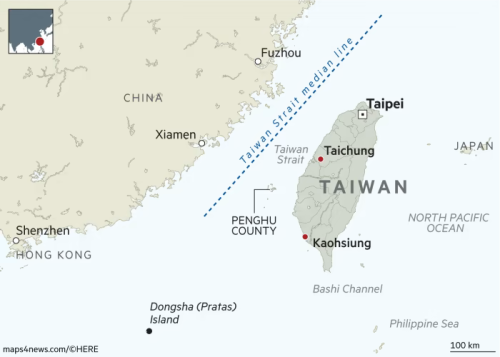
The U.S. Navy’s 7th Fleet said the P-8A Poseidon maritime patrol and reconnaissance plane flew over the strait in international airspace. China’s military described the flight as “public hype.”
8. Report: China Is Exporting Digital Control Methods – RFA
According to a new report, China’s government has turned its tech companies, such as Huawei and ZTE, into its “proxies.” It uses its dominant market share in developing countries to export its authoritarian model of the Internet.

The report “The Digital Silk Road: China and the Rise of Digital Repression in the Indo-Pacific” points to Cambodia, where it says, “China is present at virtually every layer of the digital ecosystem,” which it says has been marked by a “shift towards China-style digital authoritarianism.”
9. The West Says China Makes Too Much. Its Workers Disagree – BBC
The West has been accusing China of making far too much—this was the dominant message during U.S. Treasury Secretary Janet Yellen’s recent visit.

She chided Beijing for “unfair economic practices” for producing more than it needs or the world could afford to absorb. But workers in China grieve for the passing of China’s once unstoppable economy, which has made it harder for millions of workers to find jobs.
10. NASA Chief Warns Of Chinese Military Presence In Space – AFP
The head of the U.S. space agency said Wednesday that China is bolstering its space capabilities and using its civilian program to mask its military objectives, warning that Washington must remain vigilant.

“China has made extraordinary strides, especially in the last ten years, but they are very, very secretive,” NASA administrator Bill Nelson told lawmakers on Capitol Hill.
11. NASA Welcomes Switzerland, Sweden As Countries Sign Artemis Accords – UPI
Switzerland and Sweden became 37th and 38th countries, respectively, and signed the Artemis Accords, also known as the Outer Space Treaty.

The Artemis Accords, established by NASA and the U.S. State Department in 2020, spell out NASA standards and include an agreement on the rescue of astronauts. Currently, 38 nations make up the Artemis Accords.
12. Biden Warns U.S. Could Be Dragged Into War If Iran Succeeds In Attacking Israel – Al Arabiya
In an op-ed published in the Wall Street Journal, President Joe Biden was trying to convince American lawmakers to swiftly pass legislation for U.S. military aid to Ukraine and Israel.
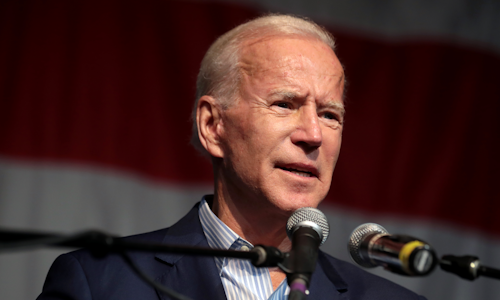
“Now is not the time to abandon our friends. The House must pass urgent national-security legislation for Ukraine and Israel, as well as desperately needed humanitarian aid for Palestinians in Gaza,” Biden wrote.
13. U.S. Plans New Sanctions On Iran After Attack On Israel – tippinsights
U.S. Treasury Secretary Janet Yellen said new sanctions could be announced within days and would likely focus on limiting Iran’s oil exports.
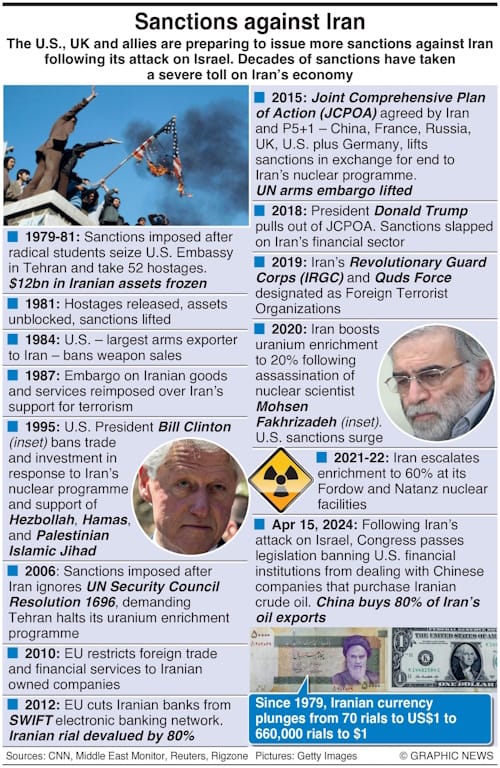
The U.S. will discuss Iran with finance ministers from the Group of 7 nations in Washington this week. The talks will center on plans to cut off Iran’s access to military components that it uses to build weapons, such as the Shahed drones that it deployed against Israel.
14. Orbán To Brussels: Time To Shake Up ‘Bad’ EU Leadership – Politico
Hungarian Prime Minister Viktor Orbán called for a change of leadership in Brussels as he blasted the European Union’s policies on migration and Ukraine.
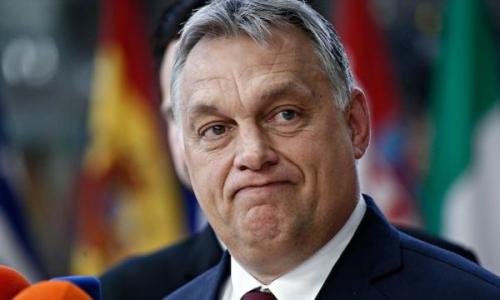
“The sense of this European election is to change the leadership,” the Hungarian leader said. “If the leadership proves to be bad, it must be replaced. It’s that simple.”
Orbán is bidding to tilt the EU in his direction after June’s European election, for which polls currently forecast a right-wing surge. A rightward swing could drastically shift EU policies on key issues from climate to the war in Ukraine.
15. Coffee In North Korea: It’s Not Just For Capitalists Anymore – RFA
Though coffee has long been derided as a symbol of imperialist capitalism, privileged North Koreans are developing a taste for it, residents in the country told Radio Free Asia.

“Until recently, coffee was perceived as a ‘luxury product symbolizing capitalism’ and incompatible with socialism.”
The North Hamgyong resident said coffee is also starting to be used as a bribe, replacing the traditional carton of cigarettes.
16. United States To Reimpose Sanctions On Venezuelan Oil Over Unfair Elections – UPI
A senior Biden administration official had indicated in a briefing with reporters that while President Nicolas Maduro met some of his country’s “key commitments,” Venezuela had “fallen short” of what they had said they would do.
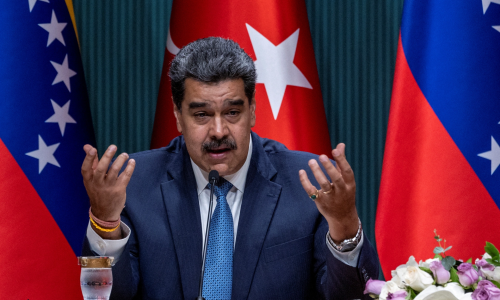
According to the Treasury Department, companies doing business with Venezuela will have 45 days to wind down their affairs.
17. America On EDGE: Voters Are Overwhelmingly Concerned About Violence Disrupting The 2024 Election And Reveal Their Fears Of Turmoil In A Shocking Daily Mail Poll – Daily Mail
Seven in ten Americans are worried about the 2024 election spiraling into violence, a DailyMail.com/TIPP poll shows.
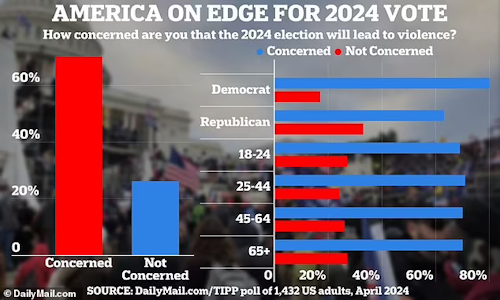
Fully 70 percent of respondents were worried about rising tensions in the White House race between President Joe Biden and his predecessor, Donald Trump. Another 26 percent said they were not concerned, and 4 percent said they were unsure.
18. Healthy Diet May Lower Risk Of Heart Disease For Breast Cancer Survivors – HealthDay News
Heart disease is a top cause of death in women who’ve survived breast cancer, likely due to the toxic effects of chemo, radiation, and targeted cancer therapy on the heart, researchers said.
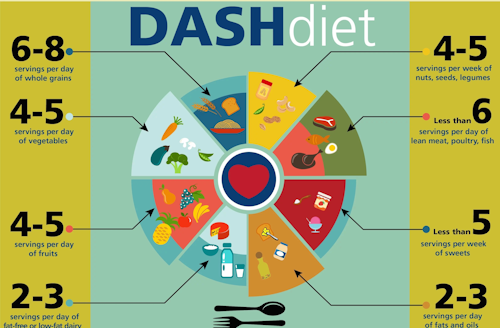
But, following a heart-healthy DASH (Dietary Approaches to Stop Hypertension) diet appears to blunt this risk, according to findings published in the journal JNCI Cancer Spectrum.
A DASH diet emphasizes fruits, vegetables, whole grains, lean protein, and low-fat dairy. It also limits salt, red and processed meats, and sugary beverages.
Republished with permission from TIPP Insights