Non-stop media coverage of campus protests at elite universities such as Columbia, Brown, and the University of Texas has failed to provide Americans with the historical context of civil unrest to understand its meaning.
The protests spearheaded by Mahatma Gandhi and Nelson Mandela – the gold standard of civil action – transcended mere demonstrations; they were movements against those in power who held the key to their relief. These historic movements serve as a benchmark by underscoring the profound commitment and organization required for effective change.
For governments to address deeply entrenched policies like the Israel-Palestine conflict, which has confounded every American President from both parties for over 50 years, it takes a lot more than campus protests in a third country that just started last week to tilt the scale. The demonstrations appear as though they are organized, judging by the consistent tent pitching, dancing, singing, and making demands such as divestation of funds in Israel. However, the protests lack seriousness and indications that students will persist in protesting beyond their current term. There’s not a single leader that we can turn to for clarification. Protests without leaders don’t have staying power and will likely result in anarchy, like the BLM-inspired summer riots of 2020. So, if there is any sort of organization at all at these campuses, it is weak and ineffective.
The truth is that well-organized protests, dating back to Gandhi during the Dandi March or Nelson Mandela’s Defiance Campaign, involved thousands of hidden hands and minds that did the heavy lifting before a single person showed up to protest. The Gandhi and Mandela demonstrations were focused and determined and went on for decades before success materialized. In both cases, the demonstrations were targeted in the jurisdictions where the bad policy prevailed and against officials who could provide relief. The current campus protests fail to meet any of these benchmarks.
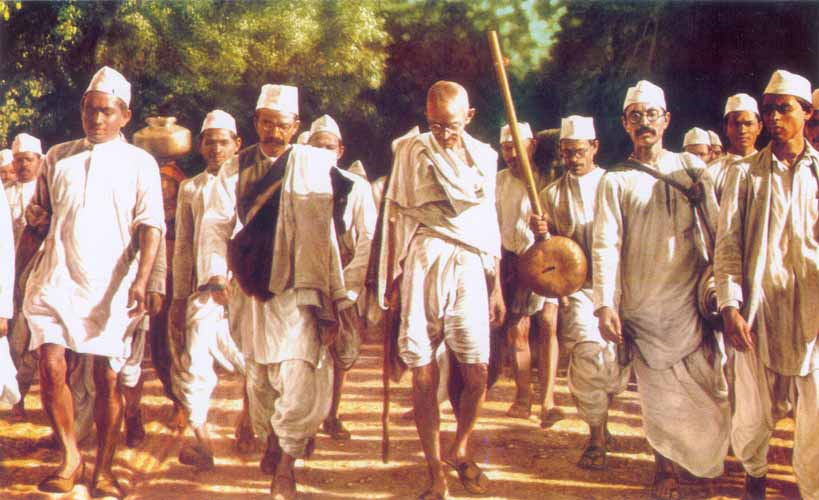
The Dandi March, also known as the Salt Satyagraha, became the gold standard of organized protest movements. Led by Mahatma Gandhi for 24 days in colonial India in March 1930, it aimed to challenge the British salt monopoly, which heavily taxed and restricted salt production and distribution in India. Gandhi’s approach (long before mobile phones, TV coverage, and social media) was breathtakingly simple. He announced to his supporters in his Sabarmati Ashram (near modern Ahmedabad) that he would walk to the coastal town of Dandi (near Surat) on the Arabian Sea coast in the western Indian state of Gujarat – and make salt.
The word spread like wildfire – and people began to join him en route in a powerful display of unity and solidarity. At each stop, Gandhi addressed crowds, highlighting the unfairness of the salt tax on poor people. It was a simple but elegant message. Who doesn’t use salt? And who wants to pay a disproportionate tax on the most vital commodity?
On April 6, 1930, at Dandi, Gandhi and his followers symbolically “produced” salt by picking up handfuls from the shore, thus breaking the law and challenging British authority. The Salt March gained widespread support among Indians and drew worldwide attention, marking a significant step in India’s struggle for independence.
It was the precursor to other non-violent demonstrations in colonial India that, unfortunately, often turned violent, showing how utterly helpless 10,000 British officers were to control the millions across India. Just 17 years later, the last British Governor-General of India, Earl Louis Mountbatten, declared that India would gain independence on August 15, 1947, along with the partition of the subcontinent into India and Pakistan.
Across multiple time zones and continents, Nelson Mandela, a prominent anti-apartheid activist and later South Africa’s first Black president, was inspired by Gandhi’s tactics. When apartheid became a state law in 1948, formalizing racial segregation and discrimination, Mandela and the African National Congress party engaged in non-violent tactics like strikes and demonstrations to protest apartheid. However, four years later, Mandela changed his tactics by leading what he called the Defiance Campaign, encouraging Black participants to actively violate discriminatory laws.
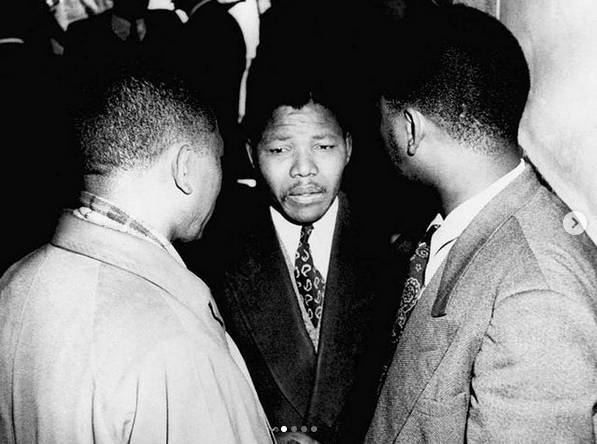
A turning point came in 1960 during the Sharpeville massacre, where 69 people were shot dead during a protest against the Pass Laws. The government declared a state of emergency, banned the ANC, and arrested hundreds of political activists, including Mandela, who was jailed for more than 28 years. Mandela’s life of resistance, imprisonment, and leadership culminated in his role as a unifying figure during South Africa’s transition out of apartheid. In 1994, he was elected President of South Africa in the country’s first free elections, marking the end of apartheid and the beginning of majority rule. Nelson Mandela’s legacy remains a powerful symbol of courage, resilience, and the fight for justice and equality.
The current campus protests bear little resemblance to the courage and conviction of Gandhi’s or Mandela’s campaigns. Besides, Gandhi and Mandela were ready to sacrifice their lives and endanger those of their supporters against violent action by authorities. The Israel-Palestine conflict has been going on for more than 60 years; why haven’t there been sustained demonstrations on college campuses during all this time? And, as usual, law enforcement takes the hit. Our men and women in blue are just doing their jobs to keep public campus spaces safe but have to endure untold tension in managing protesters that generally outnumber them. The police are blamed if they let protests grow out of hand, causing potential harm to innocent civilians. The police are blamed if they apply excess force to control demonstrations. There’s no win-win for law enforcement.
The media often simplifies the demonstrations as a conflict between the free expression of speech and law and order. The point is that every protest, dating back to Gandhi, was precisely that.
TIPP Takes
Geopolitics, Geoeconomics, And More
1. Hamas Says It Received Israel’s Response To Its Ceasefire Proposal – Reuters
Hamas said it had received on Saturday Israel’s official response to its latest ceasefire proposal and will study it before submitting its reply, the group’s deputy Gaza chief, Khalil Al-Hayya, said in a statement.

On Friday, an Egyptian delegation visited Israel to discuss the situation with Israeli officials. The official, who spoke anonymously, said Israel had no new proposals. However, it was willing to consider a limited truce in which 33 hostages would be released by Hamas instead of the 40 previously under discussion.
2. Israel Gives Hostage Deal “Last Chance” Before Rafah Attack: Reports – Indo-Asian News Service
An Israeli official was quoted as saying that Israel would not allow Hamas, in particular its leader in the Gaza Strip, Yahya al-Sinwar, to delay a hostage deal to prevent the planned military offensive in Rafah.

According to the Israeli media, the latest talks between Egyptian and Israeli representatives were initially intended to focus on a limited agreement with Hamas, whereby only some female, elderly, and sick hostages would be released. Hamas had rejected a U.S. proposal to release 40 such abductees.
According to them, there aren’t that many hostages left alive who fall into these categories. Hamas is calling for a permanent ceasefire in Gaza, a demand which Israel’s government rejects.
3. Hamas Criticizes U.S. Hostage Proposal For Not Meeting Permanent Ceasefire Demand – Reuters
Hamas criticized a proposal from the United States and 17 other countries that called on it to release all of its hostages as a pathway to end the crisis in Gaza, saying it failed to address Palestinian demands, a statement said.

The statement added that Hamas is open to ceasefire ideas and sticks to the main demands outlined by the group. Hamas is believed to be holding 129 hostages out of the 253 it took on Oct. 7.
4. Russia Targets Ukraine Railways As Western Aid Due To Arrive – AFP
Ukraine fears Russia is seeking to press its advantage on the battlefield ahead of symbolic May 9 Victory Day celebrations, as both sides continued to launch deadly cross-border strikes.

A Ukrainian security source said that Russia wanted to damage Ukrainian railway infrastructure to “paralyze deliveries and movement of military cargo” as Moscow prepares to advance.
5. Pentagon To ‘Rush’ Patriot Missiles To Ukraine In $6bn Package – BBC
Defense Secretary Lloyd Austin revealed that the U.S. will utilize $6 billion for this purpose on Friday. However, Patriot systems for launching the missiles will not be sent.

Mr. Austin said that the U.S. was committing to its largest security assistance package to date.
A source confirmed to the BBC that the $6bn was part of a $60bn aid package signed into law by President Joe Biden on Wednesday, which includes $1bn in more immediate aid.
6. On Chernobyl Anniversary, Zelenskiy Warns Zaporizhzhya Could Be Next – RFE/RL
Ukrainian President Volodymyr Zelenskiy said the continued occupation by Russia of Ukraine’s Zaporizhzhya nuclear power plant, which is Europe’s largest, heightens the danger of a nuclear catastrophe.

“For 785 days now, Russian terrorists have held hostage the Zaporizhzhia NPP,” Zelenskiy said in a message on X on the 38th anniversary of the Chernobyl nuclear accident.
7. Why Russia and Iran can dodge Western sanctions – D.W.
Despite existing sanctions against Iran’s oil industry, oil from Iran is being shipped to China in record volumes.

By rebranding Iranian oil, Malaysia became China’s fourth-largest foreign oil supplier last year, behind Saudi Arabia, Russia, and Iraq.
Following Western sanctions, Russia has had to establish similar trade routes to ensure a steady supply of vital goods for its economy. The former Soviet republics have been proving ideal for circumventing the embargoes because countries like Kazakhstan or Kyrgyzstan are part of a customs union with Moscow.
8. “China Willing To Cooperate, But…”: Xi Jinping Tells Antony Blinken – ANI
China is willing to cooperate with the United States, but the cooperation should be a “two-way street,” Chinese President Xi Jinping told U.S. Secretary of State Antony Blinken during the meeting in Beijing.

President Xi further affirmed the hope that both countries will continue working actively to stabilize, improve, and move forward in their bilateral relations.
Xi was quoted as saying, “As a Chinese saying goes, “No progress means regress.” This saying also applies to China-U.S. relations.
9. In Beijing, Blinken Says China Attempts To Interfere Upcoming U.S. Elections – ANI
Secretary of State Antony Blinken, while closing his three-day trip to China, said the U.S. has seen evidence of Chinese attempts to “influence and arguably interfere” with the upcoming U.S. elections, despite Chinese President Xi Jinping’s earlier commitment not to do so.

Blinken further noted concerns about China and other countries playing on existing social divisions in the U.S. in influence campaigns.
10. Rights Group: China Imprisons More Than 449,000 Uyghurs In Xinjiang – UPI
According to the Uyghur Human Rights Project, a Washington-based research and advocacy group, 1 in 26 Uyghurs and non-Han people in the Xinjiang Uyghur Autonomous Region in northwest China were incarcerated in 2022.

The report calculates that China currently imprisons more than 449,000 Uyghurs in Xinjiang, about one in 17.
While the Uyghur, a minority Muslim group, and non-Han population in Xinjiang made up only 1% of China’s overall population, the ethnic minority in the Uyghur Region accounts for 34% of the country’s estimated prison population.
11. Hungary Opens Up To Chinese Tech Despite Protests – BBC
Viktor Orban’s Fidesz government has trumpeted its “opening to the East.” China has an astonishing 79% share of the lithium-ion global battery manufacturing capacity. Hungary is third with 4%.

China’s CATL—the world’s biggest battery maker—has a strong foothold in eastern Hungary. In 2023, China became the single biggest investor in Hungary, with €10.7bn.
Environmental protests against the swathe of factories are growing despite near-silence in the Fidesz-controlled media about potential problems.
12. China’s Shein Fashion Retailer Faces Stricter EU Regulation – D.W.
The European Union on Friday added Chinese-founded fast-fashion company Shein to its list of very large online platforms (VLOP), which means it is subject to stricter online rules.

According to the bloc’s Digital Services Act (DSA), the listing applies to companies with over 45 million users. To be added to the list, companies must do more to fight illegal and harmful content, as well as counterfeit products, on their platforms.
13. Blinken Calls On China To Press N. Korea To End Its ‘Dangerous’ Behavior – Yonhap
Secretary of State Antony Blinken renewed his calls for China to exert its influence to press North Korea to cease its “dangerous” activities and return to dialogue during his talks with top Chinese officials in Beijing.

Blinken made the remarks during a press conference after he had separate meetings with Chinese President Xi Jinping, Foreign Minister Wang Yi, Minister of Public Security Wang Xiaohong, and other officials in the Chinese capital on the day.
14. North Korea Accuses U.S. Of Politicizing Human Rights Issues – Reuters
Pyongyang will make stern and decisive choices to protect its sovereignty and safety in response to Washington using human rights as a tool for invasion and hostile, anti-North Korea behavior, state media KCNA quoted a foreign ministry spokesperson as saying.

The spokesperson cited a special envoy on human rights in the administration of President Joe Biden. The envoy on North Korean human rights issues, Julie Turner, visited Seoul and Tokyo in February to discuss North Korea.
15. Burkina Faso Suspends BBC, Voice Of America For Reporting On Army Killings – Al Jazeera
Burkina Faso has suspended the BBC and Voice of America (VOA) radio networks from broadcasting for two weeks over their coverage of a report accusing the army of the extrajudicial killings of civilians, the authorities said.

In a new report published on Thursday, the international organization Human Rights Watch (HRW) said military forces “summarily executed” 223 civilians, including at least 56 children, in two villages in February. BBC Africa and the United States-funded VOA had published the report on their digital platforms.
16. Taking The Stairs May Up The Odds For A Longer Life – HealthDay News
Folks who regularly climb stairs have a 24% reduced risk of dying from any cause and a 39% reduced risk of dying from heart disease compared to those who always take the elevator, researchers found.

Stair climbing is also associated with a lower risk of developing heart disease or suffering a heart attack, heart failure, or stroke, results show.
Republished with permission from TIPP Insights