Vice President Kamala Harris’ past strong opposition to fracking and to former President Donald Trump’s “border wall” appears to have undergone a radical shift in recent weeks. But voters don’t think the shift is real. Indeed, more than half now call Harris’ abrupt policy changes on these hot-button issues “politically motivated,” the latest I&I/TIPP Poll shows.
With the election now merely weeks away, voters are looking at candidates stances on key issues to decide how they vote. But they also understand that, in politics, promises made on the campaign trail have a way of never being seen again once the candidate is elected.
Are voters having such a moment of recognition right now with Harris, who never faced primary voters and thus never had to fully explain all of her policy positions in detail?
It sure looks that way.
The national online I&I/TIPP Poll of 977 likely voters, taken from Oct.2-Oct.4, shows voters are highly suspicious of Harris and her recent policy changes. The poll has a +/-3.2 percentage point margin of error.
I&I/TIPP asked likely voters the following question: “Do you believe Kamala Harris’s positions on the following issues are genuine conversions or politically motivated for the coming election?” The issues included the “Border wall” and “Fracking.”
Among those responding to the border wall issue, 55% called it “politically motivated,” while just 34% deemed it “genuine conversion.”
As per usual in polling, Democrats and Republicans have very different views, with independents straddling the middle point between the two major parties.
Among Republicans, 80% agreed that Harris border wall shift was political in nature, while just 13% felt it was genuine, and 7% weren’t sure.
For Democrats, only 26% felt Harris’ change of heart on the wall to stem illegal immigration was politically motivated, while 60% called it a genuine policy change. Some 14% of Dems said they were “not sure.”
Independent and third-party voters split the difference, with 58% calling Harris’ border policy alteration political, as only 27% viewed it as not motivated by political considerations. And, like the Democrats, 14% of likely indie voters said they weren’t sure.
For the second part, I&I/TIPP asked the same question of Harris’ earlier opposition to oil and gas “fracking,” a technique used to gain access to vast pools of oil and natural gas underground that were previously inaccessible using traditional drilling methods.
Once again, overall 54% of voters called Harris’ policy metamorphosis “politically motivated,” while 30% thought it was genuine and 17% weren’t sure.
And, also once again, the fractures of our nation’s hyper-polarized political opinions show up in the data. Among Republicans, 78% believe Kamala’s shift was an act of political convenience, not genuine, while only 12% thought her policy switch was authentic.
Indie voters again stood in the center: 56% “politically motivated,” 25% “genuine,” and 19% “not sure.”
Among Dems, only 27% respond that it was political, 51% saying it was genuine, with nearly a quarter —22% — describing themselves as “not sure.”
In short, Democrats see things differently on these questions than the roughly two-thirds of American voters who don’t belong to their party.
This might not sound significant, but it is. Harris has been faulted even within her own party for not doing down-and-dirty campaigning in key swing states that could, and likely will, decide the election.
More problematic for her is the lingering impression on American voters that she bends with the political winds, even when they contradict her clear record as a progressive-left politician, both in California and on the national stage.
Border Wall: Popular With Voters
The border wall is a case in point. Democrats used it as a bludgeon against Trump while he was in office. Back then, Harris was calling for “decriminalizing” illegal immigration into the U.S., a wildly unpopular idea, especially in border states.
As such, her sudden acceptance of Trump’s border wall is a 180-degree turnabout. “Kamala Harris Shifts Stance On Border Wall, Supports Filling Strategic Gaps,” a Latin Times headline recently blared.
But the wall also has taken on symbolic significance, particularly since the mass entry of some 11 million or so new illegal immigrants under the Biden-Harris administration.
The indiscriminate immigration of possible terrorists, cartel gang members, sex traffickers and convicted violent criminals has alarmed even non-border states, previously lacking any exposure to the negative effects of uncontrolled immigration. Building the wall is hugely popular with voters.
Fracking’s Economic Impact
As for fracking, not to mention drilling of any kind for oil and gas, Harris in the past has strongly opposed conventional fossil-fuel energy in favor of far-more expensive, and far-less efficient “green” energy, such as wind, solar and hydrogen.
Indeed, in the Senate, she co-sponsored the radically energy-restrictive Green New Deal plan in Congress, to the alarm of the energy industry and many states whose economies depend on oil.
During the 2020 campaign, Harris told a Climate Town Hall: “”There’s no question, I’m in favor of banning fracking.”
It’s a remark that has come back to haunt her, especially in big swing states like Pennsylvania, the fourth-largest energy producer in the U.S. that also has a hefty 19 presidential electoral votes, same as Michigan.
Right now, Harris and Trump are running neck and neck in the state.
A number of other energy-rich states would also likely be hurt by a fracking ban, or any other broad-based energy restrictions. A 2020 study conducted on behalf of the American Petroleum Institute warned that a total ban on fracking could cost Texas, California, Florida, Pennsylvania, and Ohio (another swing state) as many as 3.6 million jobs.
“Given fracking’s history of boosting local and state economies, and the heavy criticism from environmentalists regarding air and water pollution risks, the drilling technology is expected to remain top of mind for voters as the nation approaches Nov. 5,” wrote the Washington Examiner.
Which may be why Harris is backing off her earlier extreme anti-fossil-fuel energy stance.
“Since ascending to the top of the Democratic ticket, Harris has backed away from banning fracking, saying she now believes the clean energy economy can grow without having to ban fracking,” the Wall Street Journal said.
She has also since 2020 repudiated the massively costly Green New Deal, despite earlier support. If passed, that draconian law would literally have bankrupted many energy states’ local economies.
In addition to fracking and the border wall, Harris also has backed away from earlier ardent advocacy of the electric vehicle mandate, which would be a death knell for what remains of Detroit and the internal combustion engine, and Medicare For All, a plan to impose socialized medicine on the U.S.
Even mainstream news media have noted that Harris’ notable flip-flops on key issues have dented her credibility and perhaps hurt her in the upcoming election.
“Across two decades in elected office and now seeking the presidency for the second time, Harris has not hesitated to stake out expedient and — at times — contradictory positions as she climbed the political ladder,” the Associated Press noted, adding: “Harris’ litany of policy reversals is opening her to attacks by Republicans and testing the strength of her pitch to voters as a truth-teller who is more credible than former President Donald Trump.”
With her earlier lead in the polls shrinking, maybe it shouldn’t be a surprise that Harris is altering her past highly unpopular advocacy for sweeping, even radical, changes to America’s economy. But will voters buy it? That remains to be seen.
I&I/TIPP publishes timely, unique, and informative data each month on topics of public interest. TIPP’s reputation for polling excellence comes from being the most accurate pollster for the past five presidential elections.
Terry Jones is an editor of Issues & Insights. His four decades of journalism experience include serving as national issues editor, economics editor, and editorial page editor for Investor’s Business Daily.
TIPP Picks
Selected by tippinsights
TIPP Tracking Poll Day 5: Race Tightens Again – TIPP Insights
Electoral Showdown 2024: Latest Win Probabilities – October 18 – TIPP Insights
4 Takeaways From Kamala Harris’ Fox News Interview With Bret Baier – Tyler O’Neil, The Daily Signal
Drug Costs Explode As Kamalanomics Massively Backfires – I & I Editorial Board, Issues & Insights
Beware Of War Hawks In “America First” Clothing – Connor O’Keeffe, Mises Institute
‘Progressive’ California At War With Progress – I & I Editorial Board, Issues & Insights
Russia’s Gaining Ground in Ukraine, While Biden Administration Tries To Gaslight American Muslim Voters – Larry C. Johnson, SONAR21
TIPP Takes
Geopolitics, Geoeconomics, And More
1. Yahya Sinwar, Leader Of Hamas, Killed By Israeli Forces – BBC
The Israeli military said Sinwar was among three militants killed on Wednesday in Rafah in the south of the territory.
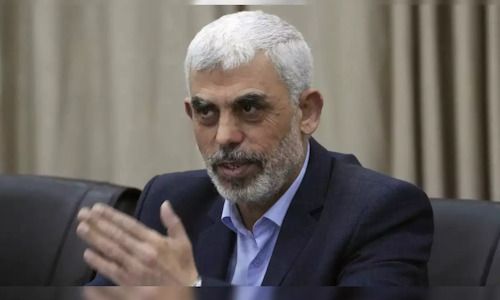
Benjamin Netanyahu, Israel’s prime minister, said the killing of the Hamas chief marked not the end but the “beginning of the end” of the year-long war in Gaza. Sinwar had led the armed group in Gaza since 2017 and was described by Israel, the U.S., and the UK as the mastermind behind the 7 October attacks – when Hamas gunmen killed around 1,200 people in Israel and took 251 hostages.
2. Biden Says Chance For ‘Day After’ In Gaza Without Hamas Possible After Sinwar’s Death – Al Arabiya
President Biden released a statement after Israel said its forces killed the Hamas chief in a Gaza operation.
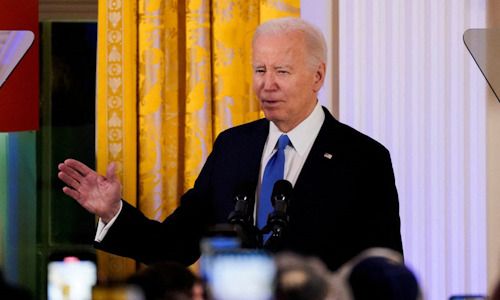
“This is a good day for Israel, for the United States, and for the world,” Biden said. President Joe Biden says there is now an opportunity to end the Gaza war and for a “day after” without Hamas in power after the killing of Yahya Sinwar.
3. Iran Says ‘Spirit Of Resistance Will Be Strengthened’ After Sinwar Killing – Al Arabiya
“The spirit of resistance will be strengthened. He will become a model for the youth and children who will carry forward his path toward the liberation of Palestine,” Iran’s mission to the United Nations said in a post on X.
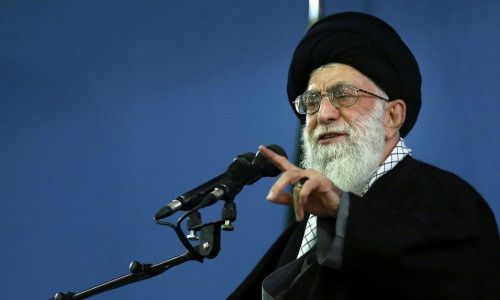
“As long as occupation and aggression exist, resistance will endure, for the martyr remains alive and a source of inspiration.”
4. U.S. Sanctions Russia Drone Production Network, Including Chinese-Based Companies – UPI
The sanctioned entities were Chinese-based Xiamen Limbach Aircraft Engine Co., Ltd., Redlepus Vector Industry Shenzhen Co Ltd., and Russia-based Limited Liability Company Trading House Vector.

The U.S. Treasury Department said these are the first U.S. sanctions “imposed on PRC entities directly developing and producing complete weapons systems in partnership with Russian firms.”
5. Russian Lawmakers Push Through Ban On Childless ‘Propaganda’ – D.W.
A group of Russian lawmakers approved legislation that would prohibit child-free “propaganda.”
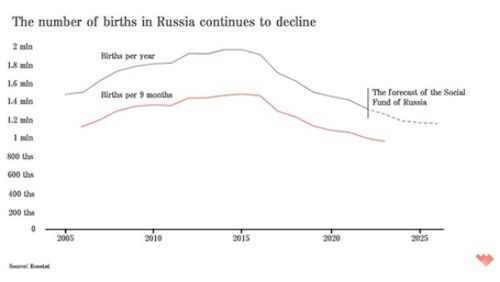
“It is important to protect people, primarily the younger generation, from having the ideology of childlessness imposed on them on the internet, in the media, in movies, and advertising,” Vyacheslav Volodin, the speaker of Russia’s lower house of parliament, or Duma, said.
Russian President Vladimir Putin has urged couples to have children as the country’s birth rate drops.
6. China Economy Slowdown Deepens, Official Figures Show – BBC
China’s economy expanded in the third quarter at the slowest pace since early last year as the country struggles to boost flagging growth.

On an annual basis, gross domestic product (GDP) rose by 4.6% in the three months to the end of September, according to China’s National Bureau of Statistics. That is less than the previous quarter and below the government’s “around 5%” target for this year.
This is the second quarter in a row that China’s official measure of economic growth has fallen below the 5% target, which will add to government concerns.
7. U.S., Taiwan To Upgrade Combat Data Network In Face Of China Threat – Nikkei Asia
The U.S. and Taiwan will revamp a military communication system to improve their armed forces’ ability to work together in the event of aggression against the self-governing island.
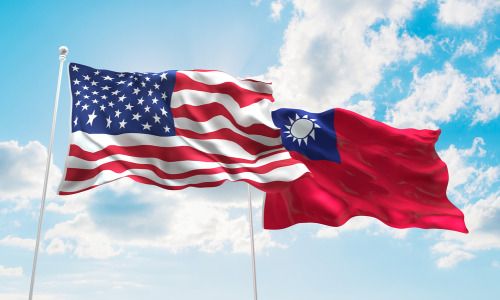
The upgrade to Link 16, which enables the exchange of tactical data in real time between military platforms and units, will make it compatible with the advanced F-16V fighter jets, M1 Abrams tanks, and other military equipment arriving from the U.S.
8. China Building Capacity To Rapidly Strike Taiwan, Senior Taiwanese Official Says – Reuters
China, which views democratically governed Taiwan as its own territory, staged large-scale drills on Monday that it said were a warning to “separatist acts” following last week’s National Day speech by Taiwan President Lai Ching-te.
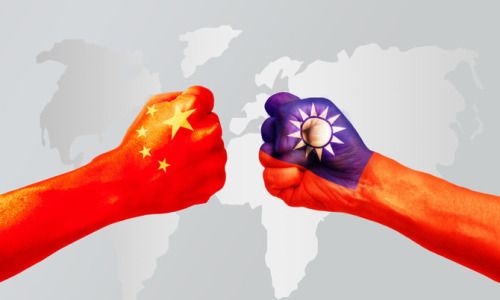
Taiwan reported a record 153 Chinese aircraft took part in the drills, an official said, adding that an unprecedented 25 Chinese Navy and Coast Guard boats also approached close to Taiwan’s 24-mile (39-km) contiguous zone.
9. Report: Communist China’s Spying ‘Expanded Rapidly’ Across 20 States Under Biden And Harris – The Federalist
Chinese Communist Party (CCP) spying in the United States “expanded rapidly” under the Biden-Harris administration’s watch, according to a congressional report released.
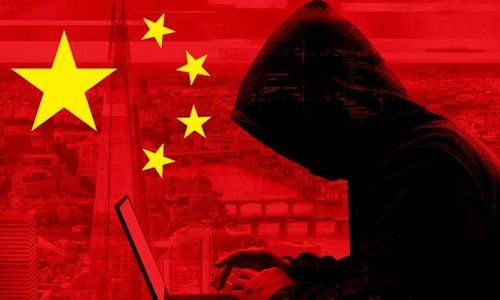
According to the report, there were more than 55 “CCP-related espionage cases in 20 states” from January 2021 to October 2024.
10. British Regulator Warns Tech Companies Of Possible Significant Fines Under Online Safety Law – UPI
In a progress update, Britain’s independent communications regulator Ofcom warned tech companies that as new online safety laws take effect in December, they could face enforcement action, including significant fines.
Tech firms will have three months to complete illegal harms assessments on their online platforms starting in December. By March 2025 platforms must finish their illegal harms assessments and put appropriate safety measures in place.
11. U.S., Allies Establish North Korean Sanctions Monitoring Team After Russian Veto – UPI
The United States, South Korea, Japan, and eight other countries formed a new multilateral team to monitor and report on violations of U.N. sanctions on North Korea, the group said in a joint statement.
The move came after Russia used its U.N. Security Council veto earlier this year to end the mandate of the Panel of Experts, which had overseen North Korean sanctions monitoring since 2009.
12. Youth Tobacco Use Reaches 25-Year Low, CDC Says – UPI Health
About 2.25 million U.S. middle- and high-school students this year say they use tobacco products, which is 500,000 fewer than a year ago, the Centers for Disease Control said.

The current number of youth who use tobacco products is the lowest number in 25 years and down from 2.8 million in 2023, according to the CDC. E-cigarettes are the most commonly used tobacco product among youth, with 5.9% of smokers saying they use them versus 1.4% using cigarettes and 1.2% cigars.
13. Just Standing More Might Not Benefit Health – HealthDay News
The study of over 83,000 British adults who wore special movement monitors on their wrists found no benefit to exchanging sitting for standing, in the absence of actual movement or exercise.

Australian researchers said prolonged standing might even be detrimental to the heart, upping the odds for issues like varicose veins or leg clots known as deep vein thrombosis (DVT). However, none of the new findings mean that folks should dismantle their standing desks and return to sitting. Instead, the team said, work more movement into your day.
Republished with permission from TIPP Insights