Nearly 18 months ago, we predicted in these pages that the Ukraine war would last until January 2025. The prediction was based on the fundamental reality that America’s support for the war hinged on President Biden’s political priorities, and that all the public rhetoric was just talk.
Biden’s involvement in the Ukraine war was always a step behind what was needed to help Ukraine win. He was profoundly concerned and scared that Russia might escalate the conflict to involve Europe and the United States. As the world’s most significant nuclear power fighting an existential war, Russia couldn’t afford to lose.
Before Russia’s full-scale invasion of Ukraine in February 2022, critics argued that the U.S. was slow to provide Ukraine with the kind of heavy weaponry (e.g., artillery and tanks) needed to defend itself against Russia’s growing military buildup. In the early months of the war, Ukraine was vocal in requesting more advanced weapons to counter Russian air superiority, particularly MiG-29 fighter jets, Patriot missile defense systems, and long-range artillery. It took months for Biden to send advanced rocket systems (like HIMARS) to Kyiv.
To this day, Biden has cleverly avoided identifying a defined objective other than having his senior cabinet officials talk in broad terms. Speaking at the U.N. Security Council in September 2022, Secretary Antony Blinken made the case for United States support:
We cannot – we will not – allow President Putin to get away with it. Defending Ukraine’s sovereignty and territorial integrity is about much more than standing up for one nation’s right to choose its own path, fundamental as that right is. It’s also about protecting an international order where no nation can redraw the borders of another by force.
Blinken’s Utopian goal formed the text of Vice President Kamala Harris’s Ukraine policy. But, as has been the case for the last three years, the goal was short on critical questions. How long would the support last? Biden’s answer: As long as it takes. How much money would it take? Biden’s answer: Whatever funds to keep the war alive. These open-ended responses should not have become the foundation of a complex policy for war.
The West could not even agree on the war’s goal. Even as Ukraine has continued to lose territory to Russia, Kyiv insists that every square inch of land, going back to Russia’s Crimean invasion in 2014, should be returned before peace talks can begin. Only in recent months has the West started to see that Ukraine’s goals are impractical. History repeatedly tells us that losing sides don’t get to set preconditions for peace negotiations.
Biden’s intention was to prove to American voters and the world that, unlike President-elect Trump (who is inward-looking in his foreign policy approach), he would restore America’s standing as the leader of the rules-based international order. He would unite Europe by spearheading NATO membership offers to Finland and Sweden, two traditionally neutral countries with long relationships with Russia. Biden would leverage Europe’s financial infrastructure, including Europe’s leadership in the maritime industry, to impose back-breaking sanctions against Russia to teach Moscow a lesson. The United States would become the largest funder of Ukraine’s defense.
Biden’s calculations would have made sense had Ukraine won the war. If Russia had retreated and Ukraine had recovered its lost territory, Biden and Harris would have taken a victory lap around the world. Biden would probably not have agreed to step down as a candidate, arguing that he could defeat Trump in the November election because his proven vision of protecting the world order is vastly superior to Trump’s isolationist MAGA movement.
But Ukraine is losing, which, by extension, means that America’s foreign policy is losing. After more than $176 billion spent on the war, Ukraine is in shambles with nothing to show for all that was spent.
Voters have punished all the leaders of the West’s support for Ukraine, humiliating them at the polls.
Trump won 312 electoral college votes and flipped the Senate to a 4+ GOP margin. He swept all seven battleground states and is currently leading the popular vote. The House will remain in GOP control with several races in California yet to be called.
In the United Kingdom, where Conservative Party leaders Boris Johnson and Rishi Sunak went all in to support Ukraine, voters dealt a death blow unseen in modern times. The Tories lost 75 seats in Parliament, nearly 40% of their strength. Inflation and other factors mattered, too, but Ukraine was always front and center.
Spain’s Prime Minister, Pedro Sánchez, lost to the People’s Party and Santiago Abascal’s Vox in the general election last December. In France, the right-wing party led by Marine Le Pen, a staunch anti-Ukraine voice, trounced Prime Minister Macron at the end of the first round vote. It was only because of France’s unusual electoral system, where parties can unite in the second round vote, that Macron engineered an 11th-hour compromise, preventing Le Pen from taking power in the French Parliament.
The opposite is true also. Leaders who have championed peace and ending hostilities since the conflict started have won comfortably. Turkish president Erdoğan resoundingly won reelection in a runoff, much to the ire of the entire Western coalition. Hungary was the first country in the E.U. to test the Western response to the war after Russia invaded Ukraine. Viktor Orbán’s Fidesz party won a decisive victory in Hungary’s parliamentary elections, securing 135 seats out of 199, which gave them a supermajority in the National Assembly. Orbán’s win came despite significant opposition efforts.
With Trump now firmly in the saddle and already having called Putin and Zelenskyy, the writing is becoming more apparent. Trump’s Vice President, JD Vance, has been an arch-opponent of Ukraine funding throughout his Senate career. Trump’s choice for Secretary of State, Florida Sen. Marco Rubio, has publicly said that America is funding a stalemate in Ukraine and that the war needs to be brought to a conclusion. Trump’s choice for U.N. Ambassador is Elise Stefanik, who voted against funding Ukraine.
History is solidly behind Trump. In Vietnam (Nixon), Iraq (Obama), and Afghanistan (Biden), it took a president from the opposing party to stop a war.
The voters have spoken. The meaningless Russia-Ukraine war, which has killed and wounded millions, displaced millions, destroyed Ukraine, and brought needless strife in much of the world, should come to an end.
TIPP Takes
Geopolitics, Geoeconomics, And More
1. Yemen’s Houthis Attacked Two U.S. Destroyers With Drones, Ballistic Missiles: Pentagon – Al Arabiya
Yemen’s Houthis attacked two U.S. destroyers with at least eight one-way attack drones, five anti-ship ballistic missiles, and three anti-ship cruise missiles, the Pentagon said.

Pentagon Press Secretary Maj. Gen. Pat Ryder said in a press briefing that the U.S. military successfully downed them all. Ryder also rejected the Houthi claim that they also targeted the U.S. aircraft carrier in the Red Sea, the USS Abraham Lincoln.
2. Hezbollah Down But ‘Far From Out,’ Top U.S. Intelligence Official Warns – Al Arabiya
A top U.S. intelligence official said that Hezbollah’s capabilities had been significantly degraded, but their ground forces along the border with Israel remain largely intact.

“It still remains down, but far from out,” said Brett Holmgren, the acting Director of the National Counterterrorism Center. The official also said that the Lebanese group, armed and funded largely by Iran, still had the ability to conduct attacks abroad.
3. Middle East: UN Aid Chief Condemns ‘Daily Cruelty’ In Gaza – D.W.
Joyce Msuya, interim chief of the UN humanitarian agency OCHA, said: “The daily cruelty we see in Gaza seems to have no limits.”

Meanwhile, a group of eight charities accused Israel of failing to comply with a U.S. demand to facilitate the flow of relief into the war-torn territory. They said the humanitarian situation had reached the lowest point since the war begin in October 2023.
4. US Says It Intends To Shore Up Support For Ukraine Until Trump Takes Office – AP
President Joe Biden intends to bolster U.S. military support to Ukraine in the final months of his administration, U.S. Secretary of State Antony Blinken said on Wednesday, after Russia launched a sophisticated missile and drone attack on Kyiv.
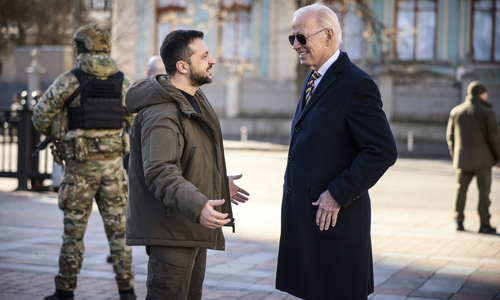
Trump has slammed the Biden administration for giving Kyiv tens of billions of dollars in aid and has promised to end the conflict quickly. Ukraine’s international backers fear that any rushed settlement would mostly benefit Russian President Vladimir Putin.
5. Russia Issues Warrant For International Criminal Court Judge – Current Time
A Moscow court has issued an arrest warrant for International Criminal Court (ICC) Judge Haykel Ben Mahfoudh on a charge of “illegal incarceration.”
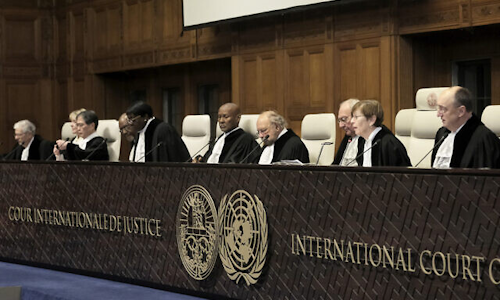
The court said that the charge stemmed from the ICC’s issuance of arrest warrants for former Russian Defense Minister Sergei Shoigu and armed forces Chief of Staff Valery Gerasimov.
6. Bill Banning ‘Childfree Propaganda’ Gets Final Approval From Russian Lawmakers – Current Time
Russia’s State Duma passed a bill that would ban “childfree propaganda,” marking the government’s latest move to regulate social discourse while pushing President Vladimir Putin’s “family values” agenda.
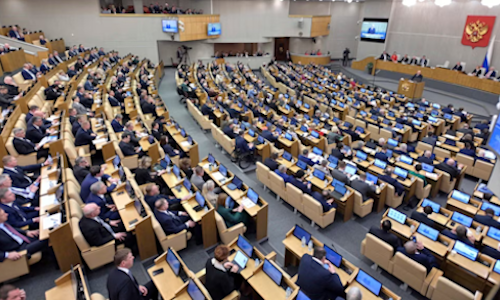
The bill now awaits approval from the Federation Council, the upper house of parliament, before Putin can sign it into law. The legislation imposes fines for promoting the choice not to have children, with penalties reaching up to 5 million rubles ($51,150) for organizations and 400,000 rubles ($4,090) for individuals. Russia faces a significant population decline, an issue Putin has frequently highlighted as urgent.
7. China, Russia Must Fight U.S. ‘Containment’ – Official – AFP
“The comprehensive partnership and strategic cooperation [between China and Russia] represent a model of collaboration between two powers in today’s world,” senior Russian official Sergei Shoigu told China’s Foreign Minister Wang as they met for security talks in Beijing.
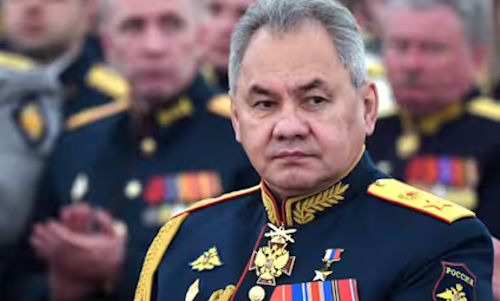
Moscow and Beijing have expanded military and defense ties since Russia sent troops to Ukraine nearly three years ago, with Chinese President Xi Jinping one of Russian President Vladimir Putin’s most important allies on the world stage.
8. Philippines Rejects China’s New Map Claim In South China Sea – RFA
The Philippines protested against China’s recent unilateral announcement of the baselines around the disputed Scarborough Shoal in the South China Sea, calling it a violation of “the Philippines’ long-established sovereignty over the shoal.”
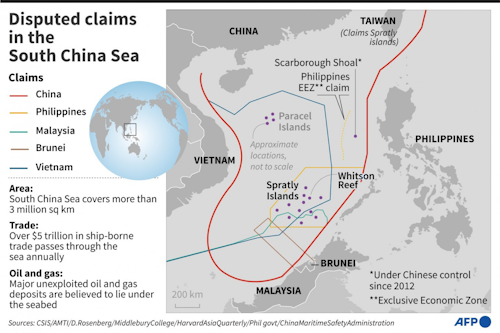
China announced the baselines of its territorial sea around the shoal to strengthen its claim over the South China Sea feature that lies within the Philippines’ exclusive economic zone. Beijing also formally named 64 islands and reefs, many claimed by several countries, risking escalating tensions with its neighbors.
9. Japan Embassy In China Urges Citizens To Not ‘Talk Loudly In Japanese’ After Zhuhai Car Attack – AFP
Japan’s embassy in China warned its citizens to be on high alert and not speak loudly in Japanese after a car attack killed 35 people in the southern Chinese city of Zhuhai on Monday.
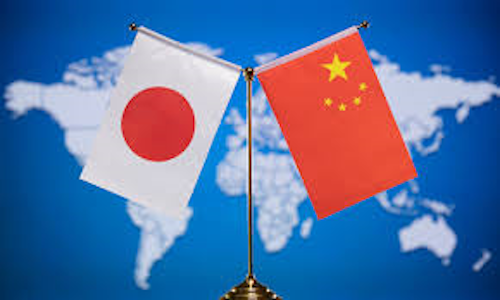
Tokyo has recently voiced concerns over the safety of its citizens in China after a Japanese schoolboy was fatally stabbed in neighboring Shenzhen in September.
10. Germany Set For Snap Elections In February – Al Jazeera
Germany is set to hold snap elections on February 23, to establish a stable government following the collapse of Chancellor Olaf Scholz’s three-party coalition last week.

The election date, agreed upon by the country’s two biggest parties, represents a compromise between the conservative opposition, which pushed for a January vote to avoid leaving Germany without clear leadership, and Scholz, who preferred mid-March to allow more time for authorities and parties to prepare.
11. North Korea Stays Silent On Trump’s Win For 1 Week – Yonhap
North Korea has remained mum about former U.S. President Donald Trump’s reelection for a week, despite the significance the outcome might hold for the North’s leader, Kim Jong-un, and his regime.
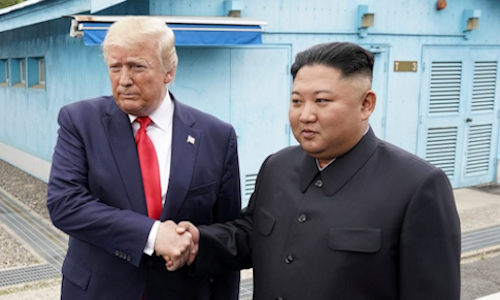
As of early Wednesday, none of the North’s state media had published any articles, commentaries or broadcasts about Trump’s election victory. However, this is not rare considering that it took a similar course in the past. North Korea has a track record of delaying reports on U.S. presidential election outcomes.
12. Haiti Could Be ‘Completely Isolated’ As Gunfire Closes Main Airport Again – Al Jazeera
Haiti’s main international airport remains shut down for the second time this year after three United States commercial passenger planes were hit by suspected gang gunfire, leaving the conflict-torn state cut off from the travel industry.

On Tuesday, the U.S. Federal Aviation Administration (FAA) banned all U.S. airlines from operating in Haiti for 30 days, citing two incidents involving planes from Spirit Airlines and JetBlue Airways.
13. VW Launches $5.8bn Tie-Up With Tesla Rival Rivian – BBC
Volkswagen Group (VW) and Tesla rival Rivian have launched a joint venture, with the deal now worth $5.8bn – up from an initial pledge from VW of $5bn.

The tie-up will see the firms sharing critical technology at a time of slowing global demand for electric cars and increased competition from Chinese rivals. The joint venture provides loss-making Rivian with a crucial source of funding as it prepares for the launch next year of its R2 model – a sports utility vehicle (SUV) that is smaller and more affordable than its current offerings.
14. Oil And Gas Are A ‘Gift Of God’, Says COP29 Host – BBC
The president of COP29’s host country has told the UN climate conference that oil and gas are a “gift of god.”
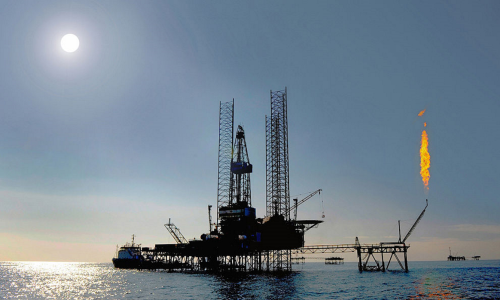
Azerbaijan’s President Ilham Aliyev criticized “Western fake news” about the country’s emissions and said nations “should not be blamed” for having fossil fuel reserves. The country plans to expand gas production by up to a third over the next decade.
Shortly afterward, UN chief António Guterres told the conference that doubling down on the use of fossil fuels was “absurd.”
15. Tesla And 2 More Stock Picks To Invest In The ‘Red Wave’ Election Results – Barchart.com
Analysts at Oppenheimer have highlighted three stocks that could benefit from anticipated policy changes under the incoming “Red Wave” in Washington, D.C.
Investors have been quick to cheer President-elect Trump’s expected pro-business agenda, which is broadly anticipated to feature investments in domestic manufacturing and infrastructure, widespread deregulation, and fresh tax incentives.
16. Bitcoin Neared $90,000 In A New Record High. What To Know About Crypto’s Post-Election rally – AP
As money continues to pour into crypto following Donald Trump’s reelection last week, bitcoin has climbed to yet another record high.
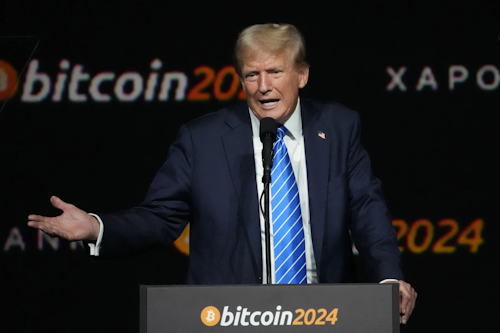
The world’s largest cryptocurrency topped $89,000 for the first time, briefly peaking at $89,995 early Tuesday, according to CoinDesk. Bitcoin’s price oscillated throughout the day but is still up more than 27% over the last week — standing at about $88,288 as of 5 p.m. ET.
17. Vitamin D Supplements May Help Lower Blood Pressure In Obese Seniors – HealthDay News
Researchers report in the Journal of the Endocrine Society that taking more than the recommended daily dose does not provide additional health benefits.

Background notes from researchers say studies have linked vitamin D deficiency to an increased risk of high blood pressure. However, there’s not solid evidence that taking vitamin D supplements can help lower blood pressure. The recommended daily dose of vitamin D is 600 IU, or about 15 micrograms.
18. Poll Finds Mental Health Benefits For Seniors With Grandchildren – HealthDay News
Overall, 72% of people with grandkids say they hardly ever feel isolated, compared with 62% of those without grandchildren, according to results from the University of Michigan’s National Poll on Healthy Aging.

People without grandchildren also are more likely to say their mental health is only fair or poor – 13% compared to 9% with those who have grandkids.
Republished with permission from TIPP Insights