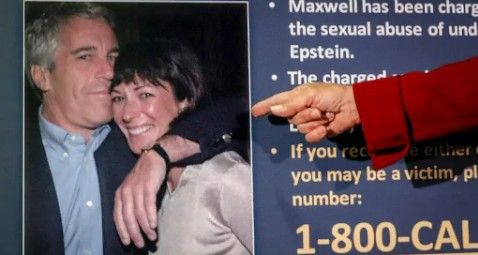
A federal judge on Monday rejected the Justice Department’s request to unseal grand jury materials used in charging Ghislaine Maxwell, the longtime confidante of Jeffrey Epstein—the disgraced financier and convicted sex offender. This decision, made by U.S. District Judge Paul Engelmayer, an appointee of former President Barack Obama, flies in the face of public outcry for transparency and justice.
The Trump administration, responding to growing grassroots pressure—including from much of President Trump’s conservative base—had sought to lift the traditional veil of secrecy surrounding grand jury proceedings. The goal? To shed more light on a scandal that implicates high-profile elites and continues to raise serious questions about government integrity and the accountability of the ruling class.
But Judge Engelmayer disagreed, dismissing the government’s arguments and the public’s right to know. “Contrary to the Government’s depiction, the Maxwell grand jury testimony is not a matter of significant historical or public interest. Far from it,” Engelmayer stated in his 31-page ruling. He went on to describe the grand jury materials as “garden-variety summary testimony by two law enforcement agents,” claiming the contents were “already almost entirely a matter of longstanding public record.”
That assessment has been widely questioned, especially by conservatives who have long argued that the Epstein saga is one of the most glaring examples of two-tiered justice in America. With political elites, royalty, and media powerbrokers allegedly connected to Epstein’s web, the secrecy surrounding the case has only fueled suspicion and skepticism.
Engelmayer’s ruling echoes a similar decision made by a Florida judge years earlier, who also blocked the release of grand jury materials related to Epstein’s earlier investigation in the 2000s. Now, all eyes turn to yet another judge in New York, who has yet to rule on whether the grand jury materials tied to Epstein’s 2019 indictment—shortly before his controversial jailhouse death—should be unsealed.
The Justice Department, under the Trump administration, had hoped to bolster public trust by pushing for limited unsealing of the materials, with appropriate redactions to protect the victims. The move followed the release of a joint DOJ-FBI memo last month that reiterated the official stance: Epstein died by suicide in his Manhattan jail cell in 2019, and investigators found no “incriminating client list.”
However, that narrative didn’t sit well with many conservatives, especially after Attorney General Pam Bondi, in February, claimed that a client list was “sitting on my desk right now.” MAGA-aligned figures and prominent conservative influencers have called for full transparency, accusing the DOJ of shielding powerful figures from scrutiny.
In a more scolding part of the ruling, the judge wrote, “The one colorable argument under that doctrine for unsealing in this case, in fact, is that doing so would expose as disingenuous the Government’s public explanations for moving to unseal.”