

In election seasons, this is what they call an “October Surprise,” only, this one likely doesn’t surprise too many of us.
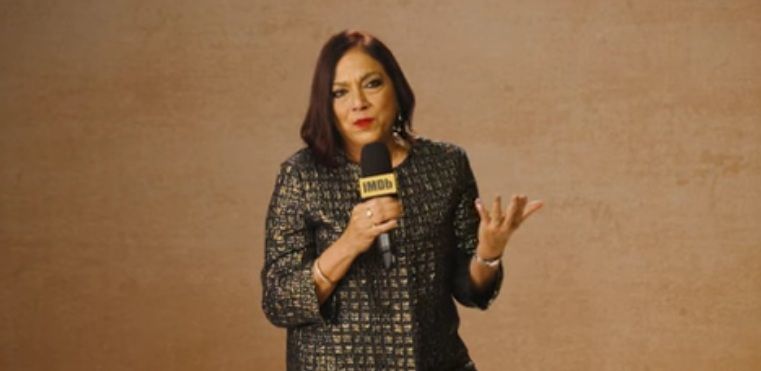
A resurfaced 2013 interview with filmmaker Mira Nair has reignited questions about the true loyalties of her son, socialist New York City mayoral candidate Zohran Mamdani. Speaking to the Hindustan Times when her son was a 21-year-old student at Bowdoin College, Nair proudly declared, “He is a total desi. Completely. We are not firangs at all. He is very much us. He is not an Uhmericcan (American) at all.” At the time, Mamdani had co-founded the campus chapter of Students for Justice in Palestine and was calling for academic sanctions against Israel. “He was born in Uganda, raised between India and America. He is at home in many places. He thinks of himself as a Ugandan and as an Indian,” Nair said.
In Hindi and Urdu, the word “firang” is an old informal term meaning foreigner or Westerner. It is not exactly a compliment. To many, Nair’s phrasing sounded like more than cultural nostalgia—it sounded like rejection. As GOP consultant Mehek Cooke, an attorney who immigrated from India, explained to Fox News Digital, “It’s not some harmless cultural term, but rather a slur. It’s the word used back in India to mock outsiders, to say you don’t belong. Using it here about your own child raised in the United States carries the same tone as calling someone a derogatory word—or worse. It’s flippant, divisive, and dripping with contempt for the very country that gave your family a better life.”
Cooke didn’t stop there. “When Mamdani’s mother says her son was ‘never a firang and only desi,’ it’s a rejection of America. It’s ungrateful, disrespectful, and frankly repulsive to live in this country since age seven, receive every freedom, education, and opportunity America offers, and still deny being American.” That kind of mindset, she argued, doesn’t just raise eyebrows—it raises real concerns about the worldview of someone asking to govern America’s largest city.
Zohran Mamdani was born in Kampala, Uganda, and moved to the United States when he was seven. He holds dual citizenship with Uganda and the United States, naturalized as an American in 2018. Nair said of her son that “we only speak Hindustani at home” and described him as “a very chaalu fellow,” a term roughly meaning street-smart or cunning. Mamdani’s father, Columbia University professor Mahmood Mamdani, told The New York Times earlier this year, “Now, of course, what we do as his parents is part of the environment in which he grew up, and he couldn’t help but engage with it. That doesn’t mean anything is reflected back on us.” Nair disagreed, interjecting, “Of course the world we live in, and what we write and film and think about, is the world that Zohran has very much absorbed.”
That world includes a deep skepticism toward Western institutions. Mahmood Mamdani’s writings often criticize Israel and Western “settler colonialism,” and he sits on the advisory council of an anti-Israel organization that supports boycotts and sanctions. Recently, a resurfaced video of him claiming that Adolf Hitler was inspired by Abraham Lincoln went viral online, racking up millions of views. Against that backdrop, Nair’s comments about her son being “not an American at all” appear less like an affectionate quirk and more like a worldview inherited from his parents.
When questioned about identity earlier this year, Mamdani described himself as “an American who was born in Africa.” That phrasing may sound diplomatic, but it sits awkwardly alongside his mother’s insistence that he is “not an American at all.” Cooke summed up the concern succinctly: “This isn’t just about identity, it’s about values. Rejecting the label of ‘American’ while living under the flag, enjoying the freedoms, and cashing in on the opportunities is a rejection of American values themselves: gratitude, unity, and pride in country. And if you raise your child to believe he was ‘never a firang,’ never an American, what message are you sending? That he owes nothing to this nation? That he can take the benefits without any sense of belonging or loyalty? That mindset breeds resentment. And that’s exactly what we’re seeing play out in politics today.”
That, ultimately, is what should worry voters. This isn’t simply about heritage or cultural pride—it’s about whether a candidate who seeks to lead an American city actually believes in America itself. Leadership in this country should come from those who embrace America, not those who distance themselves from it.
Mira Nair’s assertion that her son is “not an Uhmericcan at all” might sound like a throwaway line from a decade ago, but in 2025, as identity politics dominate public life and socialism gains traction in places like New York, her words hit differently. They force us to ask: if a candidate’s own family proudly disavows his Americanness, how can voters trust that he will defend America’s interests?












icyz9w