MTA
New York City’s Metropolitan Transit Authority has found a new way to rile up commuters — and it doesn’t involve delays, crime, or broken elevators. This time, it’s a reserved bus seat.
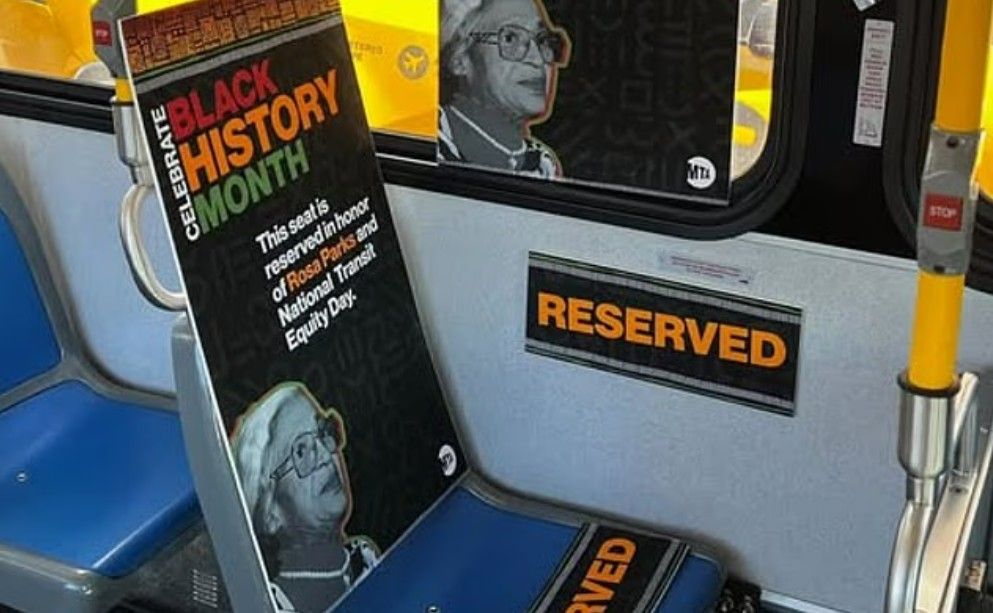
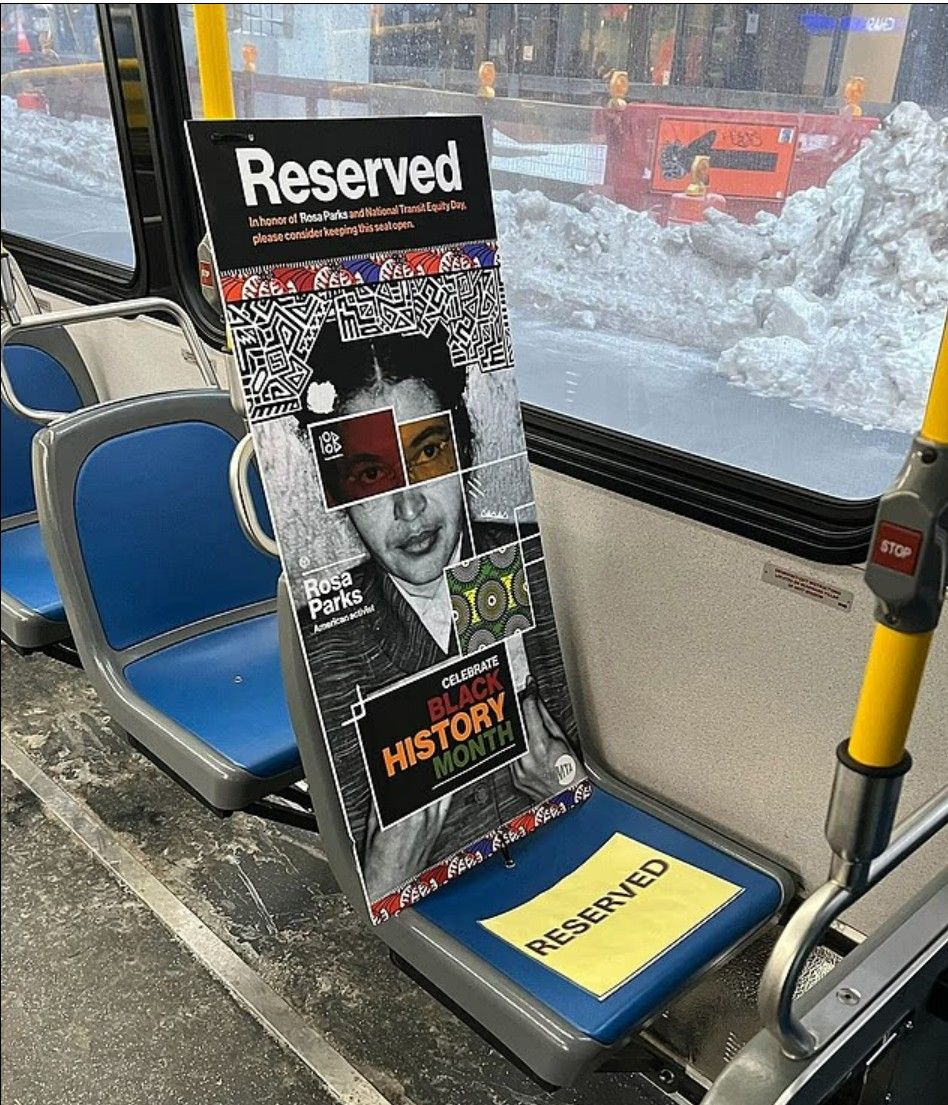
In honor of Black History Month and Rosa Parks’ birthday, the MTA marked off a seat on one of the city’s busiest buses with a bright yellow “RESERVED” sign, topped off with a massive cardboard portrait of the civil rights icon. The tribute was meant to commemorate Transit Equity Day, a federal observance recognized in 2021.
Instead, it ignited backlash.
“To commemorate Transit Equity Day and Black History Month, a seat has been reserved today to honor the legacy of Rosa Parks,” the MTA announced on Instagram Wednesday. “Each and every day, we’re committed to providing accessible and equitable transit for all.”
More than 4,000 commenters quickly weighed in — many unimpressed.
“[Not going to lie] we love Rosa but this is crazy,” one man wrote, punctuating the comment with a laughing emoji. Another chimed in sarcastically: “Wow, making a difference with this one guys.” Someone else dismissed the display as “like a parody skit.”
“Don’t piss me off,” one blunt critic added.
MTA
For riders who actually depend on the system, the frustration ran deeper than sarcasm. With buses already overcrowded and fares climbing, many questioned why the MTA chose symbolism over substance.
“How about you lower the fare to commemorate her legacy,” one commenter suggested, pointing to recent fare hikes — despite Mayor Zohran Mamdani’s pledge to make city buses free.
“You dead a** bro? Make the fare $2.75 again. We need that not a preoccupied seat,” another demanded.
Standard bus fares recently jumped from $2.90 to $3.00, while express bus fares increased from $7.00 to $7.25 — a tough pill to swallow for working-class New Yorkers already stretched thin.
“How much of the MTA budget went into this?” another user asked.
Others argued the display ignored practical realities, especially for vulnerable riders.
“This is not it,” one user wrote. “Sentiment might be right-headed, but no one who actually rides the bus would have cosigned this. C’mon guys @MTA.”
“Couldn’t you at least have cleaned the bus for her,” another person remarked, noting visible snow salt and dirt on the bus floor beneath the tribute.
Sar, an 18-year-old Bronx resident, cut straight to the point: “[Somebody] sittin on that anyways [not going to lie].”
Speaking later to the Daily Mail, Sar said the idea sounded better on paper than in real life.
“The buses are unbelievably packed and people want to sit down, and it’s New York, people are going to sit down anyways so I don’t think it’ll be appreciated properly,” he explained.
He added, “The gesture itself was fine, however it’s taking away a seat that a disabled person or a pregnant woman or someone who had a long day at work could have used.”
Not everyone agreed. Some brushed off the criticism as overblown.
“Oh my god bruh it’s one seat like goddamn, it’s never that big of a deal. They could put a pillar there, and y’all wouldn’t complain this much,” one man fired back.
Supporters also flooded the comments with clapping emojis and hearts, applauding the MTA for honoring Parks — who famously refused to give up her bus seat to a white woman in segregated Montgomery, Alabama, in December 1955. Her arrest sparked a 381-day bus boycott, a turning point in the Civil Rights Movement.
Still, skeptics questioned why the MTA continues to lean on performative tributes while failing to address everyday rider concerns — from safety to cleanliness to affordability.
Some also urged the agency to broaden its historical lens. A number of commenters suggested honoring Claudette Colvin, who refused to give up her seat nine months before Parks, at just 15 years old and pregnant. Colvin passed away on January 13 at age 86.
While Parks — who died in 2005 at age 92 — has been honored by transit agencies nationwide for nearly two decades, including free rides in cities like Washington, DC, Los Angeles, and Portland, critics say New York’s approach missed the mark.
To many riders, reserving a seat on a packed bus felt less like honoring Rosa Parks’ legacy — and more like a reminder that the MTA still doesn’t understand the people who rely on it every day.