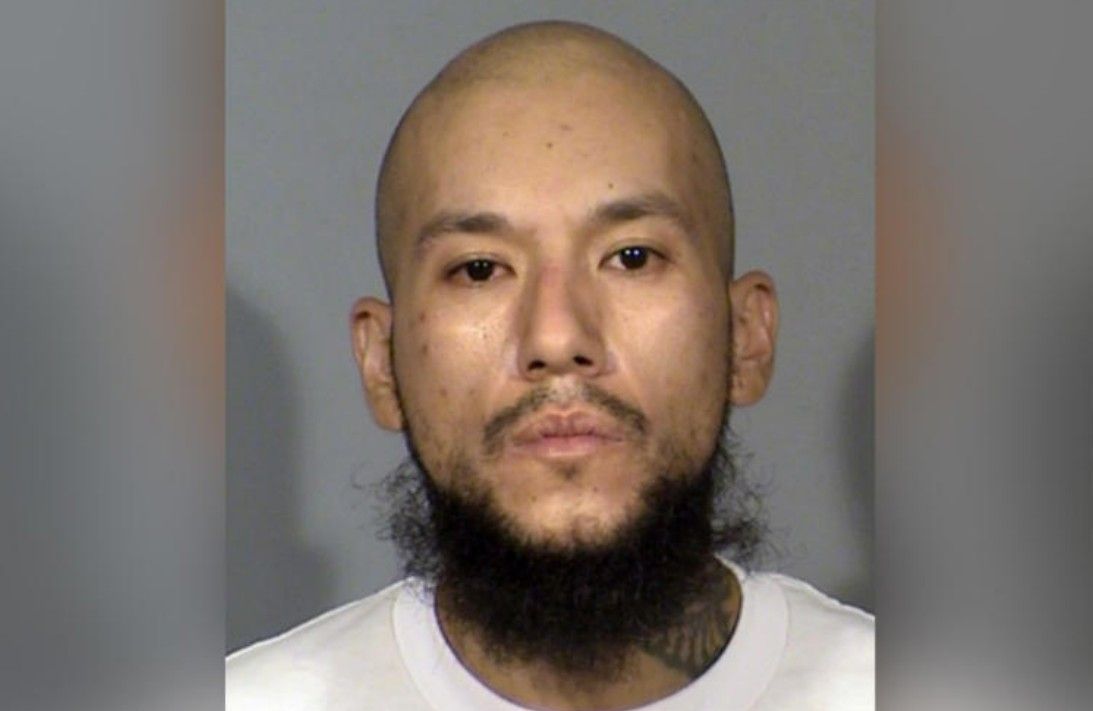
A high-drama legal clash is unfolding deep in the heart of Las Vegas, where law enforcement is drawing a hard line against what many see as a reckless judicial decision. At the center of the storm: a career offender with a staggering rap sheet—and a sheriff unwilling to gamble with public safety.
The dispute began when Eric Goodman, a Las Vegas Justice Court judge, ordered the release of 36-year-old Joshua Sanchez-Lopez. The plan? Let the repeat offender walk free under electronic monitoring, fitted with a GPS ankle bracelet instead of sitting in a jail cell.
But the Las Vegas Metropolitan Police Department wasn’t having it.
Behind the badge, officials saw something far more dangerous than a routine release. Sanchez-Lopez isn’t just another defendant—he’s a repeat offender with 35 prior arrests, including time served for drug offenses and involuntary manslaughter. For Metro, the idea of putting him back on the streets—even with a tracking device—was a risk too big to take.
“We have to take a look at that and say, ‘Is this somebody who our electronic supervision program can monitor safely in the community?” Las Vegas Metropolitan Police Department assistant general counsel Mike Dickerson told KLAS.
“This is an issue of public safety,” he added.
The case traces back to January, when Sanchez-Lopez was picked up on a warrant tied to grand larceny of a motor vehicle. Judge Goodman set bail at $25,000 and ruled that if posted, the defendant should be released under electronic monitoring. But days later, Metro flatly refused.
In a formal response, police cited a troubling pattern: failures to appear in court, violations of monitoring conditions, and alarming past behavior. One incident stood out—in 2020, Sanchez-Lopez allegedly fled from officers while armed. Later, he reportedly took to Snapchat, showing off his ankle monitor and boasting he “got chased again.”
Judge Goodman fired back, warning the department to comply or risk sanctions—including possible contempt charges. But the sheriff’s office isn’t backing down. Instead, it’s escalating the fight to the highest court in the state. At the center of the legal tug-of-war is a fundamental question: Who really has the final say—judge or sheriff?
Sanchez-Lopez’s public defender, P. David Westbrook, insists the answer is clear. “Metro’s argument is flat wrong,” he said. “It is the job of the elected judge to decide whether someone charged with a crime should be released and under what conditions. The idea that a Metro employee can overrule a judge’s release order and keep someone locked up should worry anyone who believes in the Constitution and the rule of law.”
Law enforcement sees it very differently. “There’s absolutely competing narratives about public safety occurring in our community,” Dickerson acknowledged. “There’s different approaches too.”
And for Kevin McMahill, the stakes couldn’t be higher. His office argues that Nevada law clearly gives the sheriff authority to determine whether an inmate is suitable for supervised release. “Sheriff McMahill will not violate the law to appease the Las Vegas Justice Court and let out people who he deems to be dangerous,” the department said, according to Fox News.
That position is echoed by Steve Grammas, who put it bluntly:
“Statutorily, it’s very clear the sheriff decides whether someone can be placed on supervised monitoring. It’s his jail and his supervision, so that decision rests with him.”
“When someone has dozens of prior arrests and a history of violations, that raises serious concerns about whether they can safely be released into the community,” said David Moody. “From a law enforcement perspective, public safety has to come first.”
Dickerson drove the point home with urgency:
“The safety of our officers is paramount. The safety of the public is key, and the key here is Sheriff McMahill will not violate the law to appease the Las Vegas Justice Court and let out people who he deems to be dangerous. We have a system that’s set up so people can get out of jail quickly, and sometimes, there just needs to be a little bit more thought given to it because lives are on the line.”