

A Washington Post opinion writer is stirring fresh controversy by arguing that Muslims in the United States should not have to assimilate into the broader culture to justify their place in the country — a stance that is already igniting debate among conservatives who see assimilation as central to national unity.
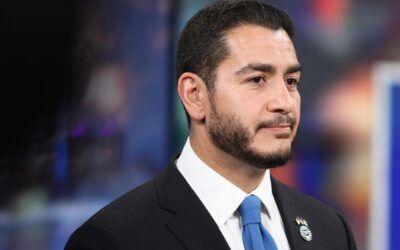
In a Wednesday column pointedly titled “I’m tired of proving I belong in America,” Shadi Hamid pushed back against the very idea that minority groups must blend into the mainstream to be accepted.
“The assimilation defense — look how well we’ve integrated — is satisfying to make,” he wrote. “But it concedes a premise I no longer accept: that a minority community’s right to be in the United States depends on its willingness to converge with the cultural mainstream. It shouldn’t depend on that. It shouldn’t depend on anything.”
Hamid framed his argument as a response to sharp rhetoric from Republican lawmakers, including Rep. Andy Ogles of Tennessee, who wrote on X last month, “Muslims don’t belong in American society,” and Sen. Tommy Tuberville of Alabama, who said, “I’m ready to get rid of the Muslims.”
But rather than defend Muslim Americans by highlighting their alignment with American norms, Hamid took a different route — insisting they shouldn’t have to prove anything at all.
“Over the past decade, surveys have shown that American Muslims are patriotic, civically engaged and more likely than the U.S. general public to say that political violence is never justified,” he noted. “You’d think that would be enough. Except it shouldn’t have to be.”
He went further, openly acknowledging cultural differences instead of downplaying them. “Muslims are different in certain ways. How could they not be?” he wrote, pointing to Islam’s influence on family life, sexuality, and moral outlook. He emphasized that Islamic practices are often more visible than those of other faiths — from daily prayer to fasting during Ramadan.
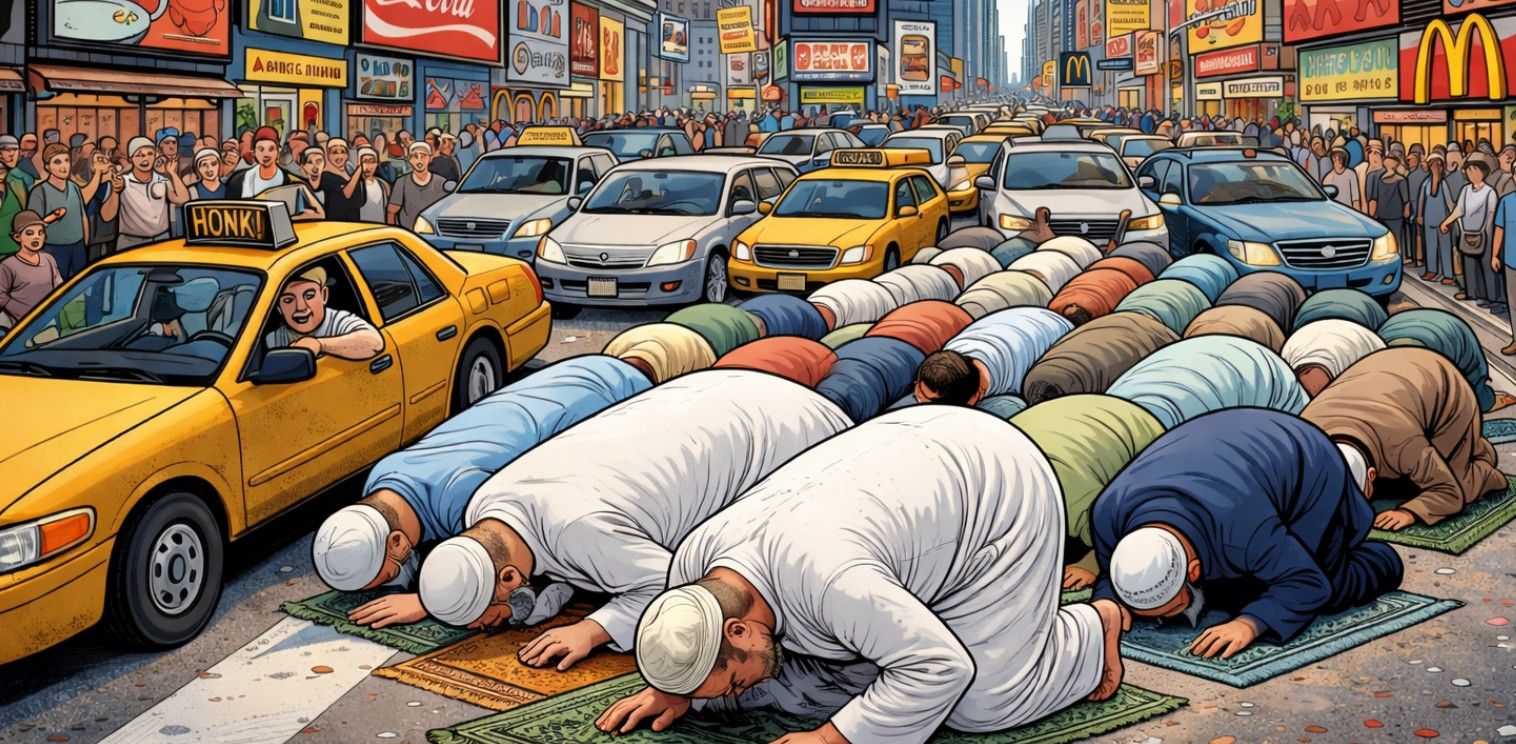
“Islam is also a more public religion than Christianity,” Hamid explained. “Muslim prayer is visually striking and often communal. If a Muslim doesn’t drink alcohol or fasts during Ramadan, that will be more noticeable to others.”
He also addressed the often controversial topic of sharia, arguing that observant Muslims cannot simply distance themselves from it. “Practicing Muslims — despite being repeatedly asked to — can’t disavow ‘sharia’ even if they wanted to,” he wrote, describing it as a broad set of religious guidelines governing daily life.
While Hamid acknowledged that Muslims have made strides integrating into civic life, he challenged the expectation that integration must mean cultural dilution. He contrasted this with trends among other groups, pointing to declining Catholic affiliation among Latinos and rising intermarriage rates in the Jewish community as examples of what he sees as assimilation’s cost.
“What strikes me about these stories is how much they resemble each other,” he wrote. “The deal is always the same: You can stay, but you have to become less yourself.”
In one of his most provocative claims, Hamid argued that both sides of the spectrum push assimilation — just in different tones. “The right says: Assimilate or get out. The left, more gently: Assimilate and we’ll celebrate you. But the endpoint is the same.”
From a conservative perspective, critics are likely to see this argument as dismissing the very idea of a shared American identity — a principle long viewed as essential to social cohesion.
Hamid, however, doubled down, asserting that deeply held religious beliefs — even those that clash with modern cultural norms — should not diminish one’s standing as an American.
“A Muslim who prays five times a day and believes homosexuality is sinful is not less American than a Muslim who drinks alcohol and hasn’t been to a mosque in years,” he wrote. He added that the same standard should apply across religious traditions, including evangelical Christians.
“These are deep disagreements about how to live, and a country that is serious about pluralism shouldn’t treat them as problems to be solved,” he argued.
In closing, Hamid invoked the nation’s founding principles, claiming America was built not on agreement, but on the ability to coexist amid profound differences.
“America was not founded on the assumption that its citizens would eventually come to agree on foundational questions,” he wrote. “It was founded on the more radical proposition that they wouldn’t.”
The question he leaves readers with is one that cuts to the heart of today’s cultural divide: whether America remains a melting pot — or becomes something closer to a patchwork of separate identities, each charting its own course.









Whoever wrote this is full of crap. Read the Immigration Act of 1965. Assimilation is one of the requirements.
Whoever wrote this is full of crap. Read the Immigration Act of 1965. Assimilation is one of the requirements.
Whoever wrote this is full of crap. Read the Immigration Act of 1965. Assimilation is one of the requirements.
Whoever wrote this is full of crap. Read the Immigration Act of 1965. Assimilation is one of the requirements.
If they want to live in America and not assimilate, we as country can establish rules such as no government financial assistance whatsoever; no voting privileges in any American election; must live in groups limited to 100 adults ages 18 and above; must buy the land and property; in which they live; and cannot intrude their lifestyle on any other non-Muslim individuals. They would be free to set their own rules and regulations within the above listed parameters.