

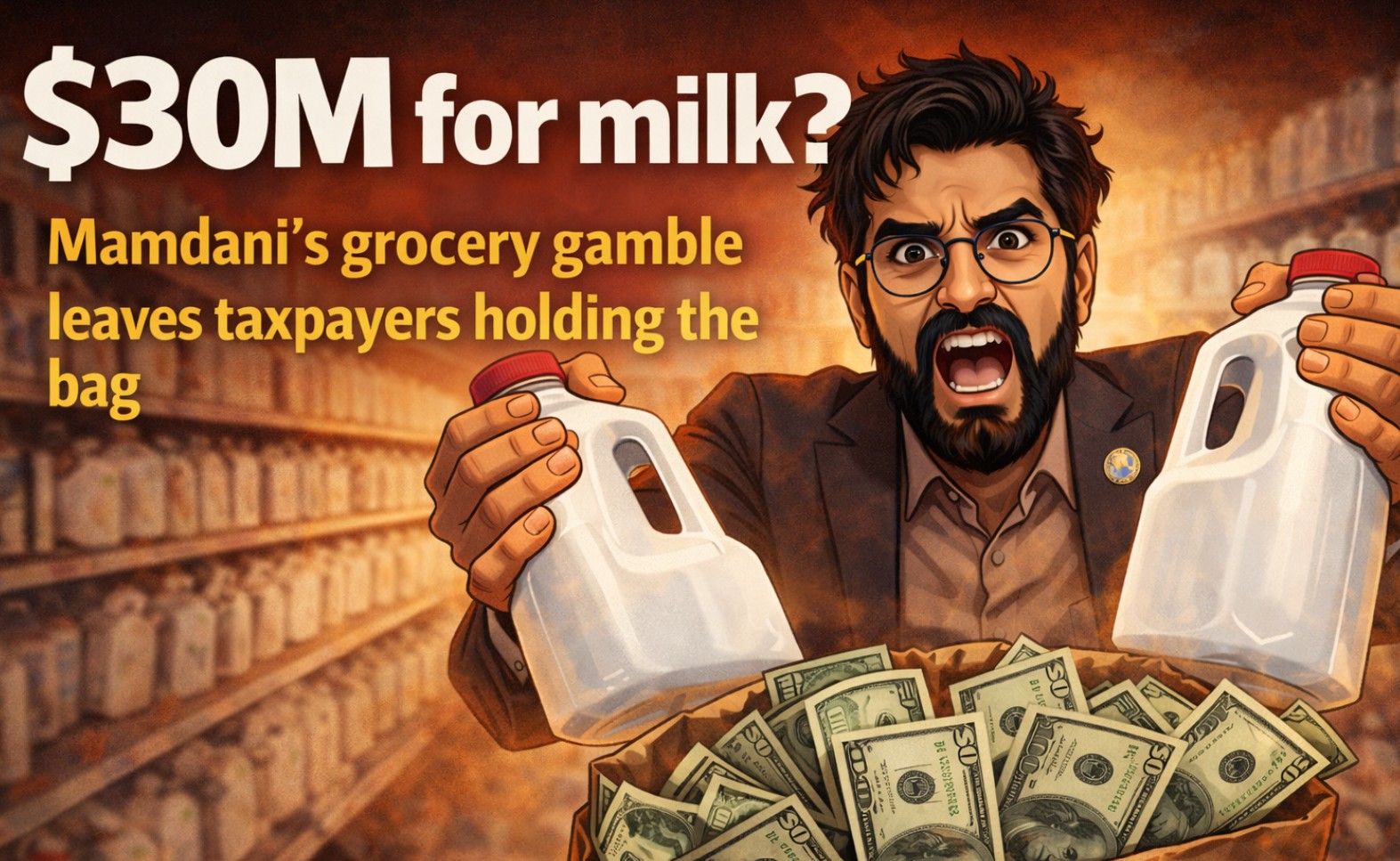
So this is what passes for “affordability” in New York City these days: a $30 million taxpayer-funded grocery store plopped into East Harlem — all in the name of cheaper milk and eggs.
That’s the eye-popping price tag for Mayor Zohran Mamdani’s shiny new city-owned supermarket at La Marqueta — a number so bloated it’s got local shopkeepers laughing, budget hawks groaning, and anyone with a calculator asking the obvious question: who exactly is this helping?
City Hall insists the plan is simple. Hand a yet-to-be-chosen operator a sweetheart deal — no rent, no taxes — and somehow, magically, prices drop for struggling New Yorkers. That’s the theory, anyway.
Out in the real world? Skepticism is everywhere.
“How can they manage something like that? A small supermarket?” scoffed Abdul Shaher, who runs a nearby grocery. He didn’t just question the plan — he laughed at it. Hard to blame him. Even under New York’s famously inflated, union-heavy construction costs, experts say a standard grocery store should run about $15 million. Mamdani’s version? Double that.
“Thirty million dollars for one store is exceptionally high,” said policy expert Adam Lehodey, noting the city isn’t even paying for land or rent — usually the biggest costs in any project.
This isn’t just expensive — it’s government-expensive.
And this is just the beginning. Mamdani wants five of these taxpayer-funded markets, with a projected total cost of $70 million. That’s a lot of public cash for a city already juggling a shaky budget and endless spending promises.
While City Hall dreams of subsidized avocados, neighborhood grocers are bracing for a gut punch. “It’s gonna affect us real hard,” warned Victor Vazquez of City Fresh Market. “It’s too near!” When the government becomes your competitor — armed with subsidies and zero overhead — it’s not exactly a fair fight.
Bodega owner Augustine Espinal put it bluntly: “The city has a much stronger business than I do. It’ll be a loss in income.” That’s the part Mamdani doesn’t advertise: every “cheap” city-run tomato risks crushing a family-owned shop that’s been scraping by without taxpayer help.
To be fair, some residents say East Harlem needs better grocery options. Fresh produce can be hard to find, and prices have climbed. “It’s very difficult to find fresh fruit or vegetables,” said Maria Huerta. “Groceries are very expensive, almost unaffordable.”
That’s a real problem. But here’s the catch: throwing tens of millions at a government-run store doesn’t automatically solve it. Critics point to similar experiments elsewhere — including a failed city-owned grocery in Kansas City — that ended up shuttered after bleeding money.
Even supporters admit there’s risk. The grocery business runs on razor-thin margins. Add bureaucratic red tape, union wage pressures, and political mandates, and the math gets ugly fast. “I think the city is going to struggle to balance the delivery of a high-quality, affordable grocery store,” said Stephen Smith of the Center for Building in North America.
He didn’t sugarcoat it: “The grocery industry is low-margin, so heavy subsidy will be needed… I’m just not sure there’s going to be the political appetite for much of that for long.”
Mamdani has wrapped the whole idea in nostalgia, invoking former mayor Fiorello La Guardia and the original La Marqueta market of the 1930s — a hub meant to help working-class New Yorkers. “We will continue his legacy,” Mamdani declared.
Nice sentiment. But La Guardia didn’t need $30 million per storefront to sell vegetables.
If this is what “affordability” looks like — sky-high construction costs, government-run competition, and long-term subsidies — New Yorkers should brace themselves.
Because in Mamdani’s New York, groceries might be cheap. But the bill? That’s going to be very, very expensive.






Howmuch were the other 65 gallong going to cost?