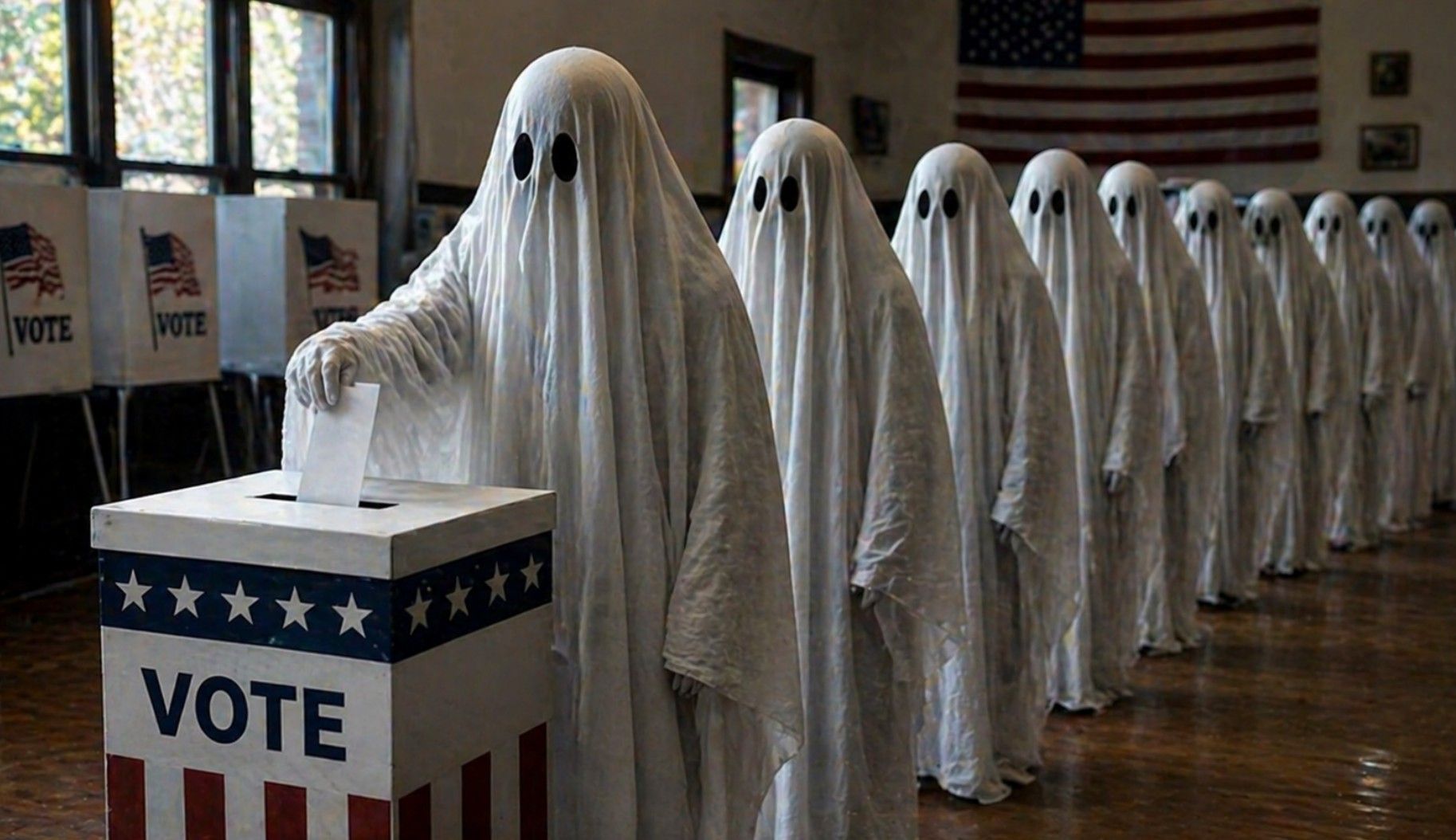
If you thought “voter roll cleanup” was just political buzzword bingo, North Carolina just handed critics a talking point gift-wrapped in bureaucratic delay.
State election officials quietly admitted they’ve identified roughly 34,000 deceased individuals still sitting on the voter rolls — yes, thousands of people who are no longer alive but somehow haven’t gotten the memo from the system.
The discovery came after the North Carolina State Board of Elections dumped more than 7.3 million voter records into a federal database — the Systematic Alien Verification for Entitlements (SAVE) system — in what was billed as a long-overdue effort to tighten up election integrity. And the result? Let’s just say it raised eyebrows.
“While we expected to find some cases, this is higher than we anticipated,” admitted executive director Sam Hayes — a rare moment of candor in a space where expectations are usually set conveniently low.
Hayes tried to strike a reassuring tone, adding, “The benefit of entering into cross-state and federal database checks is that it allows us to uncover issues like this. Our goal is to use every available and legal tool at our disposal to achieve the most accurate voter rolls possible.” So, yes, this is a problem — and yes, they’re only now getting serious about it.
He continued, “Now, we must roll up our sleeves and begin the hard work to act of verifying that every person registered to vote in North Carolina is eligible.” That’s comforting — if you’re okay with the idea that the “hard work” starts after tens of thousands of questionable registrations have already piled up.
Officials insist this doesn’t prove that dead people actually voted. But in a system where accuracy is everything, the obvious question looms: how confident should voters be when the rolls themselves are this messy?
The timing is no coincidence. The cleanup push comes after mounting pressure — including legal action — tied to concerns that the state wasn’t properly maintaining its voter lists. Earlier this month, the board voted along party lines to step up citizenship verification efforts after facing lawsuits from the Trump administration.
North Carolina does technically have a maintenance system in place. Every two years, the state is supposed to scrub its voter lists of ineligible names. According to Dr. Andy Jackson of the Civitas Center for Public Integrity, that process removed about 500,000 ineligible registrations in 2025 alone.
For deceased voters, Jackson noted, it can take eight to ten years for names to actually disappear from the rolls. A decade. Plenty of time for a “ghost voter” to linger in bureaucratic limbo.
Jackson did acknowledge that using the SAVE database is “crucial” and has already improved the system — which raises an obvious follow-up: why wasn’t it used more aggressively sooner?
Meanwhile, the broader push for election transparency is heating up nationwide. The Trump administration has been aggressively pursuing voter roll data, reportedly filing lawsuits against dozens of states to force compliance with federal record requests.
Unsurprisingly, Republican officials and party groups are seizing on North Carolina’s numbers as Exhibit A.
The Republican National Committee’s election integrity account declared the findings are “EXACTLY” why federal pressure is needed.
And Ohio Secretary of State Frank LaRose couldn’t resist a jab, quipping: “Turns out checking state voter rolls against federal records actually helps keep them more accurate. Who knew?”
North Carolina now says it will work with county officials to remove the deceased voters. That’s a start.
But the real question isn’t whether the cleanup will happen — it’s why it took this long to begin in the first place.