AI
Britain just cranked its terror threat level up to “severe” — translation: officials think an attack is “highly likely.” And if that doesn’t already rattle nerves, critics say there’s another ticking issue washing ashore: a record-smashing surge of illegal migrants pouring across the English Channel.
The warning came from the Joint Terrorism Analysis Centre after a violent stabbing in Golders Green. Authorities say both Islamist and far-right threats have been building “for some time.”
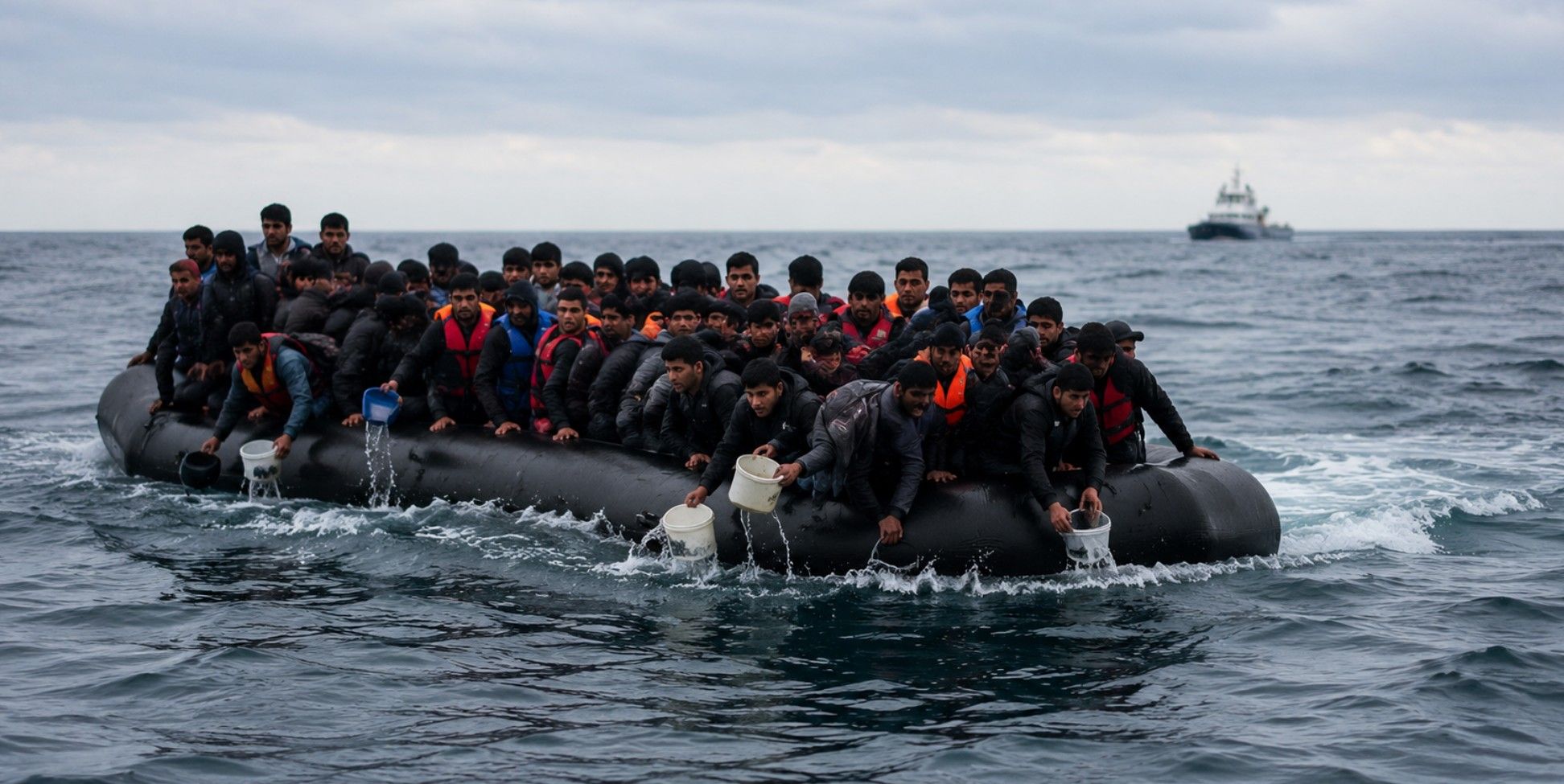
Meanwhile, the numbers tell their own story. Small-boat crossings — once a trickle — are now a flood, with arrivals closing in on 200,000 since 2018.
Enter Nigel Farage, never one to mince words. He warned this week that “most of them are unidentified, young males of fighting age,” adding the crossings pose “a risk not only to women and girls in this country but a risk to our national security.” Critics may scoff, but the bluntness is landing with a public already uneasy.
Security experts aren’t exactly dismissing the concern. Dr. Michael McManus put it plainly: “Channel migrants pose a potential security threat… Minimal vetting of the migrants means we have no way to know who is really coming to the country. The vast majority are combat-aged males from war zones and regions associated with terrorism. The current government is failing to read the mood in the country, which overwhelmingly wants action to deter and deport those who pose a threat.”
And here’s the stat that fuels the outrage — fewer than 4% of arrivals have actually been deported. Around 7,600 removals out of nearly 200,000 entries.
Prime Minister Keir Starmer now finds himself boxed in. His government insists it’s cracking down on smuggling gangs and working more closely with France, touting a “landmark” enforcement deal to disrupt the pipeline. Officials also promise a more “orderly” system, with expanded legal pathways once things are under control.
Cabinet minister Pat McFadden tried to reassure skeptics, saying migration should be “a level that is good for the economy… and done under proper rules.” That’s a nice sentiment — but critics argue the rules already look more like suggestions.
And the human cost? It’s real — and grim. Just days ago, two Sudanese women reportedly died attempting the crossing when their overcrowded boat ran into trouble. These journeys are desperate, dangerous — and increasingly common.
Advocacy groups point out many migrants are fleeing war zones like Afghanistan, Syria, and Sudan, and most go on to claim asylum. But that hasn’t cooled the political firestorm. What began as a workaround — shifting from trucks and ferries to small boats after a 2018 crackdown — has morphed into one of Britain’s most explosive issues.
The bottom line: Britain is facing a double squeeze — rising terror fears and a migration system many see as out of control. And as the numbers climb and the warnings grow louder, the question isn’t going away anytime soon: who exactly is getting in — and at what cost?