


Marjorie Taylor Greene’s post-Trump political evolution has been, to put it mildly, a rolling spectacle. Once a loud fixture of the MAGA-aligned congressional wing, she now seems to be spending as much energy picking fights with former allies as she does on anything resembling legislative seriousness.
“When your salary is $174,000 but your portfolio explodes 476%, people notice.”@DLoesch responds to @mtgreenee after she came at her over exposing her insider trading. #DanaRadio
Podcast: https://t.co/A9ZuQuXe0x pic.twitter.com/KcGzXmayX6
— The Dana Show (@DanaLoeschRadio) May 14, 2026
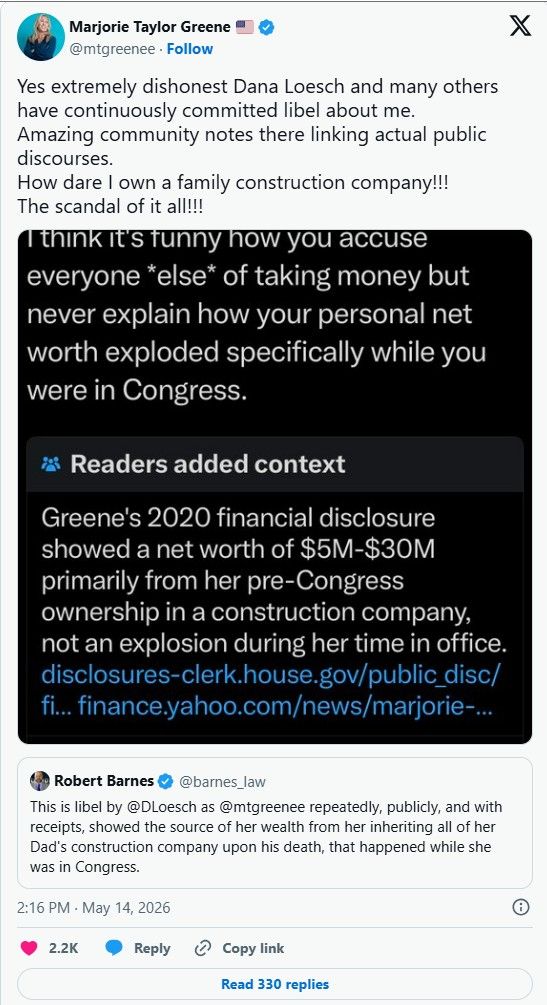
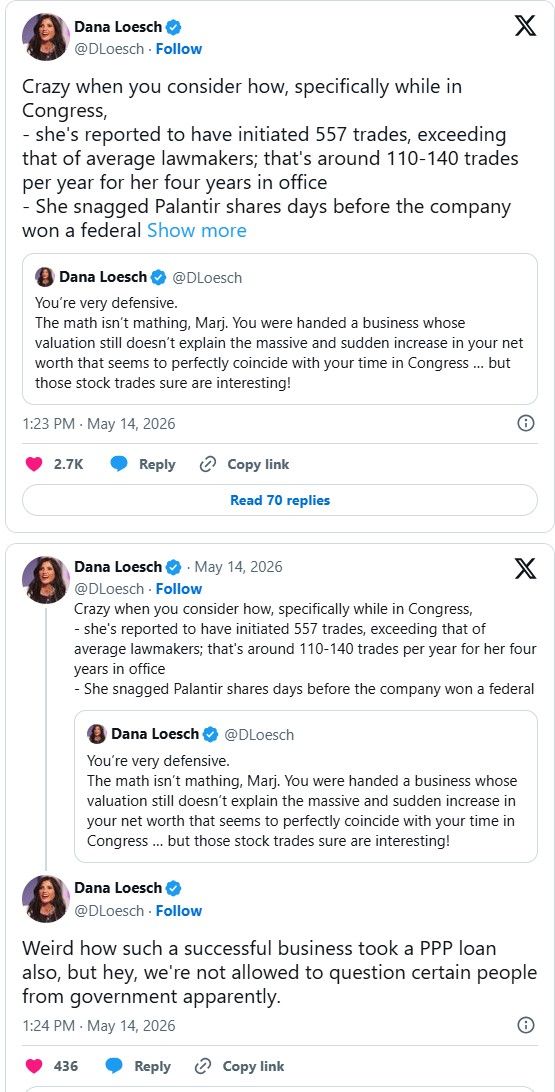
The latest dust-up comes courtesy of conservative commentator Dana Loesch, who took a hard look at Greene’s reported stock trading activity during her time in Congress—and didn’t like what she saw. The issue, as Loesch and others have pointed out, isn’t just that members of Congress trade stocks. It’s that they often sit on committees that can give them a front-row seat to market-moving information while the rest of the public is left guessing.
Greene’s financial activity, which has drawn public attention before, has once again raised the familiar Washington question: is this just savvy investing—or something that looks a little too convenient for comfort?
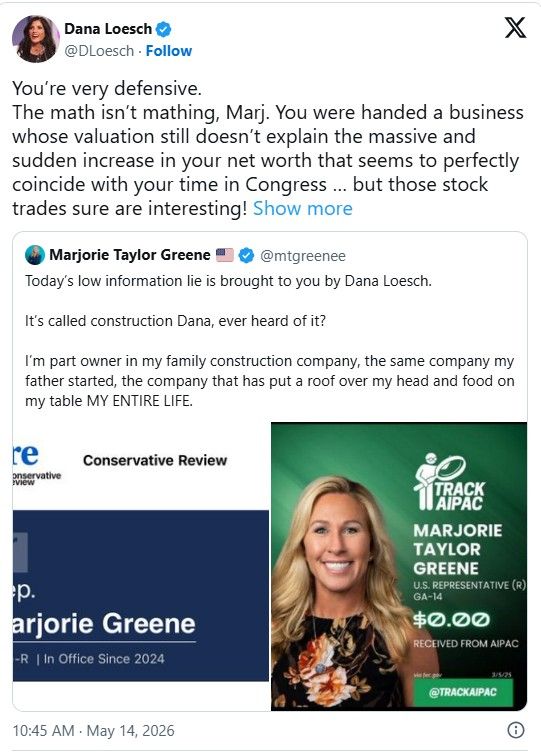
Loesch questioned the timing and performance of Greene’s trades, suggesting the “math isn’t mathing,” especially given Greene’s position in Congress and the informational advantages that can come with it.
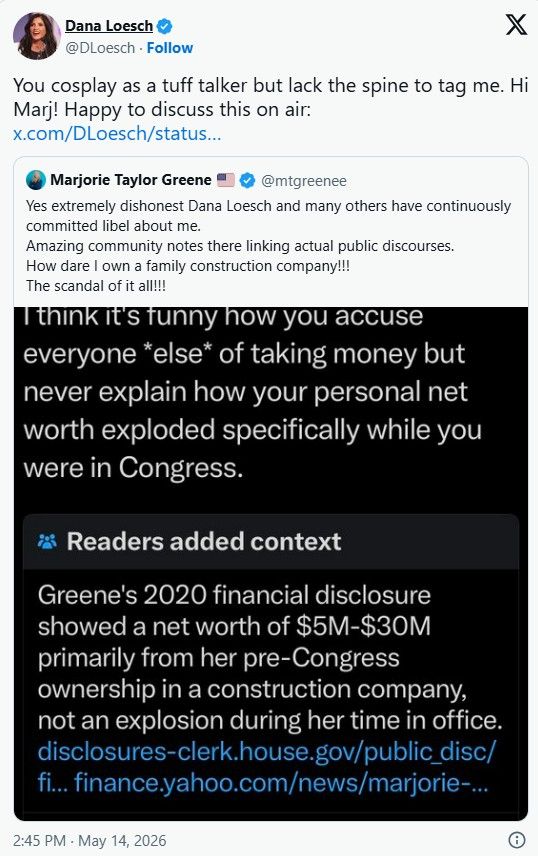
For her part, Greene didn’t respond with policy detail or a calm breakdown of her financial strategy. Instead, she leaned into the familiar social media posture of indignation, lashing out while sidestepping the underlying issue. Notably, she didn’t even directly tag Loesch in her response, but that didn’t stop Loesch from firing back anyway—and even extending an open invitation for Greene to come on air and address the concerns directly. That offer, unsurprisingly, remains unanswered.
The recurring unease around congressional stock trading itself is a subject that has dogged both parties for years. When lawmakers have access to classified briefings, regulatory foresight, and industry gatekeepers, even the appearance of market advantage tends to raise eyebrows. And in Washington, appearances tend to stick.
Critics of Greene argue that if her trades are as legitimate and skillful as she suggests, she should have no problem walking through them publicly and transparently. After all, extraordinary returns invite extraordinary questions—especially when they happen inside the Capitol.
Instead, the response cycle has largely been outrage, deflection, and social media combat. One side is demanding clarity. The other is insisting it’s all unfair noise.












This screames Grifter! Tell me where I’m wrong, MTG?