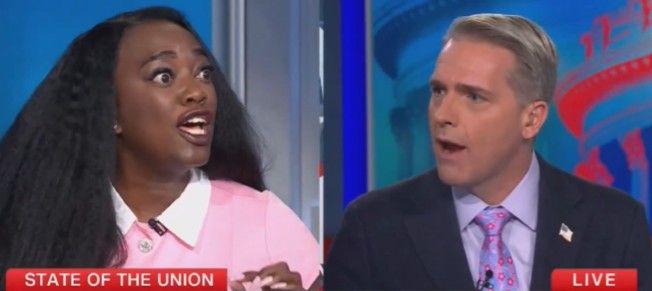
What started as the usual hand-wringing over redistricting turned into a full-blown identity-politics pileup on CNN when conservative commentator Scott Jennings calmly pulled apart the central contradiction in the modern Democratic Party’s racial messaging.
The topic was Tennessee’s congressional map and the splitting of Memphis into multiple districts — a familiar liberal talking point usually delivered with the subtlety of a college freshman wielding a sociology textbook.
“You literally are taking Memphis, which is a city with black voters, and you split it in three,” the liberal panelist complained, accusing Republicans of “dismantl[ing] the power for black people to have their voice.”
Then Jennings asked the question that detonated the entire argument: “Who’s the current Democrat congressman there? Is it a black congressman?”
Answer: Nope. He’s white.
The panelist tried to recover with: “Black people can like people that don’t look like them.” And that’s when Jennings pounced. “Exactly.”
One word. Total collapse of the premise.
Exactly! pic.twitter.com/pBeqiwzbXI
— thedailybs w/ Snerdley (@thedailybs_Bo) May 18, 2026
Because buried underneath the Democrats’ endless rhetoric about “representation” is the assumption nobody’s supposed to say out loud: that race should largely determine political allegiance. Jennings exposed the contradiction in real time.
The liberal guest insisted, “Black people don’t elect black people based on race, they elect people that are aligned with their moral [values], their beliefs in justice.”
Again: exactly. That’s the conservative argument. Voters are not political hostages chained to skin color. Or at least they shouldn’t be.
What made the exchange so brutal for CNN’s side wasn’t that Jennings denied the existence of partisan redistricting — he openly admitted it’s “a fact of life.” It’s that he forced the conversation away from emotional shorthand and into the uncomfortable territory Democrats hate most: political agency.
If black voters are perfectly capable of choosing white Democrats because they believe those candidates represent their interests, then why is it supposedly impossible for them to choose Republicans for the same reason?
That’s the part the left never quite answers without circling back to insinuations that minority voters who back conservatives are somehow confused, manipulated, or betraying their community.
And the panelist came dangerously close to saying the quiet part out loud when arguing Republicans “took that away from them” — as if black voters suddenly become disenfranchised the moment electoral outcomes stop favoring Democrats.
Jennings cut through it cleanly: “Black voters are still fully franchised and go vote for whoever they want. It just doesn’t have to be a Democrat.”
That line challenges the modern progressive orthodoxy that demographic groups “belong” to one party by default.
Democrats increasingly talk about race as destiny, while Republicans — at least rhetorically — are moving toward an argument centered on ideology, class, religion, economics, and culture instead of identity alone. That shift explains why Democrats are suddenly nervous about black and Latino voters drifting rightward in places they once treated as permanent territory.
The irony? The liberal panelist accidentally made Jennings’ case for him multiple times. Every attempt to explain why black voters support certain candidates reinforced the exact principle Jennings was defending: people vote based on interests and beliefs, not merely race. On CNN, of all places, that counted as a bombshell.