Jeanette Rubio may not hold any official title in Washington—yet—but in India this week she certainly played like she did.
While Secretary of State Marco Rubio was busy trying to cool tensions between Washington and New Delhi after a messy diplomatic flare-up, his wife quietly stole the visual spotlight, triggering the kind of “future First Lady” chatter that follows political spouses like monsoon clouds over Agra.
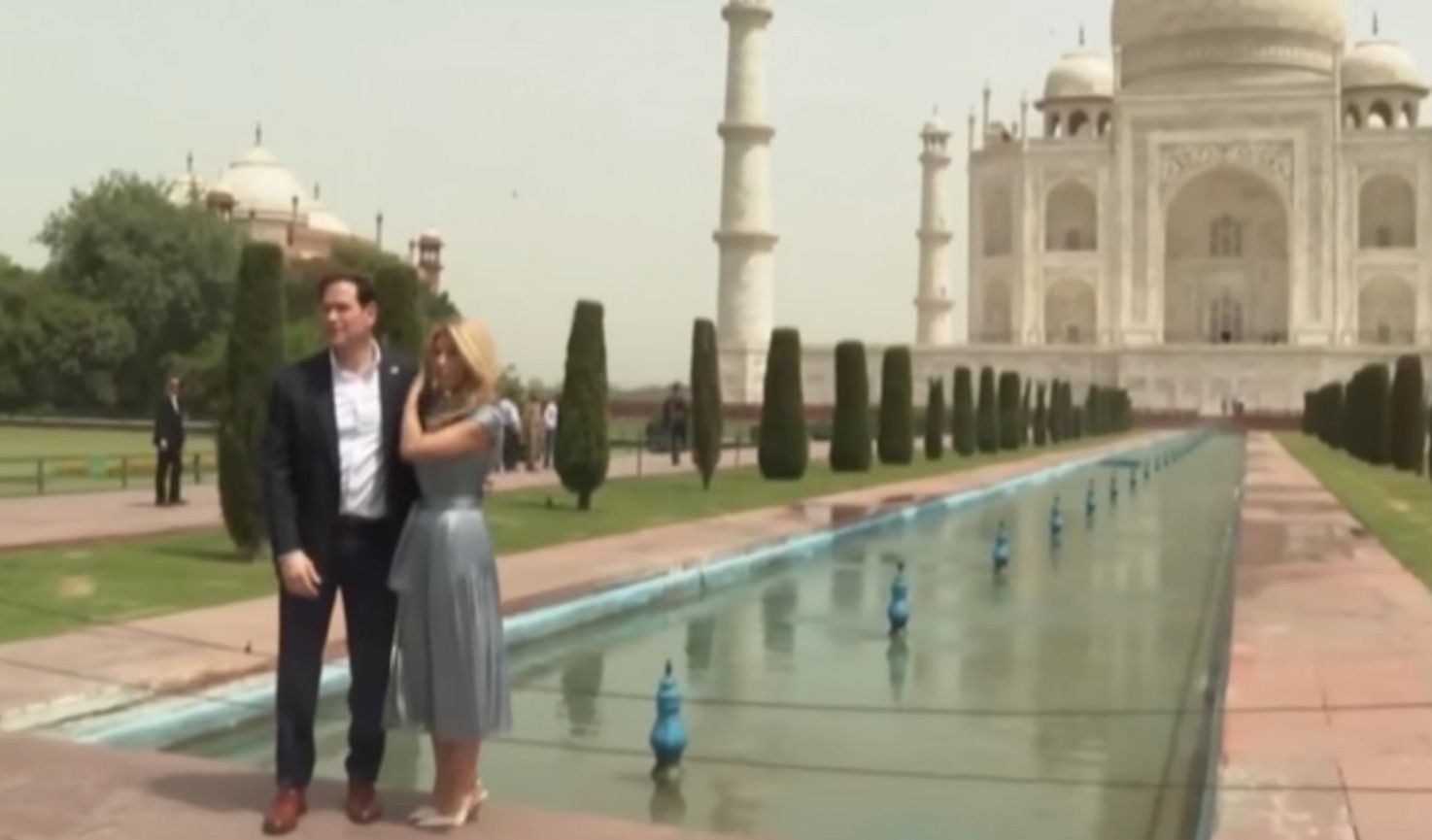
Dressed in a striking bright blue outfit and white heels, Jeanette Rubio turned heads at every stop of a high-profile India visit that mixed serious geopolitics with postcard-level pageantry. And yes, it all unfolded against the backdrop of the Taj Mahal—the kind of place that makes even hardened diplomats reach for superlatives.
The trip comes as Rubio finds himself in the middle of an awkward repair job after Donald Trump amplified a post describing India as a “hellhole,” a remark that set off predictable outrage in New Delhi and forced Washington into rapid cleanup mode. As one line of diplomacy cooled, another—far more visual—was clearly heating up.
According to Daily Mail reports, the Rubio stopover in Agra offered a rare break from the grind of meetings and crisis management, with the couple touring the Taj Mahal, the 17th-century marble monument built by Emperor Shah Jahan for his wife Mumtaz Mahal. Marco Rubio called it “one of the wonders of the world,” adding, “I think it’s important to show respect to the culture of the countries that you visit.”
From Agra, the delegation moved on to Jaipur, where the vibe shifted from diplomatic courtesy to full-blown royal spectacle. Rubio and his entourage—including U.S. Ambassador Sergio Gor—ditched the armored motorcade for open-jeep rides up rugged terrain toward Amber Fort, once home to Rajput Maharajas. Traditional dancers, drums, and turbans greeted the Americans like visiting royalty, complete with enough choreography to make a Hollywood producer jealous.
At their hotel, the welcome escalated further—elephants, white horses, camels, and manicured gardens filled with peacocks created a scene that looked less like a diplomatic visit and more like a historical epic with modern security detail.

Rubio’s India trip is part charm offensive, part damage control. Relations between the two countries have been under strain in recent months, with the Trump administration slapping tariffs on Indian exports and raising friction over India’s continued purchases of Russian oil. The result has been growing unease in New Delhi about America’s reliability as a long-term partner.
Still, both sides have tried to keep the relationship from drifting too far off course. An interim trade arrangement has eased some pressure, but broader negotiations remain unresolved—and very much in play.
Rubio has been pushing cooperation across trade, energy, defense, and maritime security in meetings with Prime Minister Narendra Modi and Foreign Minister Subrahmanyam Jaishankar, emphasizing strategic alignment even as unresolved tensions simmer underneath.
Meanwhile, the visit also doubled as a soft-power showcase. A U.S. Embassy gala in New Delhi marking America’s 250th anniversary went all-in on spectacle: Bollywood performances, packed guest lists, and even life-size cutouts of Trump administration figures so attendees could pose for photos. The President himself dialed in by speakerphone, telling guests, “I love India,” and insisting, “We’ve never been closer to India, and India can count on me 100 percent.”
The crowd reportedly loved it. Diplomacy by speakerphone may not be traditional, but in the current political era, it’s practically on brand.
Still, beneath the celebration lies a more serious geopolitical chessboard. India’s concerns about energy security—especially oil shipments through the Strait of Hormuz—remain a key pressure point, alongside broader worries about inflation and trade disruption. Add in the looming question of Iran-related negotiations, and Rubio’s diplomatic “vacation” starts looking more like a high-stakes balancing act.
Back on the ground, though, the visuals tell their own story. Jeanette Rubio, front and center at nearly every stop, has become an unexpected focal point of the trip. Whether intentional or not, the imagery of a polished, poised political spouse amid palace backdrops and global headlines has fueled fresh chatter about future ambitions in Washington circles already addicted to succession speculation.
Some are even pointing to betting markets favoring Rubio in the 2028 conversation, placing him ahead of other potential contenders in early odds tracking. In Washington, nothing travels faster than ambition rumors dressed up as analysis.
For now, though, the Rubio tour continues beyond India, with a stop planned in Armenia next. The diplomatic agenda remains packed, the tensions remain real, and the optics—well, they continue to take on a life of their own.
Because in modern geopolitics, it’s never just about treaties and tariffs. Sometimes it’s also about who looks like they belong in the next chapter of the story.