

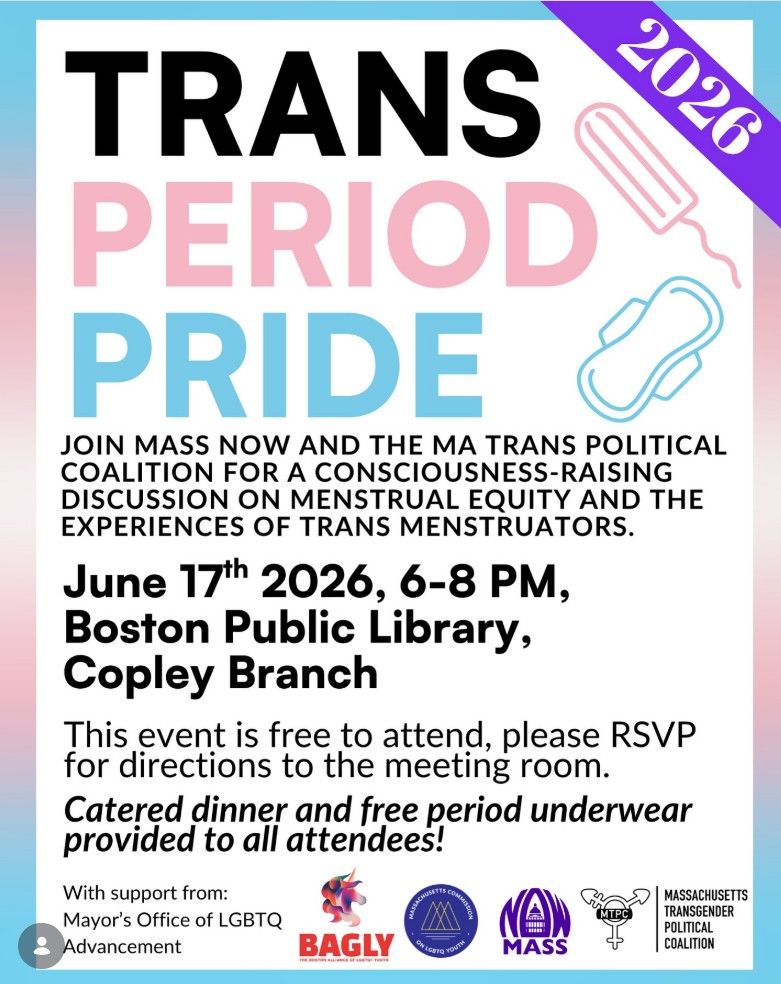
Boston Mayor Michelle Wu is once again in the hot seat after her administration’s LGBTQ+ outreach arm was blasted online for boosting a so-called “Trans Period Pride” event — a taxpayer-adjacent cultural workshop that critics say reads like satire but is very real.
The controversy centers on a June gathering scheduled at the iconic Boston Public Library Copley Branch, where activists plan to host what they describe as a “consciousness-raising discussion on menstrual equity and the experiences of trans menstruators.” The event is being promoted in partnership with groups including MASS NOW and the Massachusetts Transgender Political Coalition, alongside the Boston Alliance of LGBTQ+ Youth.
The city’s Office of LGBTQ+ Advancement amplified the event on social media, posting a graphic featuring a pink tampon and blue pad with the invitation: “Join MASS NOW and the MA Trans Political Coalition for a consciousness-raising discussion on menstrual equity and the experiences of trans menstruators.”
According to the promotional materials, attendees won’t just get a lecture in identity politics — they’ll also be treated to a catered dinner and handed “free period underwear provided to all attendees,” a detail that only added fuel to an already raging online firestorm.
The office itself describes its mission as developing “policy, community-oriented programming, and resources for the City’s diverse LGBTQIA2S+ community,” but critics say the priorities increasingly reflect ideological activism rather than core municipal needs like safety, housing affordability, or public services.
Social media reaction was swift and blistering. One user commented, “This cannot be real…….” Another added bluntly, “Is this a joke?” while a third summed up the mood with, “Yall have lost your minds.”
The backlash comes amid growing scrutiny of city-backed LGBTQ programming in Boston. Mayor Wu has previously pushed back on allegations involving city funding tied to LGBTQ migrant “wellness” perks, denying claims after they sparked controversy and confusion. In another instance, an LGBTQ advocacy group, Boston Alliance of LGBTQ+ Youth (BAGLY), reportedly returned grant money after disagreements over how funds were used, further intensifying questions about oversight.
For critics of progressive city leadership, the episode is being framed as yet another example of activist language bleeding into public policy — with City Hall now effectively endorsing niche identity programming that many residents never asked for and don’t recognize as core government business.
Meanwhile, City Hall has stayed silent so far, with Wu’s office and the LGBTQ+ Advancement team not responding to media requests for comment.









What a bunch of sick freaks!
This mayor of Boston is just plain crazy!!!!!
She is literally mentally ill