

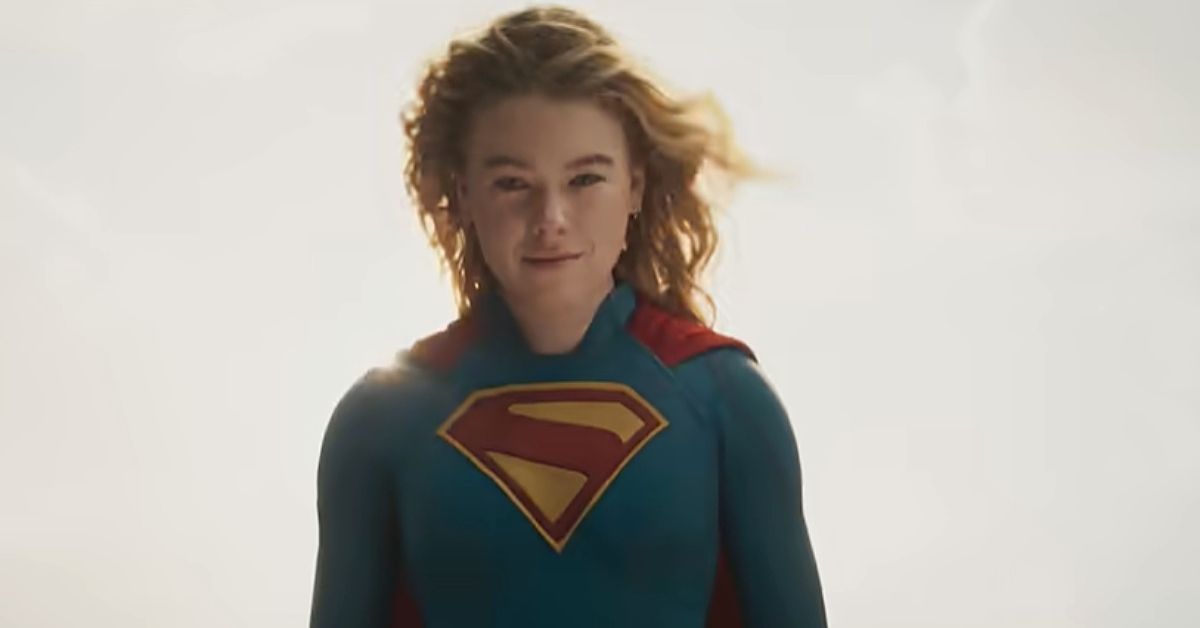
Hollywood is once again staring down a problem it refuses to acknowledge: audiences aren’t buying what it’s selling anymore.
For years now, the industry has been steadily torching goodwill with moviegoers by turning escapist entertainment into lecture halls. Instead of focusing on story, spectacle, and character — the things that used to pack theaters — studios have increasingly leaned into culture-war messaging and self-congratulatory commentary. The result has been a string of expensive bruises: underperformers and outright bombs that even brand recognition can’t save.
Disney and Marvel have already taken plenty of heat for this pivot, with high-profile disappointments like Lightyear, The Marvels, and the live-action Snow White failing to justify their massive budgets. Even once untouchable franchises have started showing cracks as audiences grow fatigued with preachy marketing and disconnected storytelling.
Now it’s DC’s turn to stumble into the same trap.
After a rocky reboot effort under filmmaker James Gunn — who helped steer Guardians of the Galaxy into a fan favorite — DC Studios’ attempt to reset its cinematic universe is already wobbling. His 2025 Superman relaunch didn’t exactly crash, but it didn’t soar either, landing well short of expectations and falling behind earlier franchise highs.
Worse for the studio, Gunn’s own promotional messaging didn’t help. In interviews, he leaned into framing Superman as a political and cultural metaphor — describing it as a story about America, immigration, morality, and “basic human kindness,” while brushing off critics in blunt terms. That kind of framing may play well in certain circles, but it didn’t translate into box office dominance.
Now attention has shifted to Supergirl, scheduled for a June 26 U.S. release, and early signals are flashing red.
Lead actress Milly Alcock has found herself at the center of controversy after comments about online criticism and gender politics in the superhero genre. In one interview, she suggested the backlash she receives stems from “simply existing as a woman” in the space, adding: “It definitely made me aware that simply existing as a woman in that space is something that people comment on. We have become very comfortable having this weird ownership of women’s bodies. I can’t really stop them. I can only be myself.”
Milly Alcock addresses the backlash she received after saying that “simply existing as a woman is something that people comment on. We have become very comfortable having this weird ownership of women’s bodies.”
“I didn’t even say ‘men’ — I said ‘people!’” Alcock says. “And they… pic.twitter.com/2qQshmdg5w
— Variety (@Variety) May 20, 2026
She later doubled down when responding to criticism, insisting she didn’t even single out men, saying: “I didn’t even say ‘men’ — I said ‘people!’ And they got so angry. I was like, ‘You’re proving my point. You’re proving my point!’”
Alcock also claimed she had irritated certain online critics, referencing anonymous accounts and what she described as predictable profile labels like “Dad of four” or “Christian.”
Whatever one thinks of the discourse, the controversy is now part of the film’s pre-release narrative — and not in a helpful way.
And the numbers aren’t helping either. Early box office tracking reportedly places Supergirl in the $47 million to $65 million domestic opening range — a troubling figure for a film carrying an estimated production budget around $175 million, plus heavy marketing costs. In today’s theatrical economics, that means the movie would likely need roughly half a billion globally just to break even.
That’s a steep climb for any superhero film. For one opening soft, it starts to look impossible.
#Supergirl lands in theaters and @IMAX June 26. pic.twitter.com/N7BYoszfl0
— Supergirl (@supergirl) March 31, 2026
The comparison to Superman only sharpens the concern: that film opened significantly higher and still underwhelmed relative to expectations for a universe reboot. If Supergirl opens below half of that, the trajectory for DC’s “new era” starts looking less like a reset and more like a slow-motion repeat of past franchise fatigue.
DC’s problem isn’t just one film, or one actor’s interview cycle, or even one director’s messaging. It’s a broader inability to remember what made these movies work in the first place: big-screen fun, clean storytelling, and characters audiences want to root for without feeling like they’re being pulled into someone else’s lecture.
Instead, the promotional cycle has become a revolving door of controversy, defensiveness, and cultural signaling — all of which tends to repel the very mainstream audience these films need to survive.
At a time when attention spans are fractured by TikTok, YouTube, and a thousand streaming options, Hollywood can’t afford to keep alienating the people still willing to buy a movie ticket. Yet that’s exactly what keeps happening.
If Supergirl underperforms as early tracking suggests, it won’t just be a stumble for one film — it’ll be another warning flare for an industry still insisting it’s the audience that’s the problem.









hard pass on aa movie with an actress no one has heard of