

Just when New Yorkers thought they had heard every possible way Albany could spend taxpayer money, another eye-popping proposal has landed on the table: six-figure reparations checks.
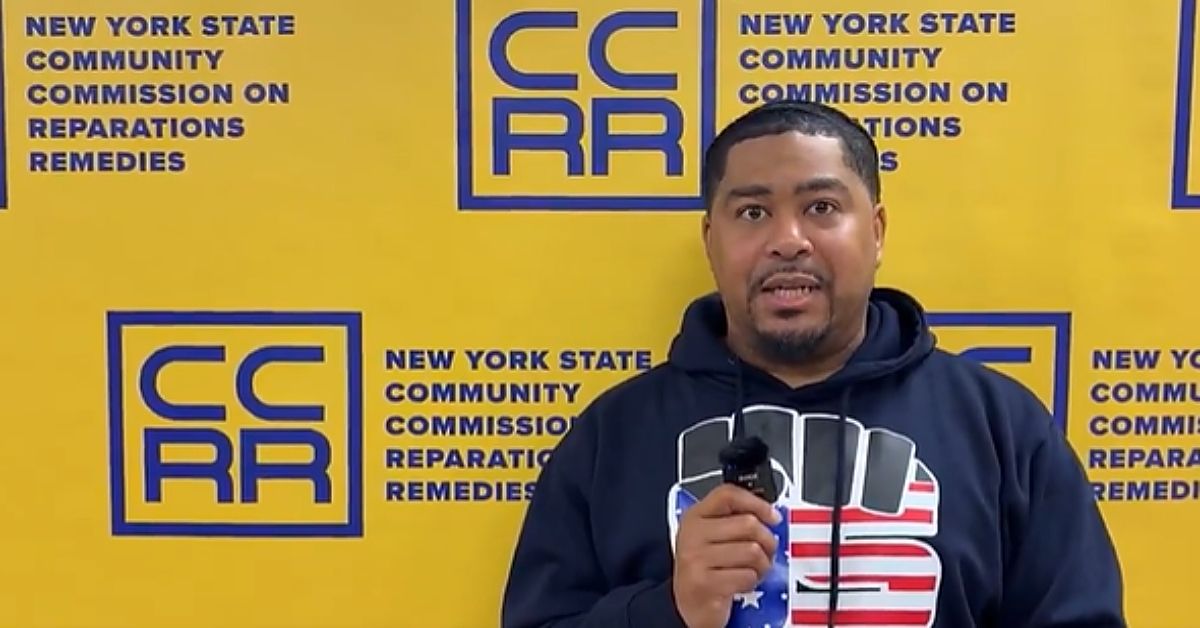
At a recent public hearing hosted by New York’s reparations commission, several activists argued that direct cash payments aren’t merely one option — they’re the only meaningful form of compensation. And some weren’t talking about modest sums.
“We need $800,000 for each foundation of Black Americans. That’s simple,” activist Aubrey Muhammud said. “That’s — in New York — that’s about the cost of living that’ll get you a home or a small business or for you to recover from any financial duress.”
Simple? Maybe for the people expecting the checks. For everyone else, the obvious question remains: who’s paying?
Some Black New Yorkers told a state reparations hearing that $800,000 cash payments per person are the only true form of justice. The commission, established by Gov. Hochul, is examining reparations for descendants of enslaved people.
— Fox News Flash (@FoxNews_Flash) May 30, 2026
The hearing was part of an ongoing effort launched after Gov. Kathy Hochul signed legislation in 2023 creating a commission to examine New York’s historical ties to slavery and study possible reparations proposals. The commission is gathering testimony before eventually delivering recommendations to state leaders.
But what unfolded sounded less like a historical discussion and more like a bidding war over taxpayer-funded compensation.
One speaker, Rex Burns, proposed reviving something akin to a modern Freedmen’s Bureau, describing it as “like a central bank almost to Black America” that would distribute resources to Black communities.
Others made it clear that cash remains the top priority. “It shouldn’t only be a check, but it should start with a check,” Brooke Lean argued. “Then we can start addressing education issues, redlining issues, policing issues, all of these other issues that are badges and incidents of slavery.”
In interviews with Fox News Digital at a hearing on New York reparations, some Black residents discuss what kind of financial compensation they believe they deserve and where identity comes into play. The push comes as New York weighs how — and whether — to compensate descendants… pic.twitter.com/yM1WUJ5X3J
— Fox News Flash (@FoxNews_Flash) May 30, 2026
Another attendee, Caprice Reins, offered a blunt summary of the movement’s position: “I think that we are owed a debt.”
And Tanasia Poke left little room for ambiguity about what she considers justice. “It’s been the greatest impact to our community overall, generationally. And so, by policy and finance, it’s how it’s been institutionalized in the first place. It is the way to repair it.”
The hearing also highlighted growing divisions within the reparations movement itself. Members of the United States Freedmen Project argued that any eligibility should be based on lineage and direct descent from enslaved Americans rather than broader racial categories. Supporters contend that reparations programs based solely on race could face constitutional challenges.
Meanwhile, New York joins a growing list of Democrat-led jurisdictions exploring reparations plans. In Illinois, the city of Evanston became one of the first municipalities to distribute reparations-related payments, providing qualifying recipients with housing assistance funds. Similar efforts have surfaced in Chicago, California, and other progressive strongholds, often triggering fierce legal and political battles.
While families continue struggling with inflation, housing costs, crime concerns, and crushing state taxes, political leaders appear increasingly willing to entertain programs that could cost taxpayers billions while dividing Americans by ancestry and identity.
Assemblymember Michaelle Solages, one of the lawmakers behind the commission, emphasized that the process is still about gathering public input. “At the end of the day, we’re a collective state. We are many people in one, and it’s important that we hear from New Yorkers,” Solages said. “And so our intention when drafting the legislation was for the Commission to hear from the New Yorkers and deliver a report.”
Fair enough. Hear everyone. But if Albany ultimately decides that writing massive checks for events that occurred generations ago is the answer to today’s challenges, voters may have a few questions of their own when they head to the ballot box.









The US was paying Reparations until the democrat President who succeeded Lincoln stopped it , also any real Reparations should come from the people who sold there ancestors into slavery , you know the black Muslims sold there own race into slavery because they wanted the money . So go over to Africa and demand Reparations , let us know how that turns out
The US was paying Reparations until the democrat President who succeeded Lincoln stopped it , also any real Reparations should come from the people who sold there ancestors into slavery , you know the black Muslims sold there own race into slavery because they wanted the money . So go over to Africa and demand Reparations , let us know how that turns out
One more reason NY is losing taxpayers in droves for asinine policies like these.