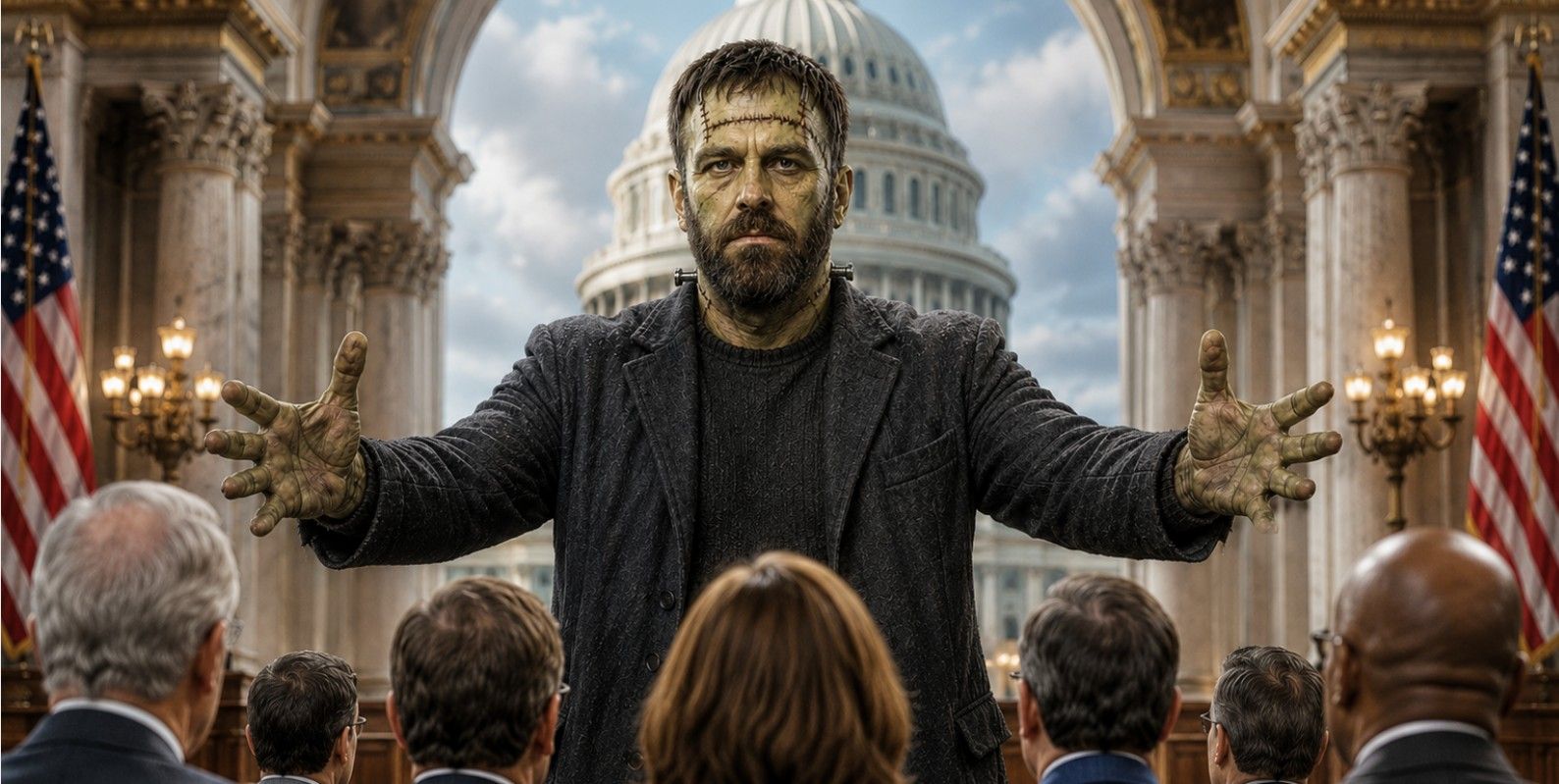
The Graham Platner saga has officially graduated from ordinary campaign scandal to full-blown political farce.
Just days before Maine Democrats head to the polls, the Senate candidate already dogged by revelations involving explicit messages, inflammatory online posts, and a Nazi-linked Totenkopf tattoo is now facing allegations that his campaign tried to intimidate a former aide and then pin the entire mess on her when she refused to play along.
If this sounds like the plot of a bad political satire, that’s because reality is doing a better job than comedy writers these days.
According to former campaign political director Genevieve McDonald, she provided information about Platner’s sexting controversy to The Wall Street Journal months ago on background. The newspaper reportedly conducted its own verification and corroborated the story through multiple sources before moving toward publication. When publication neared, McDonald says she was warned to expect fallout. That’s when, according to reports, members of the Platner orbit allegedly pressured her to deny what she knew and help discredit the story. When she declined, she claims she became the designated fall guy.
The allegation isn’t merely that campaign operatives wanted favorable press. Politics is full of spin. The allegation is that they wanted a former staffer to publicly contradict facts that had already been independently verified. When she refused, the campaign allegedly prepared to portray her as a disgruntled ex-employee responsible for the controversy.
For voters keeping score at home, this controversy arrives on top of a growing mountain of baggage. Platner has spent months answering questions about old Reddit posts, a tattoo critics identified as resembling a Nazi Totenkopf symbol, and now reports that he exchanged sexually explicit messages with multiple women during his marriage. Platner has apologized for some past controversies and dismissed recent reporting as gossip, while his wife has publicly defended both their marriage and his candidacy.
Yet the most remarkable aspect of the entire affair may be the Democratic Party’s response.
For months, party leaders and activists who routinely compare Republicans to Nazis seemed strangely willing to look the other way as controversy after controversy piled up around one of their most important Senate recruits. Only now, with headlines multiplying and primary day approaching, are prominent Democrats beginning to sound even mildly uncomfortable.
Enter Sen. Cory Booker.
Asked about Platner’s mounting scandals, Booker offered what may be the understatement of the political year: “That guy has questions to answer.” He added that he had “concerns.” That’s it. Concerns. Not outrage. Not demands for withdrawal. Just concerns.
Imagine the media hurricane if a Republican Senate candidate were simultaneously defending a Nazi-linked tattoo controversy, battling reports of explicit communications outside marriage, and facing allegations that campaign associates tried to pressure a former aide into helping suppress damaging information. Cable news would need extra batteries to keep the outrage machine running.
Instead, Democrats appear trapped by their own political calculations. Maine’s Senate race is viewed as critical to their hopes of reclaiming control of the chamber, making Platner both politically valuable and increasingly radioactive. The result is a spectacle in which party figures seem desperate to avoid discussing the candidate while also hoping voters somehow ignore the avalanche of stories surrounding him.
The cruel irony is that much of this predicament was avoidable. Had Democratic leaders drawn a bright line when earlier controversies surfaced, they might have avoided today’s scramble. Instead, each new revelation has raised the same question: if previous scandals weren’t disqualifying, what exactly is?
As primary day approaches, Democrats find themselves staring at a political trap of their own making. If they continue backing Platner, they own every headline that follows. If they try to distance themselves now, voters will wonder why they waited until the eleventh hour to discover their principles.
Either way, the scandal isn’t going away. It’s growing. And with every new disclosure, the question becomes less about Graham Platner and more about the party that kept insisting everything was fine.