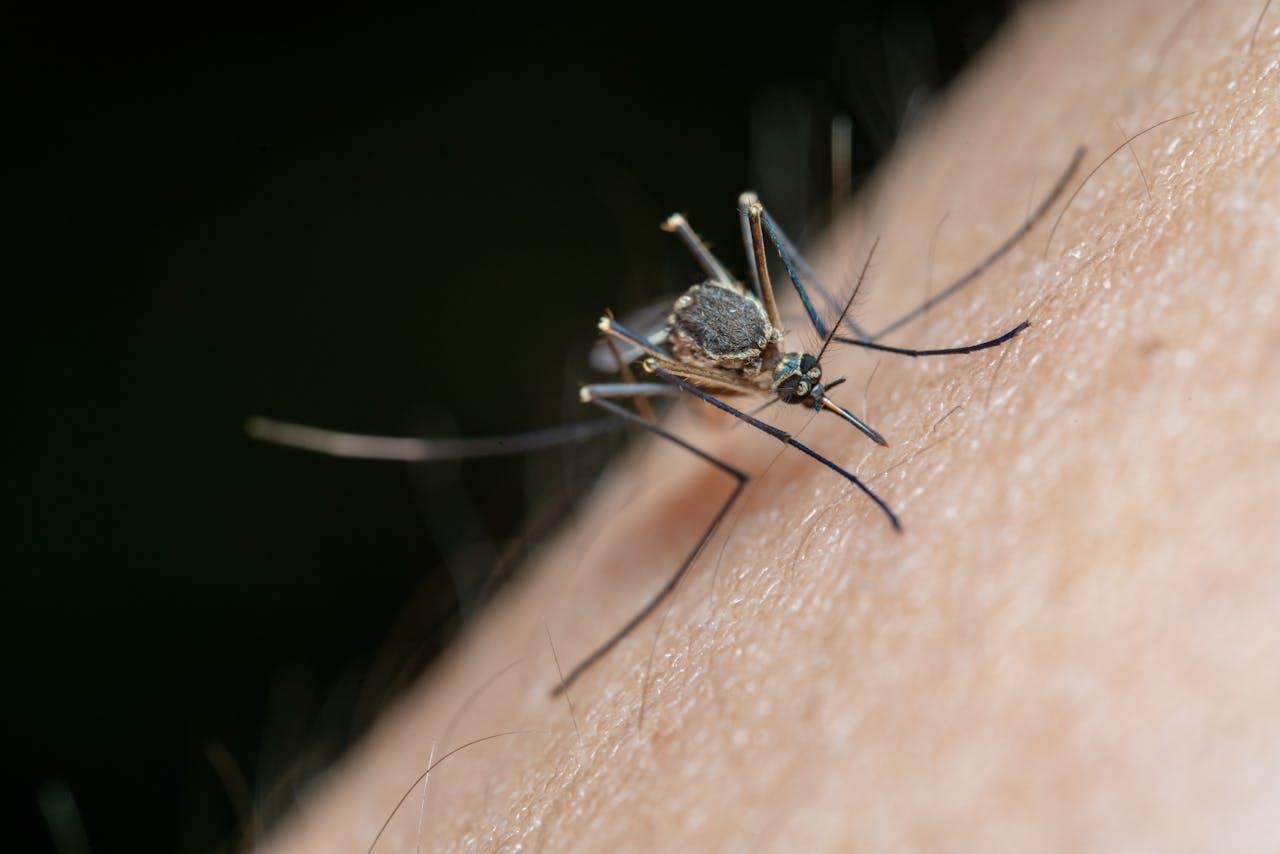
Just when you thought Big Tech couldn’t get any more ambitious—or reckless—Google is now reportedly preparing to unleash a staggering 64 million bioengineered mosquitoes across California and Florida. Yes, mosquitoes. Millions of them. Released into the wild.
The rollout, part of what the company calls its “Debug Project,” is already triggering bipartisan unease, including a very blunt reaction from Rep. Tim Burchett, who took to social media with a warning that reads like a checklist of past ecological disasters.
“Why does Google have 32 million mosquitos? Have we not learned our lesson with Kudzu, Sparrows, Black Birds, Asian Carp? Should I go on? Don’t mess with the balance of nature.”
That about sums up the gut instinct of a lot of Americans who’ve watched “well-intentioned” environmental interventions turn into decades-long headaches.
According to the company’s own materials, the plan calls for releasing 64 million mosquitoes over two years—32 million per year, split evenly between California and Florida. The goal, Google claims, is to fight disease by flooding ecosystems with engineered insects designed to crash wild mosquito populations.
The twist—if you want to call it that—is that all 64 million are supposed to be sterile males.
“Our good bugs are male mosquitoes that have a naturally occurring bacteria called Wolbachia, which makes them unable to have offspring with wild female mosquitoes,” the project’s official website states.
“When a wild female mates with a sterile male, her eggs won’t hatch. The population gets smaller with each generation,” the website continues.
In theory, it’s a tidy little population hack: release harmless male mosquitoes that don’t bite, reduce reproduction, and eventually suppress disease-carrying populations. In practice, critics say, it’s a lot of moving biological parts for a very large outdoor experiment.
Even supporters of mosquito control methods admit the risks are real. California Academy of Sciences entomologist Chris Grinter told SFGate that while the technique can be effective, it demands near-perfect execution.
“It’s really a genius technique that has been used to completely eradicate or reduce the numbers of serious pests and vectors,” Grinter said.
Then came the warning label buried in the optimism: “You don’t want to accidentally increase the mosquito population.”
That “oops” scenario—releasing the wrong mosquitoes or too many females—would be the exact opposite of the intended outcome. And it’s not exactly a comforting thought.
Before any bugs take flight, the plan still needs approval from the Environmental Protection Agency. The EPA will reportedly decide whether to greenlight an experimental use permit after a public comment period that closes June 5, according to reporting cited by The Guardian.
Google argues on its “Debug” site that traditional mosquito control methods just aren’t cutting it anymore.
“Attacking mosquitoes with pesticides is unsustainable because they’re becoming less effective over time and can be toxic, [and] clearing standing water is not enough because people can never find all the places that mosquitoes breed,” the site says. “We need a new approach.”
That “new approach,” however, involves releasing tens of millions of engineered insects into the environment—an idea that naturally makes a lot of people uneasy.
The company insists it will work with governments, researchers, and local communities, and claims it will spend time engaging residents to understand concerns.
It also points to overseas results, citing Singapore as a success story where similar programs reportedly achieved “80-90% suppression” of mosquito populations and reduced dengue transmission.
Meanwhile, global health warnings about mosquito-borne illness continue to circulate. The World Health Organization’s Sri Lanka office recently highlighted dengue symptoms in a public advisory:
“With dengue cases on the rise in Sri Lanka, it’s important to know the warning signs and act early. These symptoms could indicate dengue:
Fever
Severe headache
Joint and muscle pain
Nausea
Skin rashes
Pain behind eyes
If you or someone you know…”
Opposition is growing online, where skepticism has turned into outright alarm.
One critic wrote: “The company that removed the logo ‘don’t be evil’ is now releasing millions of mosquitoes to ‘stop disease,’ What could possibly go wrong?”
Another warned: “Google is about to conduct one of the LARGEST open-air biological experiments in U.S. HISTORY. 64 MILLION bacteria-infected mosquitoes are set to be released into Florida and California — potentially causing irreversible ecosystem disruptions. This must be STOPPED.”