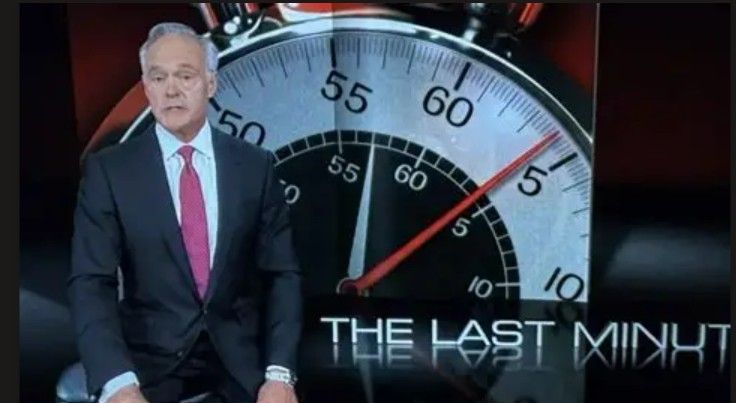
CBS News has detonated a fresh round of internal chaos — and this time it’s one of its most recognizable faces, veteran “60 Minutes” correspondent Scott Pelley, who’s out at the network after what insiders describe as a full-blown clash with new leadership.
And if you believe Pelley’s version of events, this wasn’t just a personnel disagreement. It was a newsroom civil war.
According to multiple reports, Pelley was shown the door Tuesday night following a tense series of meetings with the program’s newly installed leadership, including Executive Producer Nick Bilton — a former tech columnist whose résumé has raised more than a few eyebrows among traditional broadcast journalists.
The day before the firing, things reportedly came to a head inside a staff meeting where Pelley openly challenged Bilton’s authority and direction for the legendary newsmagazine, even questioning broader changes under CBS News leadership and media figure Bari Weiss.
One account described Pelley as “relentlessly pressing” the new executive on his qualifications, editorial direction, and recent staffing decisions — including the firing of prominent correspondents Sharyn Alfonsi and Cecilia Vega.
By Tuesday, the network’s patience had snapped. In a sharply worded termination letter attributed to Bilton, Pelley was accused of turning a staff meeting into a hostile spectacle.
“Yesterday, you hijacked my first meeting with staff to disparage me, my qualifications, and my intentions with remarkable incivility and contempt,” the letter stated, adding that his conduct showed “no interest in contributing to the future success of the show.”
But Pelley’s exit didn’t come quietly — or meekly. Shortly after news broke, he spoke to The New York Times, drawing a stark contrast between his experience covering global conflict and what he now describes as internal dysfunction at CBS.
“I have been in combat in Afghanistan,” Pelley said. “I have been in combat in Iraq. I have been in the war zone in Ukraine multiple times, risking my life and the happiness of my family because of my devotion to the broadcast.”
Pelley also took aim at CBS leadership’s decision-making, accusing new management of freezing him out of key editorial explanations — including the firing of fellow correspondents — and describing the atmosphere as “cold and callous.”
But the most explosive allegation came via a statement obtained by journalist Oliver Darcy, in which Pelley claimed management had pressured him to cross a serious ethical line. He alleged he was instructed to “inject falsehoods and bias into a politically sensitive story” and include “assertions that are unverified.” He did not provide further specifics.
Pelley’s full statement reads like a farewell manifesto for a bygone era of broadcast journalism. In it, he praised the legacy of “60 Minutes,” calling it an American institution and warning that its core identity had been eroded by recent leadership changes and corporate restructuring.
He wrote that the program’s success came from “integrity, quality, and humanity,” and argued that recent decisions — including sweeping personnel changes and leadership turnover — had stripped the show of its “DNA.”
He also claimed that under the new regime, even interview access had become politicized, alleging that politicians were being allowed to influence correspondent selection — a move critics say would be unthinkable in the program’s heyday.
And in perhaps the most pointed line, Pelley suggested the network’s direction was being influenced by external political considerations, writing that CBS was “casting this legend aside” to “curry a moment of favor with the Trump administration.”
That claim will no doubt ignite pushback — and possibly legal heat — especially given reports that his firing was formally designated “for cause,” a move that often signals potential litigation ahead.
Pelley leaves CBS after 37 years at the network, framing his exit not as retirement, but as an institutional collapse from within. His supporters are already calling it a principled stand. Critics inside corporate media circles, however, may see it as another ugly episode in an industry already drowning in distrust, restructuring, and ideological trench warfare.