The knives are out in South Florida — and this time they’re aimed squarely at one of the Democratic Party’s most recognizable veterans.
Rep. Debbie Wasserman Schultz thought she could smoothly slide into a newly drawn congressional district after Florida’s latest redistricting shakeup. Instead, she’s finding herself at the center of a messy intraparty revolt, with local activists, rival candidates, and even some Democratic leaders refusing to roll out the welcome mat.
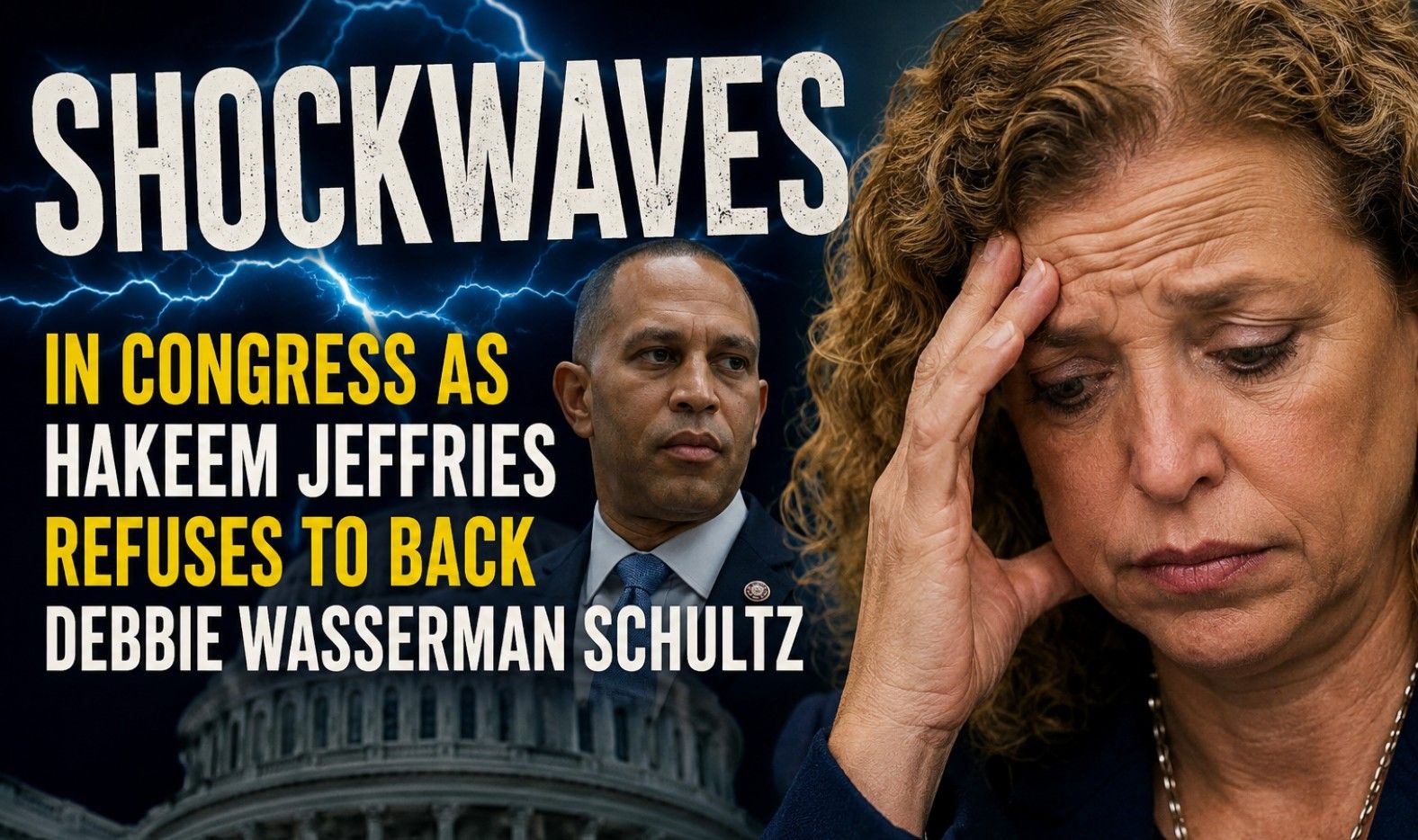
The latest warning sign came from House Minority Leader Hakeem Jeffries, who was given a simple opportunity to back a member of his own leadership team and declined to do it.
“Haven’t made a decision, as it relates to that particular race,” Jeffries said when asked whether he supported Wasserman Schultz’s bid for the Fort Lauderdale-area seat.
For a politician with decades of connections inside the Democratic establishment, that wasn’t exactly a ringing endorsement. It sounded more like a politician discovering an urgent appointment somewhere else.
Jeffries added, “Everybody has a right to run where they see fit. They’ve got to make their case to the people that they hope to represent moving forward.”
The controversy centers on a majority-Black district that has been represented by Black lawmakers for more than 30 years. Critics argue that Democrats routinely lecture voters about representation and diversity, yet suddenly become flexible when a powerful incumbent needs a political landing spot.
Jeffries attempted to frame the dispute within the broader battle over redistricting, saying, “I think we all recognize the sensitivities of the moment in terms of an unprecedented Jim Crow-like assault on Black political representation that has been unleashed by the Supreme Court’s outrageous decision to gut the Voting Rights Act.” He continued: “And it’s an environment that all of us need to be sensitive to as we move forward.”
But sensitivity is in short supply in this race.
One of Wasserman Schultz’s opponents, progressive activist Elijah Manley, wasted no time piling on. In a social media broadside, he accused the congresswoman of overstating support from influential Democratic figures. “First, she said the CBC encouraged her to run. The CBC Chair said they did not,” Manley wrote. “Then she went on TV and said that Leader Jeffries was supporting her. Jeffries just declined to endorse her.”
Manley then delivered the political equivalent of a mic drop. “It is not a good day to be named Debbie Wasserman Schultz in Florida’s 20th District.”
Still, if politics were decided by press releases and social media posts, campaigns would be much cheaper.
Wasserman Schultz enters the race with one enormous advantage: money.
Federal campaign filings show she has more than $2.5 million available, giving her a financial edge that most challengers can only dream about. In modern politics, cash may not guarantee victory, but it certainly buys a lot of television commercials explaining why you’re actually the victim.
And the Democratic primary field is hardly lacking drama. Former Rep. Sheila Cherfilus-McCormick is seeking a comeback despite facing serious legal troubles and a pending criminal case. The former congresswoman resigned earlier this year while under intense scrutiny and is now attempting an unlikely return to Washington.
Former Broward County Mayor Dale Holness is also in the race, along with musician Luther Campbell, adding even more personalities to an already crowded contest.
The showdown is unfolding against the backdrop of Florida’s aggressive redistricting overhaul. Republican lawmakers reshaped congressional boundaries across the state, forcing several incumbents to make difficult political calculations about where to run.
For Wasserman Schultz, the move may have looked straightforward on paper. In practice, it has ignited a debate about political entitlement, representation, and whether longtime incumbents believe every Democratic district automatically belongs to them.
It’s also a reminder that while Republicans and Democrats spend plenty of time attacking each other, some of the fiercest political fights happen inside the party tent.
And for Debbie Wasserman Schultz, the toughest opponent in this race may not be a Republican at all. It may be the growing number of Democrats asking a simple question: Why this district?