

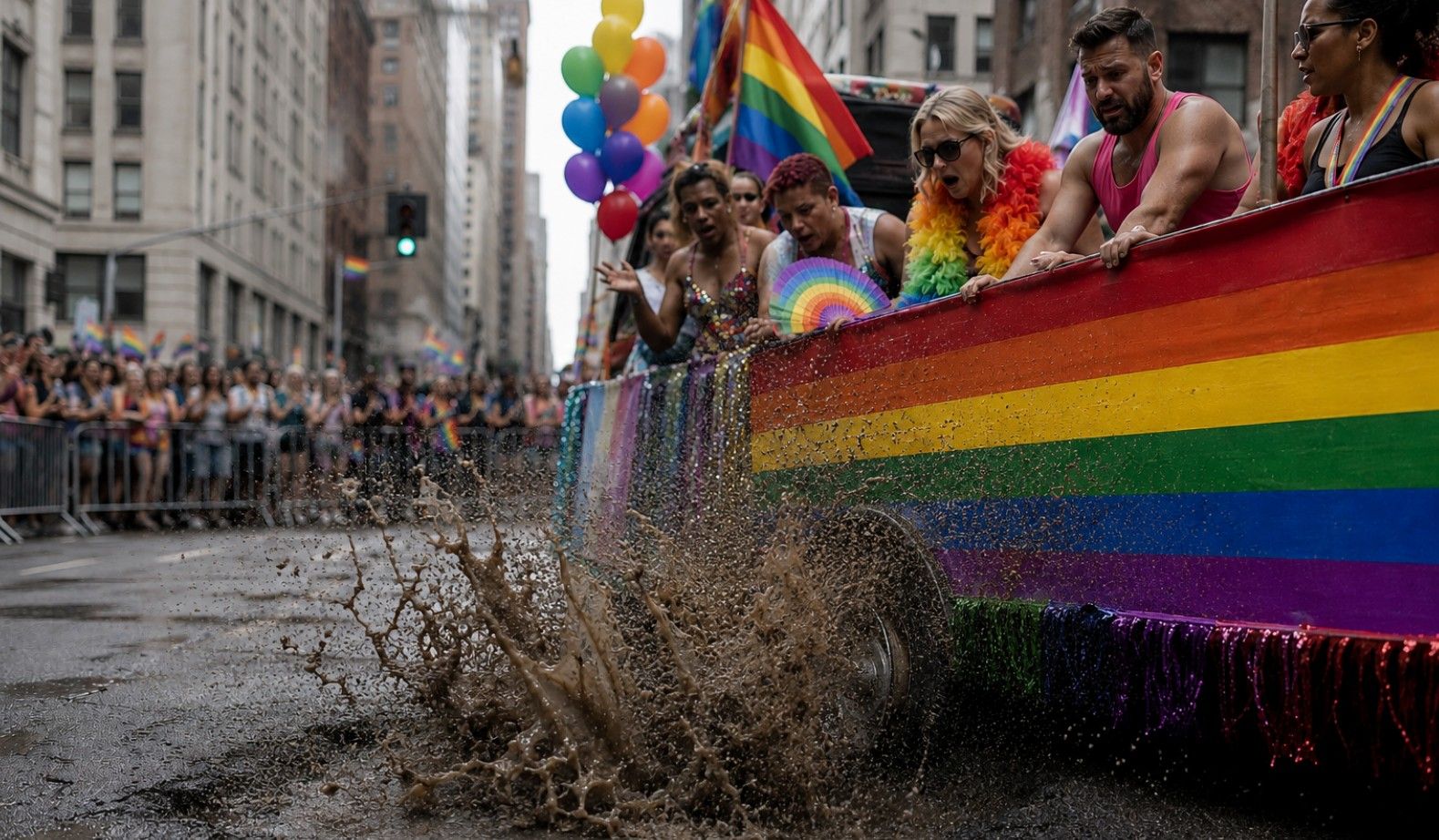
For years, America’s cultural elites acted as if the debate was over.
Hollywood declared victory. Corporate America slapped rainbow logos on everything from sneakers to cereal boxes. Universities treated dissent as a disciplinary offense. And activists insisted the public would only become more enthusiastic about the ever-expanding LGBTQ agenda.
Turns out voters had other ideas.
A newly released Gallup survey suggests the country may be experiencing something that many political and media gatekeepers swore would never happen: a cultural course correction.
Support for same-sex marriage remains a clear majority position in the United States, with 65% of Americans backing its legality. But the bigger story isn’t where the number stands today. It’s where it’s headed.
That figure has fallen six points from its recent high-water mark reached just a few years ago. At the same time, only 62% of Americans now describe gay and lesbian relationships as morally acceptable — the lowest reading Gallup has recorded in a decade. Meanwhile, public skepticism toward gender-transition issues has grown even more pronounced, with a majority of Americans now saying changing one’s gender is morally wrong.
The numbers reveal a trend that political consultants, activists and corporate diversity officers may find uncomfortable: the relentless march leftward on social issues is no longer a one-way street.
The most dramatic movement has occurred among Republicans. Support for same-sex marriage inside the GOP has fallen to 37%, a sharp drop from the majority support Gallup measured just a few years ago. On the question of whether gay and lesbian relationships are morally acceptable, Republican approval has fallen back to levels not seen since the early 2010s.
Independent voters are drifting in the same direction, albeit more gradually. Democrats, meanwhile, remain overwhelmingly supportive, highlighting an increasingly stark partisan divide on cultural questions.
That divide matters because it suggests something larger than a temporary polling fluctuation. Americans aren’t merely answering survey questions differently. They’re reacting to a decade of nonstop cultural confrontation.
The political establishment often frames opposition to progressive social policies as intolerance. Many voters appear to see it differently. They watched schools become battlegrounds over gender identity. They saw biological males competing in female sports. They witnessed corporate DEI programs evolve from inclusion efforts into ideological litmus tests. And increasingly, they seem willing to push back.
Gallup acknowledged that support for LGBTQ causes peaked in the early 2020s and has been edging downward ever since. The polling organization linked the shift to conservative resistance against DEI initiatives and other activist-driven efforts that became deeply embedded throughout major institutions.
None of this means America has suddenly returned to the social attitudes of decades past.
Same-sex marriage still enjoys majority support nationally. More than six in ten Americans continue to view gay and lesbian relationships as morally acceptable. But the assumption that every new progressive demand would be greeted with automatic public approval is colliding with reality.










LGBTQ this is morally and ethically wrong and repugnant to normal human beings. It is a complete display of mental illness and should not be tolerated in our society.