California’s political class may not have figured out exactly how reparations would work, who would qualify, or how much taxpayers could be on the hook for — but some lawmakers are already working on making sure any future payouts stay out of the tax collector’s reach.
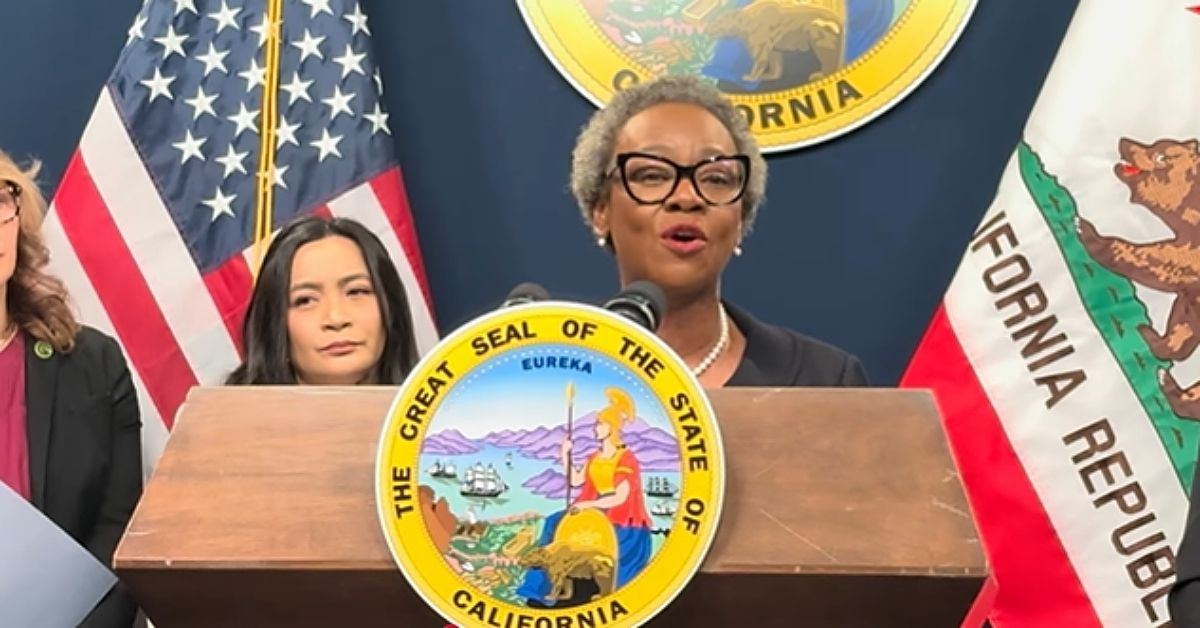
In a move that is sure to reignite one of the state’s most divisive debates, Democratic Assemblymember Tina McKinnor has advanced legislation that would exempt future reparations payments from California state income taxes if such programs are ever approved.
The proposal, Assembly Bill 2186, has now landed in the California Senate after clearing the Assembly. If it survives there, it will head to Gov. Gavin Newsom’s desk.
McKinnor framed the bill as a matter of fairness, arguing that recipients should receive every dollar of any future reparations package. “For generations, descendants of formerly enslaved people have been denied both justice and economic opportunity,” McKinnor said. “Reparations are meant to repair harm, not be partially taken back through taxation.”
The legislation would carve out a special tax exemption for a broad range of future benefits connected to reparations programs. Under the proposal, any qualifying payment received between January 1, 2027, and January 1, 2032, would be excluded from taxable income.
And we’re not just talking about cash. The bill’s language covers monetary payments, grants, trust distributions, debt forgiveness, and other forms of financial compensation that could emerge from future reparations initiatives.
In other words, Sacramento is already writing tax rules for a reparations system that doesn’t yet exist. McKinnor argues California needs to prepare now. “California is actively preparing for the implementation of reparations programs,” she said. “We must ensure that recipients receive the full benefit of these efforts.”
The debate comes as reparations advocates continue pushing for compensation programs across the country. In Evanston, Illinois, officials approved housing-related payments worth up to $25,000 for eligible Black residents. Other cities and states have explored direct cash payments, housing assistance, grants, and various compensation programs tied to historic discrimination claims.
On Capitol Hill, Michigan Democratic Rep. Shri Thanedar recently revived federal reparations efforts through legislation that would establish a commission tasked with studying and potentially distributing land-based reparations for descendants of American slaves.
Thanedar has long aligned himself with progressive causes and previously backed similar reparations efforts that failed to gain traction in Congress.
California remains ground zero for the modern reparations movement. The Golden State became the first in the nation to create a statewide reparations task force dedicated to studying slavery’s legacy and recommending compensation proposals.
But even in deep-blue California, political reality has started colliding with activist ambitions.
Newsom has already rejected several reparations-related measures amid concerns about legal challenges, and leading contenders in the state’s upcoming gubernatorial race have shown little enthusiasm for making reparations a centerpiece issue.
That leaves advocates searching for political allies willing to carry the torch.
Civil rights attorney Lisa Holder, who previously served on California’s Reparations Task Force, acknowledged earlier this year that supporters face a lengthy road ahead. “You can’t legislate yourself out of 400 years of inequality and injustice. You have to do an entire body of laws to change the systems that have been disparately affecting Black folks for decades,” Holder said.