

LOS ANGELES — A newly surfaced photograph and a growing pile of voter registration records are fueling fresh outrage over Los Angeles elections, raising uncomfortable questions for City Councilmember Nithya Raman and putting California’s election system under a harsh national spotlight.
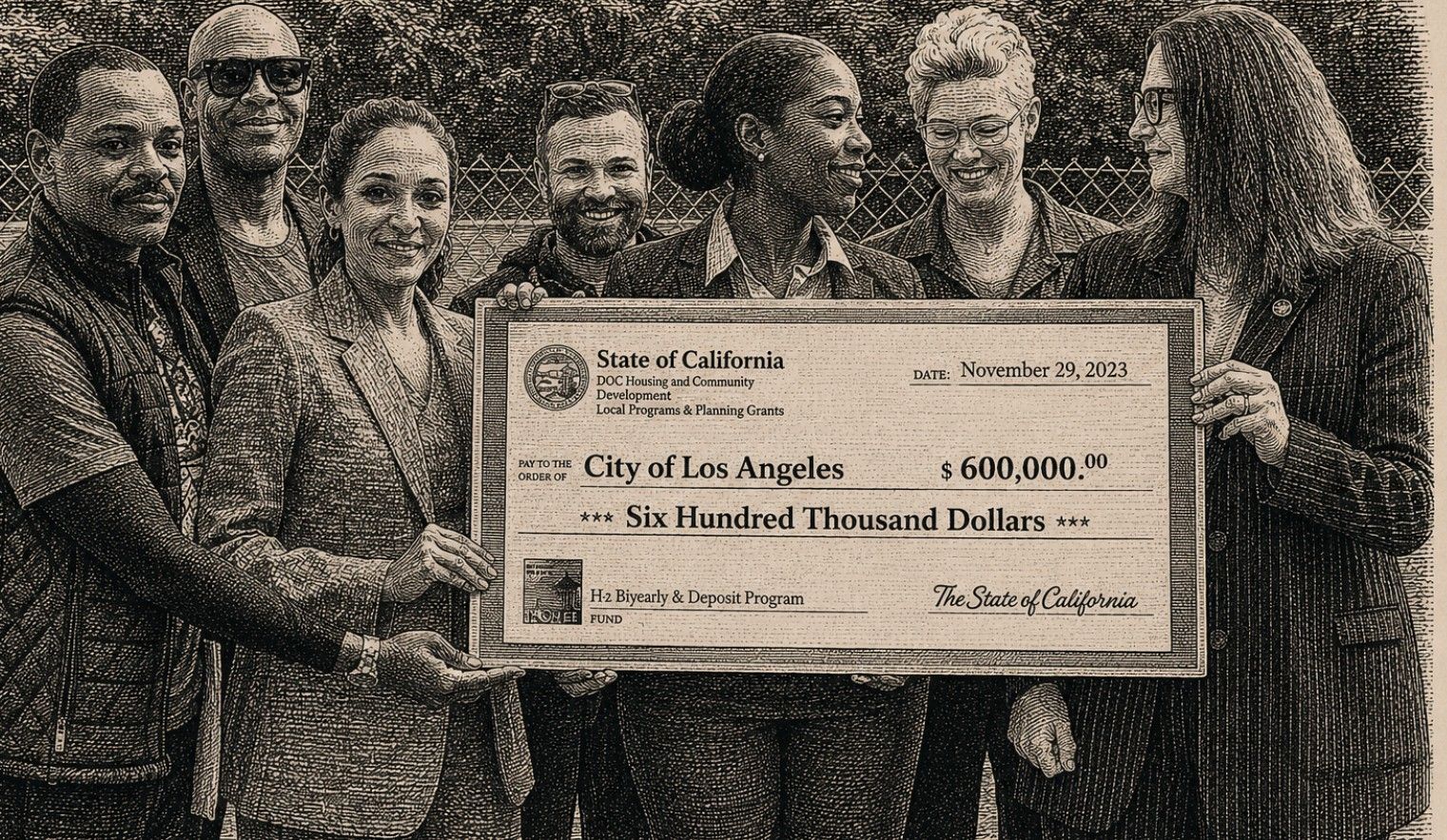
At the center of the controversy is St. Joseph Center in Venice, a homeless services organization that public records show had 185 registered voters tied to its address despite operating as a drop-in service center rather than a residential shelter. The organization previously received a $600,000 taxpayer-funded grant awarded while Raman chaired the Los Angeles City Council’s Housing and Homelessness Committee.
The controversy intensified after inquiries about the relationship between Raman and the organization reportedly went unanswered. A photograph showing Raman presenting a ceremonial check to the group was later removed from the organization’s website after media questions were raised.
The dispute comes as scrutiny falls on Los Angeles voter rolls. Public records reviewed by reporters identified roughly 7,600 registered voters connected to homeless shelters, service providers and related facilities across the city.
The largest concentration appeared at the Midnight Mission on Skid Row, where voter registration records reportedly showed 1,160 registered voters associated with the address. The shelter itself publicly advertises far fewer beds than that figure, prompting critics to question how such large voter concentrations accumulate at service-provider locations.
Federal attention has now entered the picture. U.S. Attorney Bill Essayli said his office intends to examine the concerns and determine whether any laws were violated. “California has effectively decriminalized election fraud by removing basic fraud detection that are common in other states,” Essayli said. “Dirty voter rolls, with no voter ID and unregulated ballot harvesting is a open invitation for bad actors to commit fraud. “If California wants to restore public trust, we invite them to comply with federal law and allow us to audit its voter rolls — what are they afraid of.”
Those remarks are likely to intensify an already heated debate over California’s election policies, which have long been criticized by election-integrity advocates while defended by voting-rights groups.
Interviews conducted with homeless individuals added another layer to the controversy. Martin Rowe, who lives in Venice, said he was registered during an outreach effort near a grocery store. “They asked you all the questions,” Rowe said. “They gave you a paper.”
Another man on Skid Row, identified only as Norman, claimed voter registration drives have been a common sight in the area for years. “It was a big push to get a certain area of town registered to voting,” Norman said. “They are just doing it because we’re here. You see people sitting around. It’s just a few lines to sign and you’re a registered voter.”
The allegations could not be independently verified, and no evidence was presented linking the described activities to any specific campaign or political organization. Still, the claims have revived memories of previous election-related scandals involving homeless populations in Los Angeles County.
The controversy deepened further when reporters encountered a registered voter outside the Midnight Mission who reportedly could not recall registering and was unable to identify a candidate in the Los Angeles mayoral race.
Meanwhile, records reportedly identified hundreds of additional voters connected to affordable housing developments, supportive housing projects, addiction treatment centers and behavioral health facilities. More than 300 registrations were also linked to addresses associated with Los Angeles County social-services operations.
Election-law attorney Garrett Fahy argued that critics may be attacking outcomes produced by the very system California lawmakers intentionally created. “The system is not set up to prevent people from voting. It’s to ensure anyone who can register votes,” Fahy said. “This is the system that our representatives have given to us.
“If you don’t like our system, don’t yell at your local elections official. Go yell at Sacramento and go yell at the secretary of state because those are the people who determine the laws that we have.”
Fahy maintained that the registrations appear consistent with California law and reflect years of legislative policy decisions rather than misconduct by local election administrators. “This is how our system works as it was intended to work,” Fahy said.








Where’s the photo or the link???
California should have its statehood revoked and be designated a territory, dissolving its corrupt government and putting it back under federal control.
It is a matter of national emergency, of having destroyed what is arguably the most important state for food production in the United States, never mind what was done to the rest of what was once known as The Golden State.