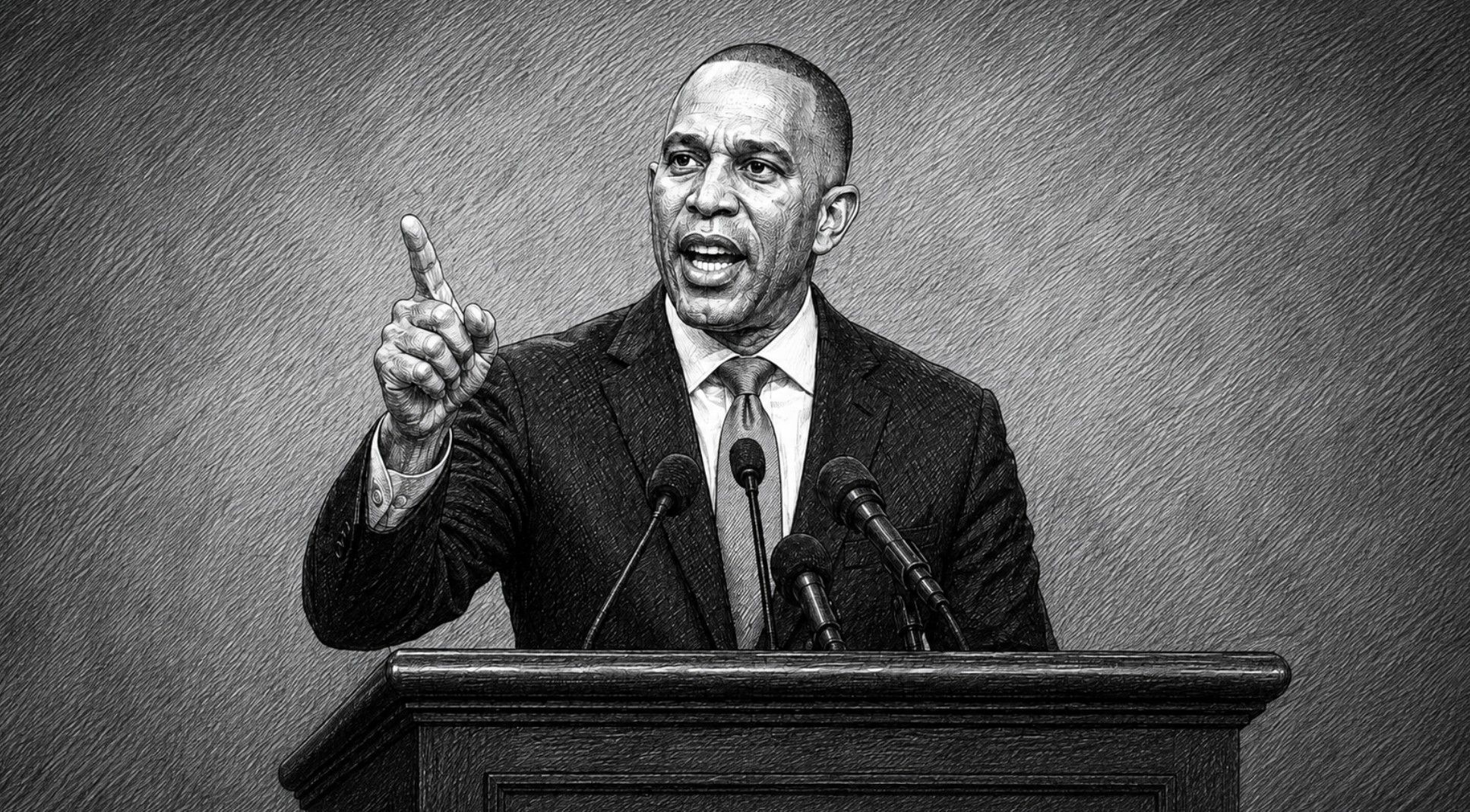
For years, Democrats and their media allies have treated election skepticism as a thought crime — at least when Republicans are the ones asking questions. But now that the 2026 midterms are approaching, House Minority Leader Hakeem Jeffries appears to be singing from a very different songbook.
The latest Democratic message is enough to give voters political whiplash. On one hand, party leaders insist elections in deep-blue states like California are secure, transparent, and beyond reproach. On the other, they’re warning that Donald Trump and Republicans are somehow plotting to rig upcoming elections.
Which is it?
This contradiction isn’t exactly new. Democrats spent years questioning election outcomes when the results didn’t go their way. After the 2016 election, many prominent figures pushed claims that Russian interference effectively handed the presidency to Trump. Following the 2024 election, some activists and commentators floated theories involving billionaires, technology platforms, and alleged manipulation of the electoral process.
Yet whenever Republicans raise concerns about election administration, ballot security, voter rolls, or mail-in voting procedures, they’re told there’s absolutely nothing to see here.
Jeffries has become one of the loudest voices promoting the idea that Trump poses a unique threat to election integrity. The argument asks voters to believe two seemingly incompatible things at once: that America’s election systems are so secure that concerns about vulnerabilities are baseless, but also so fragile that Trump can supposedly manipulate national outcomes.
It’s a remarkable balancing act.
Critics say the messaging boils down to a familiar political strategy: confidence in elections when Democrats control the machinery and suspicion when Republicans gain momentum with voters.
The irony is hard to miss. Many of the same Democrats who dismiss concerns about election safeguards have opposed various election-reform proposals backed by Republicans, including measures aimed at tightening voter verification procedures and improving confidence in the voting process. Supporters of those reforms argue that stronger safeguards increase public trust regardless of which party wins.
Meanwhile, online reactions have been relentless. Commentators across social media have mocked what they see as an obvious contradiction, arguing that Democrats cannot simultaneously insist elections are perfectly secure while warning that Republicans are preparing to undermine them.
Others have taken the criticism a step further, suggesting that accusations of election manipulation often function as political projection. Their argument is simple: if politicians are constantly warning about the other side rigging elections, voters may reasonably wonder why those claims only seem to emerge when poll numbers become uncomfortable.
None of this means election systems are perfect. No serious observer believes any institution is immune from mistakes, administrative failures, or bad actors. The real question is whether political leaders apply the same standards consistently.
That’s where Jeffries and many of his fellow Democrats face a credibility problem. If elections are secure, then voters should be reassured regardless of which party is expected to perform well. If elections are vulnerable, then concerns about safeguards shouldn’t be dismissed based solely on partisan convenience.
Americans have heard years of lectures about “election denial.” Now they’re watching some of the very people who coined the phrase flirt with their own version of it.