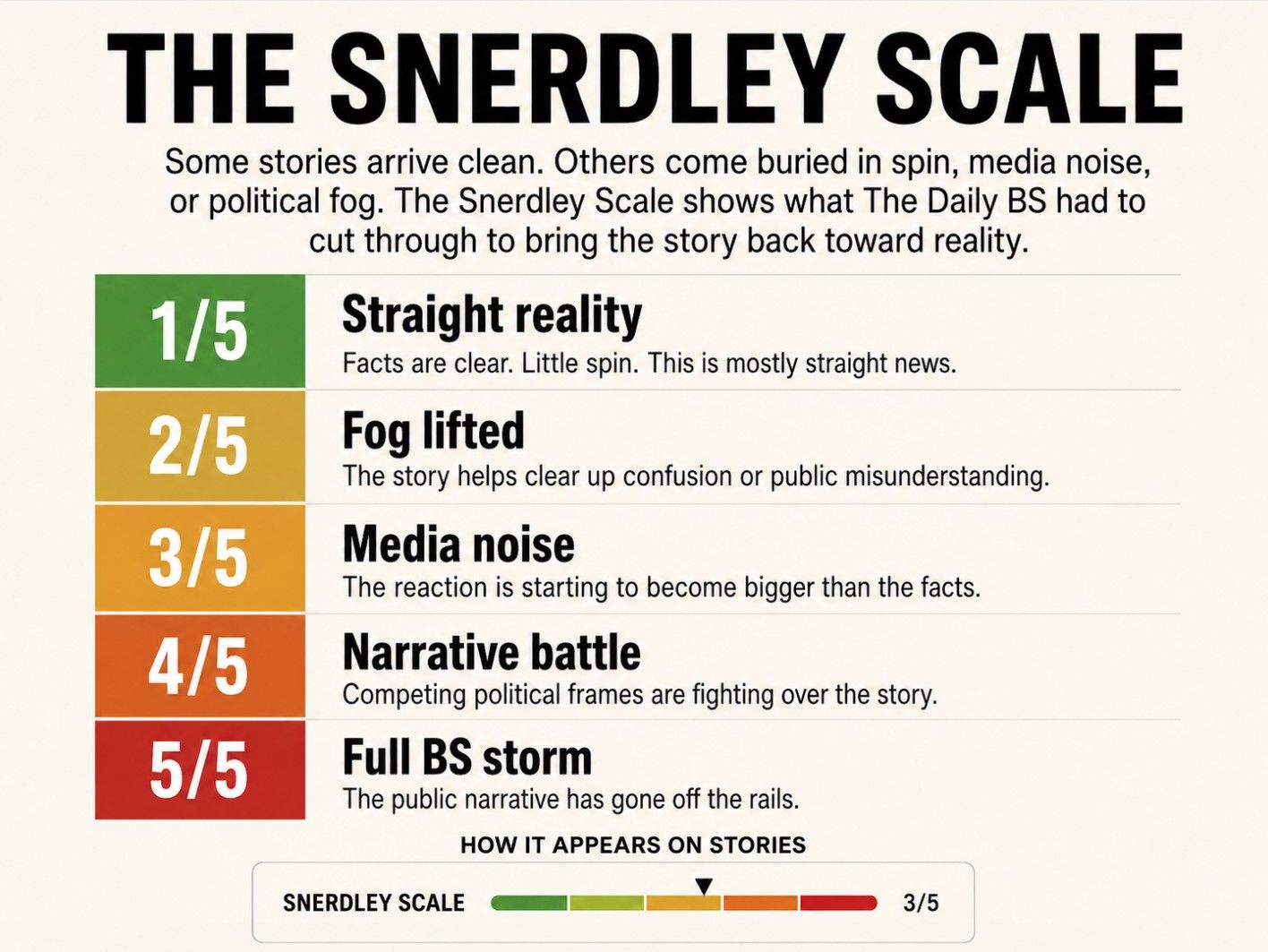
Snerdley Score 1/5 Straight Reality
What started as a student tribute ended with a six-figure embarrassment for a North Carolina school district.
Gabby Stout, a student at Ardrey Kell High School in Charlotte, has secured a $95,000 settlement after school officials publicly branded her actions as vandalism, suggested she was the target of a criminal investigation, and triggered a controversy that quickly became a flashpoint in the national debate over free speech, faith, and political double standards on campus.
The dispute traces back to September 2025, just days after conservative activist Charlie Kirk was killed while speaking at an event in Utah. Like thousands of supporters across the country, Stout wanted to honor his memory. Her chosen canvas was the school’s “spirit rock,” a longstanding student tradition used for messages and tributes.
According to court filings and statements from her legal team, Stout first checked with the school’s front office and received permission to paint the rock, provided the message contained no profanity or vulgarity.
She and her friends then painted an American flag, a heart, the phrase “Freedom 1776,” and the message “Live Like Kirk—John 11:25,” referencing the biblical verse in which Jesus says, “I am the resurrection and the life.”
That should have been the end of it.
Instead, within hours, the tribute was painted over. Then things got worse.
School administrators blasted out a message to the entire school community claiming the rock had been vandalized, that school rules had been violated, and that law enforcement had been contacted. Suddenly, a student who says she had permission to paint the rock found herself publicly portrayed as a wrongdoer.
Stout says she was pulled from class, questioned by administrators, ordered to provide a written statement, and pressured to surrender her phone for inspection. Meanwhile, rumors spread, social media piled on, and classmates allegedly ostracized her.
Months later, the district quietly acknowledged what critics had been saying all along: there had been no vandalism, no conduct violation, and no police referral.
Funny how those details arrived only after the damage was done.
Now the school board has agreed not only to pay $95,000 to settle the lawsuit but also to adopt a new free-speech policy and issue a formal public statement clearing Stout’s name.
The required statement admits that the students’ painting of the spirit rock “did not violate the Code of Student Conduct or other school system policies in place at the time,” “was not an act of vandalism,” and “the school did not report the incident to law enforcement.” The board also states that it regrets what Stout experienced.
That’s a remarkable reversal from the original public narrative.
The case drew additional attention because of allegations that the district applied different standards depending on the message being expressed. Court filings pointed to events in 2020 when students painted Black Lives Matter slogans and political messages on the same spirit rock. School officials reportedly allowed those messages to be restored and expanded after they were painted over by others.
Critics argued that progressive political expression was treated as protected speech while a conservative, faith-based tribute was treated as a disciplinary matter.
Whether one agrees with Kirk’s politics or not is beside the point. The constitutional issue isn’t whether school officials like a message. It’s whether they apply the rules equally.
Stout put it bluntly after the settlement: “This settlement finally reinforces that I did nothing wrong, and the school system has to admit that publicly.”
She added: “After I got permission to paint a message sharing my faith in God, school officials accused me of vandalism in front of my whole school and my entire community. Then they put me through an unfair investigation. They never should have treated me this way, and by saying they regret that I had this experience, they are finally acknowledging that publicly.”
Later, reflecting on the broader implications, she said: “I hope they learn that students don’t leave their faith or their free speech rights when they walk into school. I didn’t do anything wrong, as they now admit. I was sharing a message I believe in, a message that inspired me, and a message that honored Charlie Kirk by pointing people to the hope for salvation through Jesus Christ. And they made me feel like a criminal for doing this. School officials can’t just silence a student because they don’t like what the student says or believes.”
She added: “I hope this settlement is a wake-up call, not just for my school, but for every school. And I hope it inspires and empowers students to express their views freely.”
Her attorney, Travis Barham of Alliance Defending Freedom, was even more direct: “Charlotte-Mecklenburg Schools should be ashamed at how it treated Gabby. She did everything right, and they did everything wrong. She got permission, and she painted an uplifting message of faith. They censored her speech, publicly denounced her, and then punished her for expressing her views. In this country, no student should ever be threatened, investigated, or publicly smeared for expressing her faith. Schools cannot pick and choose which viewpoints can be expressed on campus, and this settlement makes that crystal clear.”
The larger lesson here isn’t about a painted rock.
It’s about what happens when institutions rush to condemn first and verify later. It’s about whether schools are places where students learn to engage with differing viewpoints or places where approved opinions get a green light while disfavored ones get painted over.
For Charlotte-Mecklenburg Schools, that lesson came with a $95,000 price tag, a mandatory apology, and a public admission that the student they treated like a vandal wasn’t a vandal at all.
Turns out the real mess wasn’t on the rock.
It was in the administration office.