(The Center Square) – President Donald Trump’s short-term peace deal with Iran has sparked mixed reactions among U.S. lawmakers, with Republicans projecting cautious optimism and Democrats criticizing the conflict occurring in the first place.
As of Monday, the Trump administration has not released the exact details of the deal to the public but is expected to do so Friday at the official signing ceremony in Switzerland.
The U.S. and Iran electronically signed the deal Monday, reopening the Strait of Hormuz and lifting the U.S. naval blockade for the next 60 days as nuclear talks continue. Iran is also supposed to demine the waterway within the next 30 days.
“Ships are starting to move, many loaded with Oil, out of the Strait of Hormuz,” Trump said Monday on social media. “They are going along the Southern ‘Highway,’ which is totally safe, secure, and pristine. There are other areas of travel, also!!!”
Since the initial U.S.-Israeli joint strikes on Iran 107 days ago, 14 U.S. servicemembers have died and the U.S. has spent more than $30 billion, according to House Armed Services Committee Chairman Mike Rogers, R-Ala.
The number is likely an undercount since the Pentagon doesn’t include spending on military construction costs of repairing or replacing U.S. installations in Iran.
Despite the White House’s characterization, even some Republicans in Congress remain cautious.
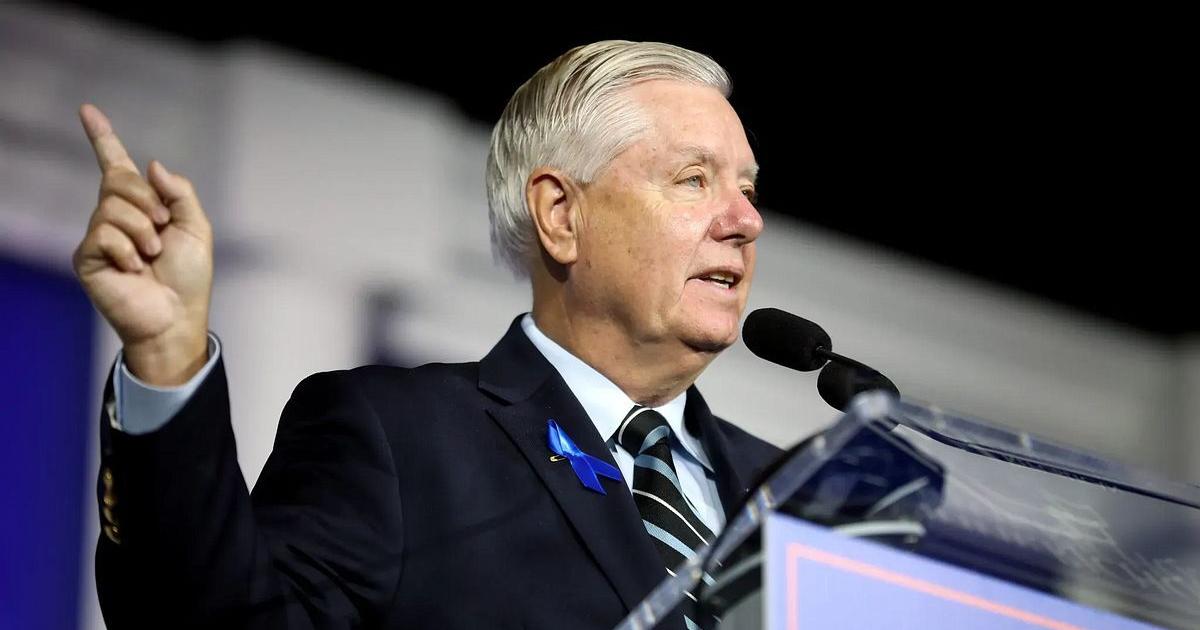
U.S. Sen. Lindsey Graham, R-S.C., said he was “pleased” to hear of the ceasefire deal, but will be “watching closely,” adding that he is “somewhat concerned that Iran’s view of the agreement seems different than what the American negotiating team is claiming.”
He also reminded the administration that the law requires Congress’ approval on any nuclear deal with Iran.
“I look forward to reviewing the final product and I believe it is imperative that the architect of the deal, Vice President [J.D.] Vance and his negotiating partners, be part of the process in presenting the final deal to Congress,” Graham said on social media. “Congratulations to all in getting us to this point. Time will tell.”
Congress never authorized the initial U.S.-Israeli strikes on Iran, nor any of the administration’s military actions that followed. Trump initially invoked the War Powers Act of 1973, which gives the president 60 days to conduct military operations without congressional approval.
When that date passed, Trump declared a temporary ceasefire – which he argued reset the clock – despite continued military hostilities.
Congressional Democrats, who have consistently pushed the War Powers Resolution to curb U.S. military action, pointed out that while “a step in the right direction,” the current deal is temporary and requires few real concessions from Iran.
Sen. Chris Murphey, D-Conn., accused the president of “humiliating America” and pledged to “hold Trump accountable” once the conflict finally ends.
“An end to this disastrous war is a good thing – no matter the humiliating terms. Because every day it continues, our nation gets weaker, costs keep going up, Iran gets stronger, and Trump gets further from accomplishing his goals. More war would just make things worse,” Murphey posted on X Sunday night.
“But make no mistake: these are Iran’s terms. They made one single concession – opening the Strait. And it’s not even a concession because the Strait was open before the war! And now that Iran has proven that the U.S. can’t stop them from closing it, their power expands,” he added.
Secretary of War Pete Hegseth told Congress in May that the U.S. military has “degraded almost completely [Iran’s] defense industrial base” and destroyed Iran’s navy, as well as three aircraft carriers and 11 submarines. Iran’s nuclear program, however – the Trump administration’s main target – is still operational.
“Unfortunately, the president has made many promises about this war and fulfilled few of them,” Sen. Chris Coons, D-Del., stated after news of the deal. “This war has come at a high cost…While a ceasefire and negotiations are a positive development, so far this war of choice has only made American service members and civilians less safe and left many key questions unanswered or unaddressed.”
Since the conflict began, the costs of jet fuel, crude oil, and fertilizer have skyrocketed, resulting in more expensive plane tickets, higher distribution costs for consumer goods, and U.S. gas prices hitting a four-year high.
Republican lawmakers who praised the deal urged the public to have patience as talks between the U.S. and Iran continue.
“Voices seeking to undermine President Trump and keep us locked in a foreign conflict are doing a grave disservice to the country,” Sen. Bernie Moreno, R-Ohio, posted on X Monday. “President Trump deserves our trust and support as he works to bring peace to the Middle East.”
The Center Square’s most recent Voters’ Voice Poll, which surveyed 2,585 registered voters nationally June 1-4, showed that half of American voters support the U.S. pursuing diplomacy rather than further military action.
“The administration’s turn toward diplomacy is welcome. Negotiated, verifiable agreements remain the only way to sustainably address our disputes with Iran, including its nuclear program,” House Foreign Affairs Committee Ranking Member Gregory Meeks, D-N.Y., said in a statement.
“We have seen time and again: war cannot change the Iranian regime; eliminate its missile and drone program; end Iranian support for proxies; or stop its abuse of the Iranian people,” Meeks added. “Any final agreement must be durable, enforceable, transparent, and subject to rigorous oversight by Congress.”