


SOURCE: “The Point Is to Spread Fear”: DOJ Charges 15 with Conspiracy for Anti-ICE Protests in Minnesota
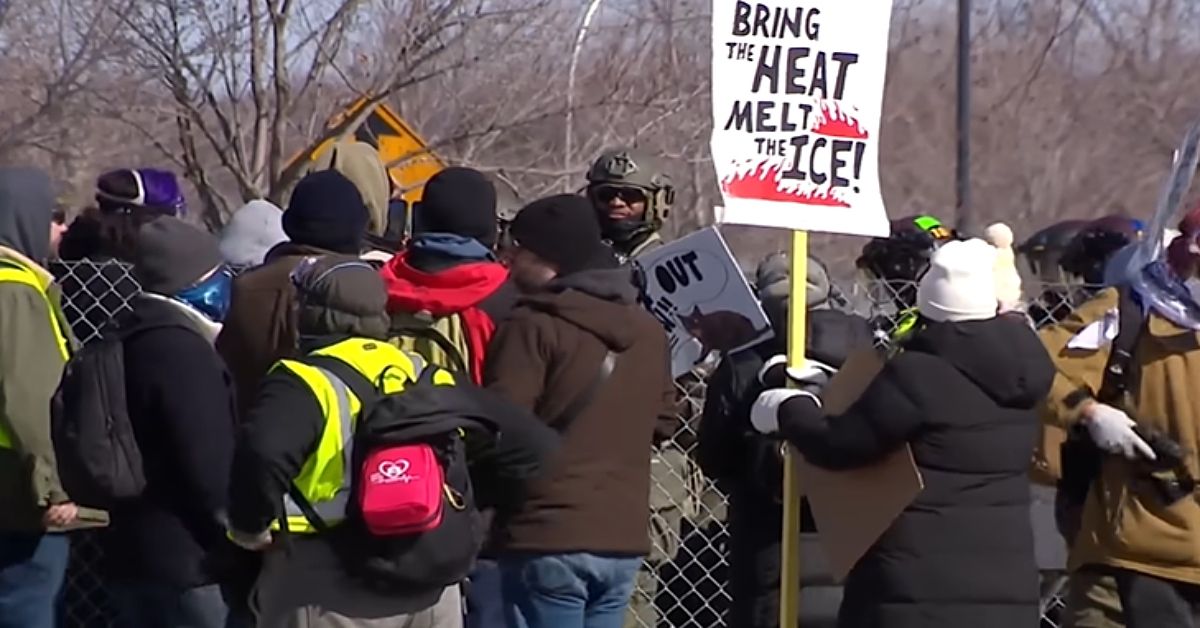
When a news story opens by telling readers what the government’s motives supposedly are before it seriously examines the charges, you’re already entering the Spin Zone.
That’s exactly what happens in the latest progressive-media treatment of federal conspiracy charges against 15 anti-ICE activists in Minnesota. The headline doesn’t ask whether the defendants obstructed federal officers. It doesn’t ask what evidence prosecutors have. It doesn’t ask whether organized efforts existed to interfere with immigration enforcement.
Instead, readers are handed a conclusion before the first paragraph: “The Point Is to Spread Fear.”
Case closed, apparently.
The story spends thousands of words portraying the defendants as sympathetic community members while treating the federal government’s allegations as an almost annoying inconvenience. Readers are repeatedly told that the accused are “union members, workers, neighbors” and people involved in “mutual aid.” That’s nice. Plenty of people with admirable résumés have also found themselves charged with crimes. Being a neighbor isn’t a legal defense.
One of the most revealing moments comes when defense attorney Bruce Nestor declares: “All 15 of the defendants are members of the community, active in mutual aid, union members, workers, neighbors.”
Okay. And?
The question isn’t whether they’re neighbors. The question is whether they participated in conduct that crossed the line from protest into criminal interference with federal law enforcement. That’s the part the article seems least interested in exploring.
15 members and associates of Direct Action Minnesota (DAMN) have been charged with various federal crimes, including conspiracy to impede a federal officer, multiple counts of interstate stalking, interstate threats, solicitation to commit a crime of violence, multiple counts of… pic.twitter.com/VfGoFLiVX7
— U.S. Department of Justice (@TheJusticeDept) June 16, 2026
Instead, readers are treated to a steady stream of loaded language. Federal immigration enforcement becomes a “brutal invasion.” ICE operations become a “crackdown.” Defendants become freedom fighters. Prosecutors become political villains. The entire narrative is constructed so that one side receives moral sainthood while the other receives suspicion.
Consider this remarkable quote from Nestor: “Whether people were monitoring ICE, documenting, photographing, following, blowing whistles or, quite frankly, even impeding ICE, we stand in their corner.”
Read that again. “Quite frankly, even impeding ICE.”
That’s not exactly a ringing endorsement of peaceful observation. Yet the article moves along as if admitting support for impeding federal officers is perfectly unremarkable.
Federal prosecutors in Minnesota have charged 15 people in connection with anti-ICE protests in the Twin Cities. The point of the indictments is “to spread fear,” says attorney Bruce Nestor, who represents one of the defendants.https://t.co/uDqatU5L66 pic.twitter.com/DugkMpmYxH
— Democracy Now! (@democracynow) June 17, 2026
Then there’s the recurring effort to portray “antifa” as essentially a fictional concept. Readers are informed that antifa is “not an actual group,” a favorite semantic argument on the activist left. The problem is that Americans have spent years watching self-described antifa activists organize online, appear at demonstrations, coordinate actions, wear common symbols, and operate under shared ideological banners.
Whether antifa is a formal corporation with membership cards is beside the point. Nobody argues that every decentralized political movement needs a corporate charter before it can exist.
The story also repeatedly describes immigration enforcement through the language of authoritarianism and fascism. Nekima Levy Armstrong says activists were “standing up against fascism and authoritarianism.” Nestor warns of “the growing fascism of the federal government.”
Kat Abughazaleh claims the administration wants people to “fear the secret police.” That’s a lot of dramatic vocabulary for a story about federal officers enforcing federal immigration law.
Notice what’s missing. There’s little discussion of why ICE operations were occurring. Little discussion of public support for immigration enforcement. Little discussion of communities frustrated by years of border chaos. Little discussion of the fact that President Trump’s immigration agenda was a central campaign issue and a major reason many voters returned him to office.
The article treats opposition to ICE as inherently virtuous and support for enforcement as inherently suspect.
To be fair, some facts in the story are newsworthy. If charges are later dismissed, that’s significant. If prosecutorial misconduct occurred in unrelated cases, that’s worth examining. If questions exist about the conduct of individual federal officers, those deserve scrutiny too.
But none of that changes the obvious framing imbalance.
The headline tells readers the government’s goal is fear.
The guests tell readers the government is authoritarian.
The defendants are presented as community heroes.
The federal government is cast as a political menace.
And somewhere beneath all that narrative fog sits the actual indictment.
Maybe the evidence is weak. Maybe it’s strong. Maybe the case falls apart. Maybe it doesn’t.
But readers never get much opportunity to wrestle with those possibilities because the article already decided who the good guys and bad guys are.
That’s why this earns a 5 out of 5 on the Snerdley Scale.









Good job, Bo!