SOURCE: Wire
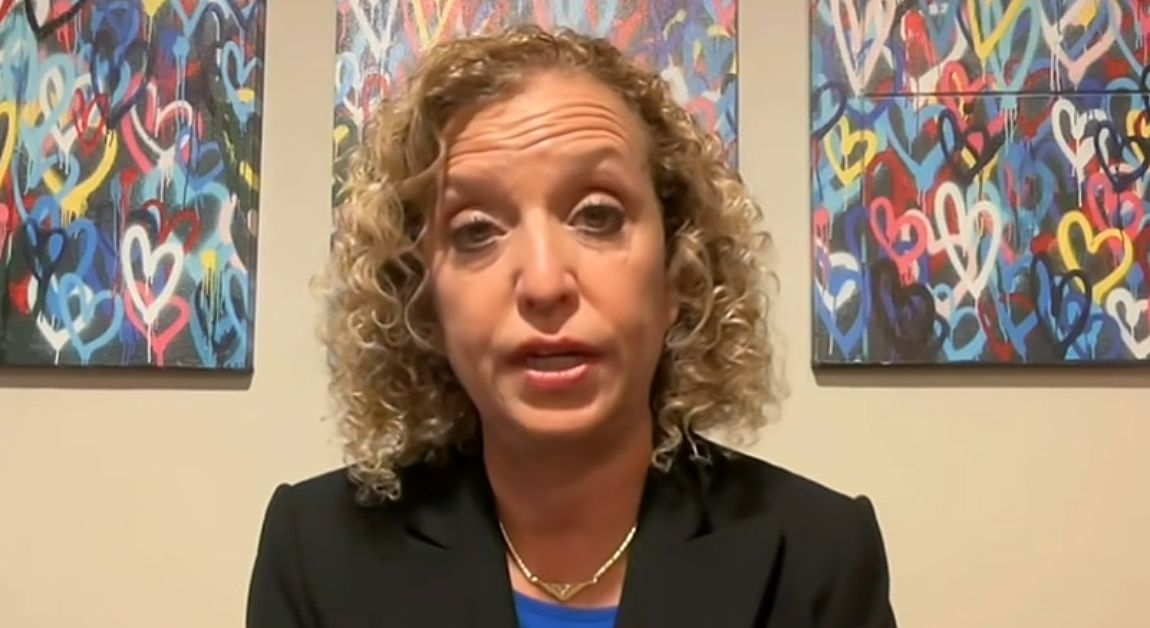
There is an old saying about chickens eventually coming home to roost.
In today’s Democratic Party, they apparently arrive carrying diversity training manuals.
Now, we’ve covered versions of this story before and tried to be charitable. But when one of the architects of modern Democratic identity politics starts getting measured by the same racial yardstick her party spent years handing out to everyone else, it’s probably time to stop whispering and start laughing.
Because that’s exactly what’s happening to Debbie Wasserman Schultz.
I had a great time celebrating Juneteenth yesterday with residents of King’s Point, Tamarac, and Coral Springs!
Juneteenth may be over, but the work toward racial justice continues year-round. pic.twitter.com/jovmya2u4G
— Debbie Wasserman Schultz (@DWStweets) June 20, 2026
And here’s the funny part. The complaint is that she’s the wrong demographic.
That’s it.
After years of Democrats telling Americans that representation matters, some Democrats are now looking at Debbie Wasserman Schultz and saying, “Not that kind of representation.”
If there’s an irony meter somewhere, it’s smoking.
The veteran Florida Democrat is facing growing resistance from within her own party after jumping into the race for Florida’s 20th Congressional District, a heavily Democratic district with a large Black voting population.
Her move came after Republican redistricting made her current seat far more competitive. Politically speaking, she’s doing what politicians have always done when the map changes, looking for friendlier territory.
The problem is that this particular territory comes with politics Democrats themselves have spent years emphasizing.
Several Black Democrats running in the race argue that the district should continue sending Black representation to Congress and accuse Wasserman Schultz of treating the seat as a political lifeboat.
Progressive activist Elijah Manley spoke out against her, “I think, for sure, it was a bad move by the congresswoman to run in this district. It was selfish and all about her, her career and not about the community,” Progressive activist Elijah Manley said, describing the move as “a hostile takeover of the district.”
Debbie Wasserman Schultz didn’t grow up in FL-20 like I did. She never represented FL-20. She never fought for FL-20. When her own district became politically inconvenient, she packed her bags and came here. FL-20 needs a representative who chose this community before it was…
— Elijah Manley (@iElijahManley) June 17, 2026
Former Broward Mayor Dale Holness, former Rep. Sheila Cherfilus-McCormick, and others have raised similar concerns.
Even rapper Luther Campbell jumped into the fight, warning that if multiple Black candidates split the vote, Wasserman Schultz could benefit from the division.
In a social media post, Campbell wrote:
“If her strategy is to come in because there are multiple Black candidates and hope we ‘split the vote’ … that’s the same old playbook—divide and conquer.”
Now pause for a second. Republicans didn’t create this argument. Democrats did.
For years the party has emphasized descriptive representation—the idea that elected officials should physically reflect the demographics of the communities they represent.
Now some activists are applying that standard to one of the party’s most recognizable figures.
And suddenly qualifications are back in fashion.
Wasserman Schultz is making a case that sounds remarkably familiar to anyone who remembers politics before identity became the center of every discussion.
Her argument is simple, experience matters. “I know how to stand up for, fight for and represent diverse communities.”
She also noted that she has represented many of the cities currently located within the district. “They know me, and I know them.”
Honestly, twenty years ago that probably would have ended the discussion.
Today, not so much. Even Democratic leaders seem unsure how to handle the situation. House Minority Leader Hakeem Jeffries carefully avoided taking sides, saying:
“Everybody has a right to run where they see fit.”
What’s happening here is bigger than one Florida congressional race.
The Democratic Party spent years teaching voters that race, ethnicity, gender, and identity weren’t merely factors in politics—they were often the factors. Now some of those voters are taking that lesson seriously. Very seriously.
And Debbie Wasserman Schultz is discovering what happens when the rules you’ve promoted for years suddenly apply to you.
Somewhere in Florida, a Democratic consultant is probably staring at polling data wondering how the party ended up in a fight over whether a longtime Democrat is diverse enough.
Good luck solving that one.