Source: Wire
There are moments in politics when voters learn something important about a candidate’s policies. Then there are moments when voters learn something important about a candidate’s judgment. This week gave us the second category.
Somewhere in America, a political consultant is probably sitting in a dark room asking himself how a harmless community event turned into a viral lesson on why authenticity still matters. Because once again, a politician tried desperately to look spontaneous, relatable, and connected to the crowd—and the internet responded by reaching for the meme machine.
Now, let’s be fair. Nobody expects elected officials to be professional dancers. If that were a requirement, Congress would be even emptier than it already is.
The problem isn’t bad dancing. The problem is when voters get the unmistakable feeling they’re watching a carefully manufactured performance rather than a genuine human moment.
Americans can spot that from a mile away.
We’ve entered an era where politicians seem convinced every public appearance must generate a social media clip. Every handshake becomes content. Every meal becomes content. Every community event becomes content. Somewhere along the way, authenticity got replaced by choreography.
And when choreography goes wrong, well, the internet never misses an opportunity.
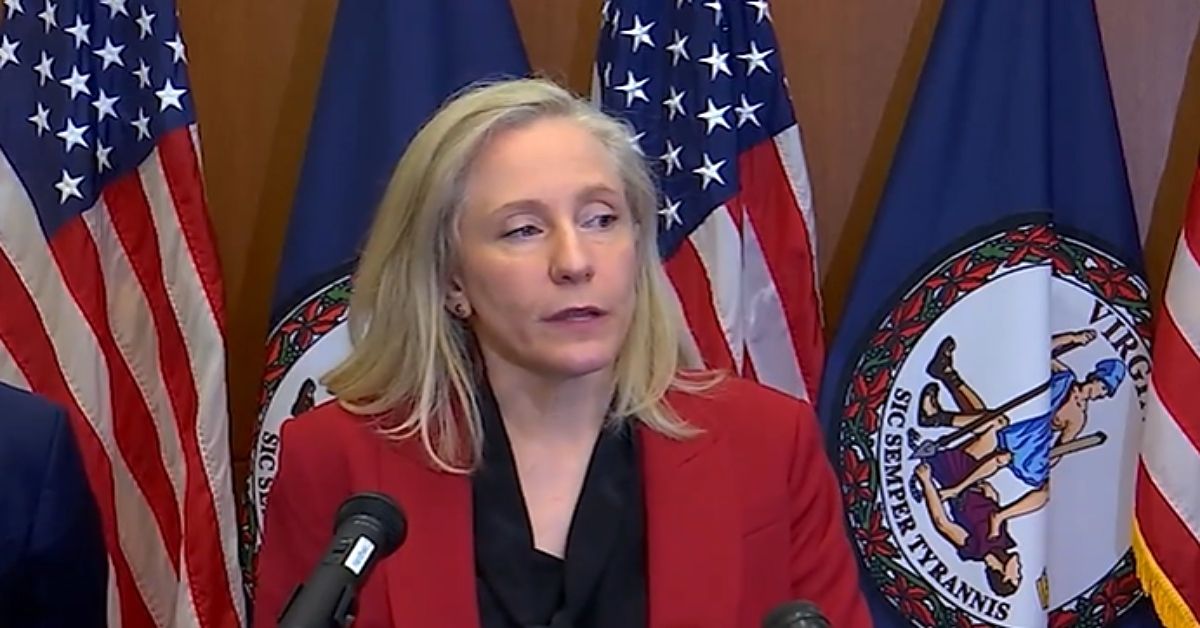
Abigail Spanberger found herself at the center of online ridicule after video from a Juneteenth celebration began circulating across social media.
The footage showed the Virginia gubernatorial candidate enthusiastically joining in during a dance segment at the event. What was likely intended as a lighthearted moment quickly became catnip for critics, comedians, and meme-makers across the political spectrum.
Within hours, social media users were comparing the performance to everything from awkward wedding reception dance moves to the type of enthusiastic rhythm usually associated with someone hearing music through noise-canceling headphones.
The reaction wasn’t necessarily about dancing itself. Plenty of politicians have cut loose at public events without triggering a digital avalanche. Instead, critics argued the clip perfectly captured a broader problem that increasingly plagues modern political campaigns: the relentless effort to appear culturally connected rather than simply being culturally connected.
People don’t mind seeing politicians have fun. They don’t even mind seeing them embarrass themselves occasionally. In fact, those moments can sometimes make candidates more likable.
What voters dislike is the feeling that they’re watching a focus-group-tested version of a human being. That’s why the clip exploded beyond Virginia politics and became a national talking point. It touched a nerve that extends far beyond one event, one dance, or one candidate.
For years, political consultants have pushed candidates toward increasingly manufactured displays of relatability. The result often feels less like real life and more like a corporate marketing campaign disguised as a personality. Unfortunately for Spanberger, the internet remains undefeated when it comes to detecting forced political theater. The clip has already joined a long list of campaign moments destined to live forever online, replayed whenever discussions turn to political awkwardness and candidates trying just a little too hard.
The public doesn’t expect politicians to be cool. It just wants them to be real. Those are two very different things. One earns votes. The other earns memes.
Gov. Abigail Spanberger “busts moves” at a Juneteenth event. I apologize in advance. pic.twitter.com/EhN3TCaKde
— End Wokeness (@EndWokeness) June 21, 2026