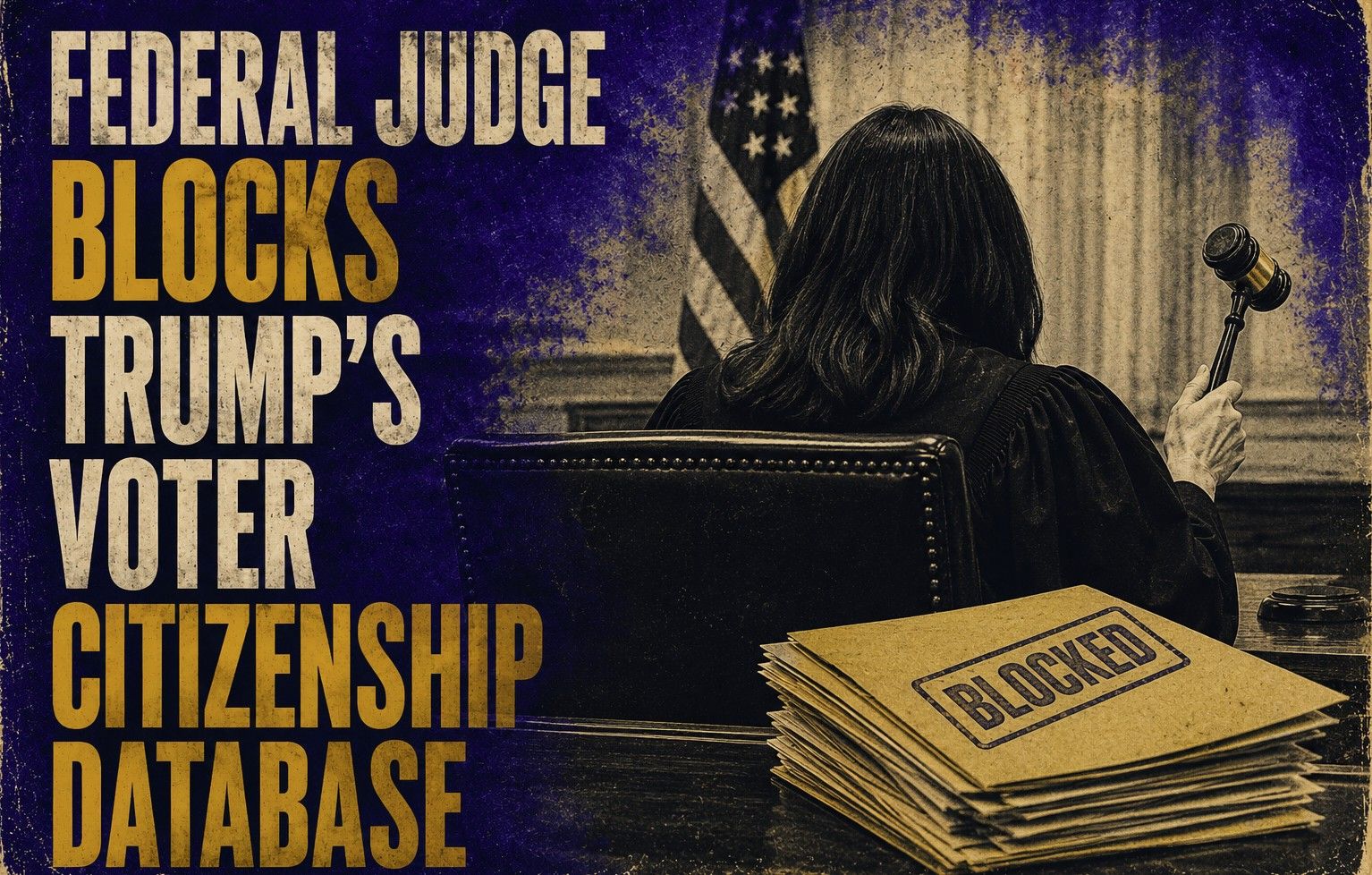
A federal judge blocked a Trump administration effort to create a centralized database containing Social Security information, citizenship records, and other government data intended to help states identify eligible voters.
Supporters saw the project as a common-sense tool for election integrity.
Critics saw it as a privacy nightmare waiting to happen. A federal court has now sided—at least for the moment—with the latter argument.
The administration’s proposal stemmed from President Trump’s March executive order aimed at overhauling parts of the federal election system. One piece of that effort directed federal agencies to work together to build a database that could help states verify citizenship status and voter eligibility using existing government records.
The plan called for the Social Security Administration to help create what was described as a “State Citizenship List,” drawing information from Social Security records, naturalization data, and the federal SAVE system maintained by the Department of Homeland Security.
The goal, according to supporters, was straightforward. Only citizens can vote in federal elections. States should have reliable tools available to verify that requirement.
The controversy began when critics argued that combining information from multiple agencies created serious privacy concerns and increased the likelihood that inaccurate records could result in eligible voters being mistakenly flagged.
District Judge Sparkle Sooknanan agreed. In a sharply worded ruling, she wrote that government officials: “Haphazardly combined and repurposed the private information of millions of Americans, including citizenship data that they knew to be unreliable.”
The judge also expressed concern that states were already using the information in ways that could affect voter registration rolls.
She wrote, “Since then, states have partnered with the federal government to access the database and are actively removing United States citizens from voter rolls based on inaccurate information.”
And later added, “All in all, the federal government has knowingly trampled on the privacy rights of American citizens in a manner that threatens the sacred right to vote. This Court cannot stand idly by while that happens.”
Judge Sparkle decrees that America belongs to any random alien on planet earth, just like our founders intended. https://t.co/X8guI1Xrt6
— Stephen Miller (@StephenM) June 22, 2026
The ruling concluded that the effort violated several federal laws, including provisions of the Social Security Act, the Privacy Act, and the Administrative Procedure Act.
The lawsuit was brought by voting-rights groups, including the League of Women Voters. Not surprisingly, supporters of the ruling celebrated.
Democracy Forward said, “This protects millions from baseless investigations and unlawful voter roll purges – a critical win for voting rights.”
On the other side, administration officials accused critics of opposing election security measures while insisting problems don’t exist. James Percival, general counsel for the Department of Homeland Security, pushed back in a statement posted online: “It’s amazing how hard the Left will fight to stop us from solving problems they insist do not exist. Judge Sparkle Soknanan’s latest ruling preventing DHS from addressing alien voting is just the latest example.”
Most Americans support secure elections. Most Americans also support protecting private information from government misuse. The challenge comes when those two goals collide.
Because once government starts pooling information from multiple agencies into a giant centralized system, questions about privacy become unavoidable. At the same time, election officials continue facing pressure from voters who want stronger safeguards and more confidence in the integrity of voter rolls.