PC: Pexels
For generations, retirement planning in America came with a fairly simple script. Work hard in New York, New Jersey, Illinois, Ohio, or somewhere else where winter seemed to last six months. Build your nest egg. Then head south to Florida, buy a condo near a golf course, and spend your golden years soaking up sunshine while your former neighbors shovel snow.
That formula worked so well for so long that Florida became almost synonymous with retirement itself.
But something interesting is happening.
Nearly as many retirees are now leaving the Sunshine State as arriving, creating what some analysts have started calling the “halfback” phenomenon—people who move to Florida and later move halfway back north.
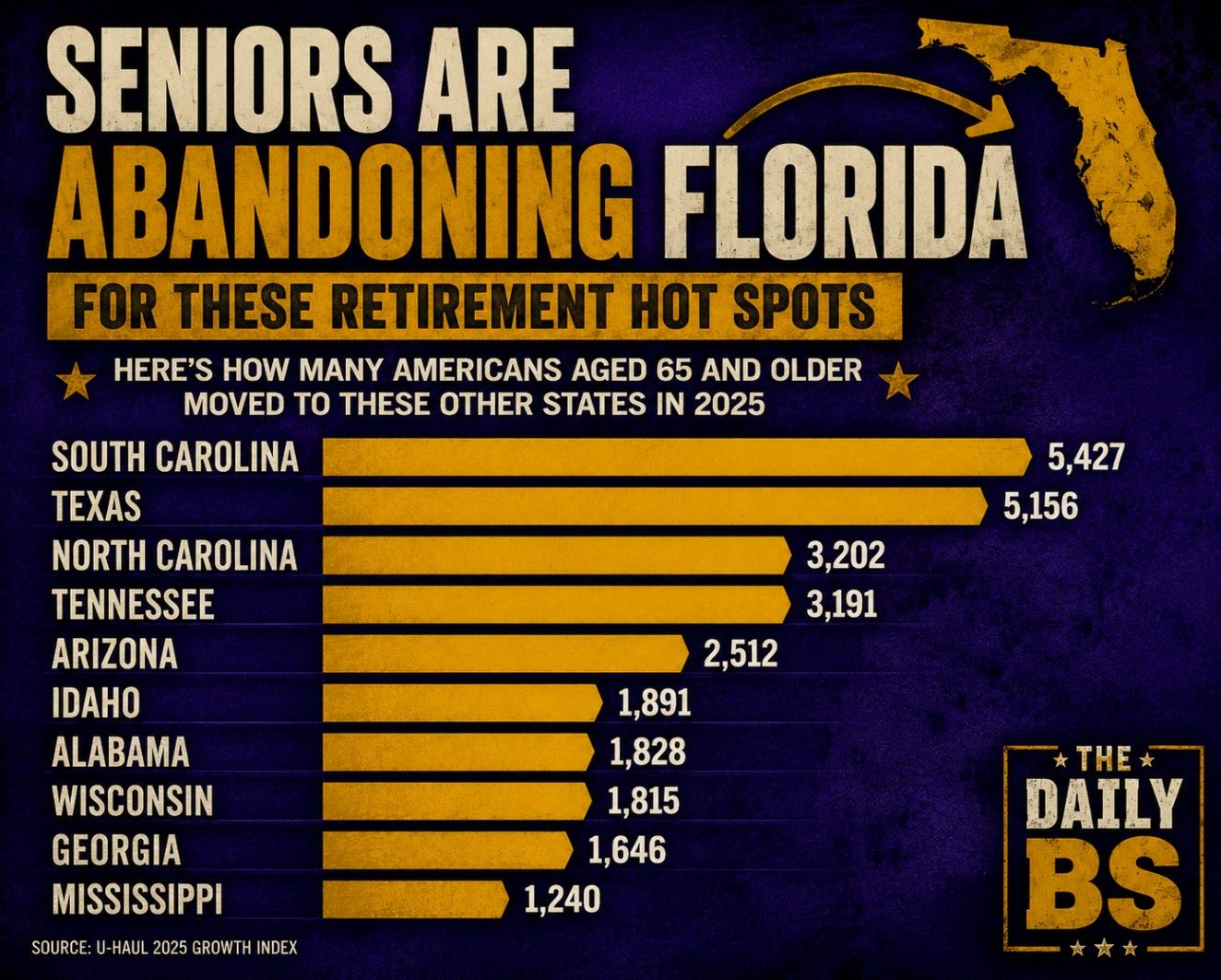
Florida is still attracting retirees by the tens of thousands. In fact, it remains the most popular retirement destination in America. According to moving data compiled by HireAHelper, more than 2.1 million Americans aged 65 and older relocated during 2025. Florida attracted 45,696 retirees, more than any other state in the country. But 44,881 retirees also left, leaving the state with a net gain of only 815 senior residents.
Florida welcomed nearly 46,000 retirees and still barely moved the needle because almost the same number headed somewhere else.
The biggest winners weren’t necessarily the places most Americans would guess. South Carolina posted the strongest net gain of retirees, followed closely by Texas. North Carolina and Tennessee also attracted large numbers of seniors looking for a new place to settle down.
The reasons aren’t particularly mysterious.
For many retirees, Florida delivered the sunshine but also delivered something else, sticker shock.
Lauren Reinhardt, a broker in Asheville, North Carolina, told Realtor.com: “I would say about 40 percent of the retirees I work with are from Florida.”
She added: “Florida wasn’t what they were promised.”
That may sound harsh, but it’s a sentiment that appears to be showing up more frequently among retirees living on fixed incomes. The beaches are still beautiful. The weather is still warm. The tax advantages still matter. But rising insurance costs, higher HOA fees, growing congestion, and increasingly expensive housing have changed the equation.
Insurance may be the biggest factor of all. After years of hurricanes and severe weather claims, many Florida homeowners are facing insurance premiums that dramatically exceed national averages. As Charleston-area broker Julia Donovan put it, “A bad storm means insurance increases. And even after the increase, you’re still in the path of the storms.”
For retirees who no longer have a paycheck coming in every two weeks, those expenses can become difficult to absorb.
That’s where states like South Carolina, North Carolina, Tennessee, and Texas begin to look increasingly attractive. Many offer lower insurance costs, lower overall living expenses, growing healthcare networks, and plenty of the warm weather retirees were seeking in Florida to begin with.
What’s especially notable is that this trend isn’t limited to Florida. Expensive states across the country are seeing retirees head for the exits. California posted the nation’s largest net loss of retirement-age residents in 2025, while New York also saw thousands of seniors leave. Many of those former residents landed in lower-cost states throughout the Southeast and Southwest.
The migration patterns suggest today’s retirees are making decisions differently than previous generations. Earlier retirees often prioritized climate above almost everything else. Today’s retirees appear to be conducting a much broader calculation involving insurance costs, healthcare access, housing affordability, taxes, and quality of life.
The data even reveals what kind of homes they’re buying once they arrive. Nearly 40 percent purchased homes priced between $200,000 and $400,000. Most chose practical two- or three-bedroom homes rather than sprawling retirement estates. The average home purchased by a retiree was built in 1981, suggesting many seniors are choosing established communities over flashy new developments.
One surprise in the data may raise a few eyebrows. The most popular metro destination for retirees wasn’t in Florida at all. It was Las Vegas. The Nevada city attracted nearly 8,000 retirement-age movers in 2025, followed by places such as Tucson and Houston. Florida still placed several cities among the nation’s retirement favorites, including Naples, Miami, Fort Lauderdale, and The Villages, but the overall pattern suggests retirees are becoming far more flexible about where they spend their retirement years.
Twenty years ago, warm weather alone could close the deal. Today people are running spreadsheets. They’re comparing insurance bills, HOA assessments, healthcare options, and housing costs before they pack the moving truck.
And frankly, who can blame them?