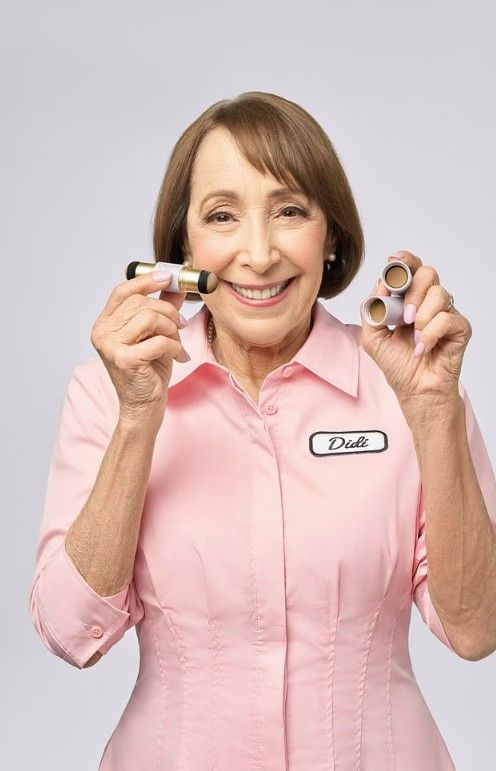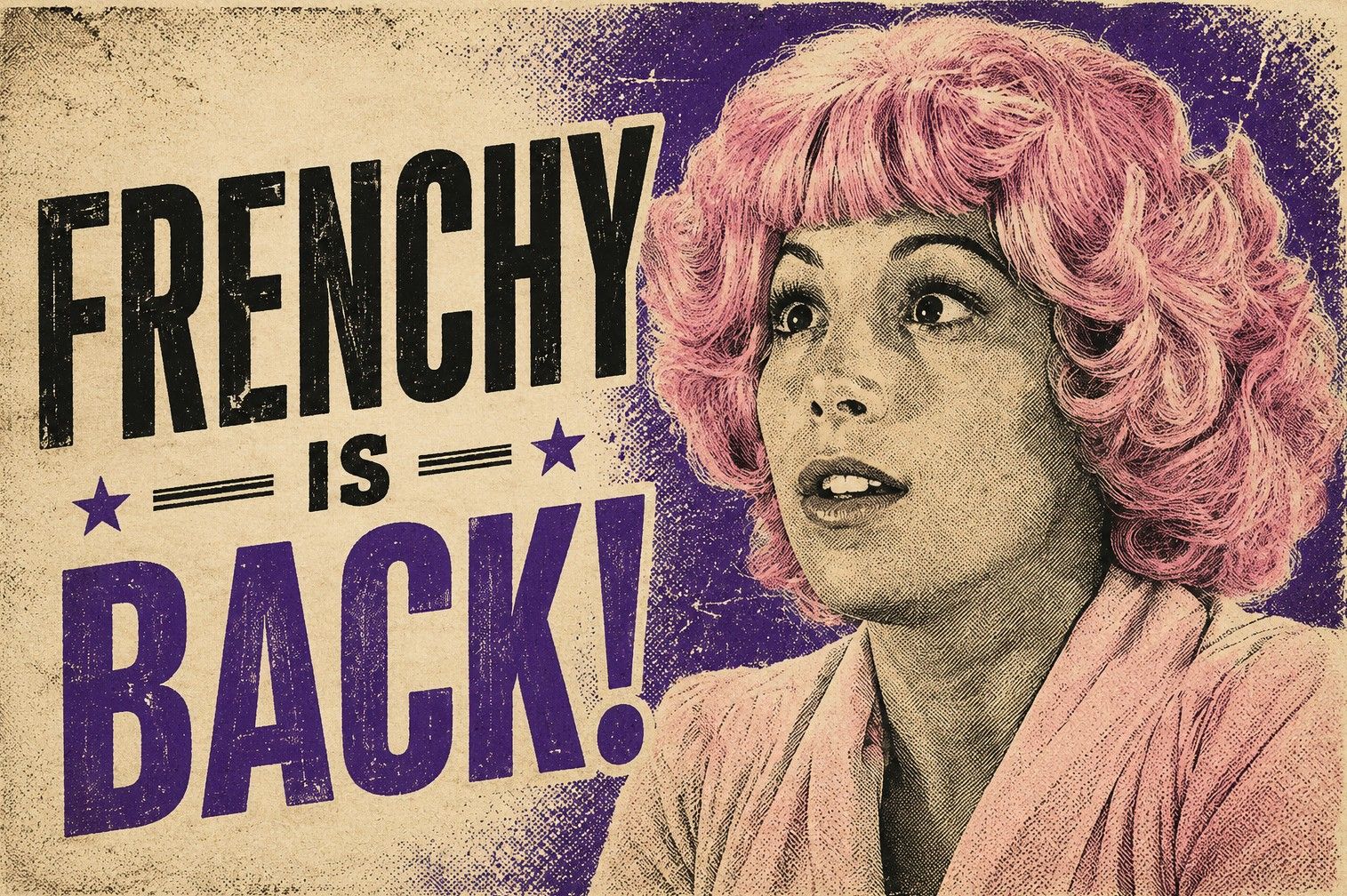
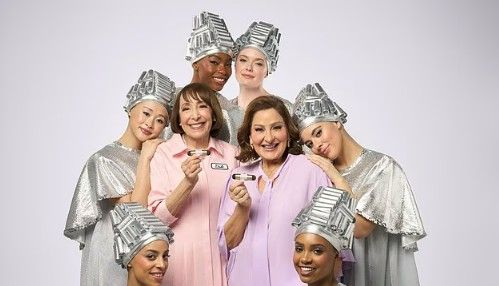
Conn, now 74, has stepped back into the public eye with a new campaign that playfully revisits the role that made her famous. For generations of movie fans, Frenchy was the warmhearted Pink Lady whose dream of becoming a beautician led to one of the most memorable storylines in the 1978 classic starring John Travolta and the late Olivia Newton-John.
Rather than distancing herself from the role, Conn appears to be embracing it.
In a recently released promotional video, she jokingly references Frenchy’s infamous “beauty school dropout” storyline, telling viewers:
“Hi there. You might remember when I famously dropped out of beauty school. I thought my life and my hair was ruined and I’d have to spend eternity making expensive salon appointments.”
The lighthearted callback immediately struck a nostalgic chord with longtime Grease fans who remember Frenchy’s disastrous hair-color experiment and her unforgettable musical number.
Conn’s appearance also sparked discussion among fans who were impressed by how well the actress has aged. Sporting a stylish brunette bob, she looked noticeably different from Frenchy’s bright pink hair and later reddish-orange mishap that became part of the character’s charm.
Grease continues to enjoy remarkable staying power in American culture. While countless films from the 1970s have faded into obscurity, Grease remains a fixture on television, streaming services, and in popular conversation. Younger audiences continue discovering the film while longtime fans revisit it as a reminder of a different era of entertainment—one focused on fun, music, romance, and memorable characters rather than modern political messaging.
That enduring popularity has occasionally brought renewed scrutiny from cultural critics eager to reinterpret the film through a contemporary lens.
One of the most frequent criticisms centers on Sandy’s transformation at the end of the movie. Critics have argued that the character changed her appearance to win Danny Zuko’s approval. Conn has long rejected that interpretation.
During a previous television appearance, Conn defended the storyline and argued that Sandy’s evolution represented personal growth rather than submission.
Discussing the famous ending, Conn explained, “Frenchy always wanted to be a beautician. She wanted to make people beautiful and bring every great quality in them.” She continued, “She failed, she had a few problems in the tinting class over there. She still cared, especially for her friends.”
Conn argued that Sandy’s makeover reflected a young woman becoming more confident and willing to express parts of her personality that had previously been restrained.
“So when Sandy is all alone by herself after the car race and she decides she wants to be part of the gang, she wants to have fun and allow herself to be emancipated a little bit. She says to Frenchy, ‘Can you help me Frenchy?’ you know.”
“So, it’s like the first makeover show, she is becoming more of herself. She is allowing herself to come through.”
She added:
“It’s not so much to get her man but it’s to be who she is 100%.”
For many fans, that explanation aligns with what made Grease resonate in the first place. The film wasn’t a political statement or a cultural manifesto. It was a coming-of-age musical about friendship, young love, self-discovery, and having fun.
Nearly 50 years after its release, audiences are still debating its themes, quoting its songs, and celebrating its characters. And thanks to Conn’s nostalgic return to the spotlight, Frenchy remains every bit as memorable as she was when Grease first became a cultural phenomenon.