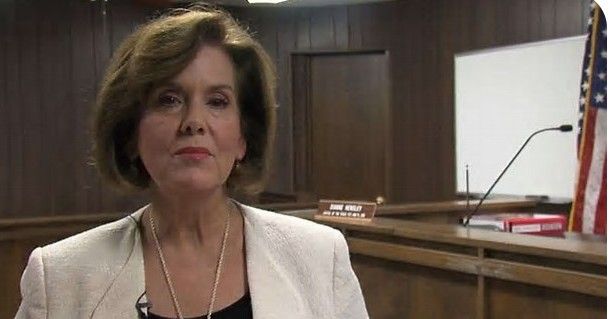
For nearly a decade, Texas Judge Dianne Hensley found herself at the center of a debate that has become increasingly common in modern America, what happens when religious conviction collides with government policy?
Last week, after years of legal battles, investigations, appeals, and public scrutiny, Hensley emerged victorious.
A Travis County court awarded the longtime justice of the peace more than $640,000 and permanently barred the Texas State Commission on Judicial Conduct from punishing her for declining to officiate same-sex weddings because of her religious beliefs.
The dispute dates back to the years following the Supreme Court’s landmark 2015 ruling legalizing same-sex marriage nationwide.
Hensley, who has served as a McLennan County justice of the peace since winning election in 2014, initially stopped performing all wedding ceremonies while she evaluated how to reconcile the new legal landscape with her religious convictions.
The following year, she resumed performing wedding ceremonies for opposite-sex couples while directing same-sex couples to other judges who were willing and available to officiate their ceremonies.
According to court records and her attorneys, Hensley did not attempt to prevent same-sex couples from marrying, nor did she seek to interfere with their access to marriage services. Instead, she established a referral system designed to ensure couples could obtain a ceremony elsewhere.
That distinction became central to the years-long legal fight. The controversy intensified after Hensley publicly discussed her decision during a newspaper interview.
“My conscience was bothering me because so many people were calling and wanting a wedding.”
Those comments eventually prompted an investigation by the Texas State Commission on Judicial Conduct. In 2019, the commission issued a public warning against Hensley, arguing that her actions raised concerns about whether she could act impartially toward individuals based on sexual orientation.
The warning stated that Hensley should be disciplined for “casting doubt on her capacity to act impartially to persons appearing before her as a judge due to the person’s sexual orientation.”
For many religious liberty advocates, the commission’s action represented a troubling precedent.
Their concern was simple, if judges can be punished for following sincerely held religious beliefs—even while providing alternative accommodations—what protections remain for people of faith working in public service?
Hensley decided to fight back. The legal battle stretched across multiple courts and consumed years of litigation. In 2024, she secured an important victory when the Texas Supreme Court allowed her lawsuit to proceed. The judicial commission later withdrew its warning, but Hensley continued pressing forward, arguing that stronger protections were needed to prevent similar actions in the future.
Last week’s ruling delivered exactly that.
According to First Liberty Institute, which represented Hensley, the court awarded the maximum damages permitted under the Texas Religious Freedom Restoration Act and permanently prohibited the commission from investigating or disciplining her over her refusal to officiate same-sex weddings based on her religious convictions. The judgment included $10,000 in damages and approximately $630,000 in attorney fees.
First Liberty attorney Hiram Sasser called the outcome a significant victory.
“It’s a great victory for people of faith. It’s important for people of faith to be able to decline to participate in things that they find that are incompatible with their religious faith.”
Sasser also emphasized that Hensley attempted to accommodate everyone involved rather than simply refusing service outright.
“I think one of the great things about how Judge Hensley handled things here is that she not only was exercising a religious faith to say, ‘Hey, look, I can do some marriages, but not others,’ but she was also being a good neighbor. She had a referral system in place for people whose weddings she could not perform.”
He argued that had Hensley accepted the commission’s warning, additional disciplinary actions could have followed.
“They gave her a warning that if she continued to do any kind of weddings without performing same-sex weddings that they would, you know, take it to the next level and continue the punishment against her.”
For her part, Hensley expressed relief that the lengthy battle had finally come to an end.
“All I wanted to do was serve our community and maintain my faith commitments. I am thankful the law prevailed after eight long years, and we restored religious liberty to the land.”