A new watchdog report is raising fresh questions about how American universities manage international academic partnerships—particularly when those relationships involve individuals connected to organizations later linked to foreign governments or defense industries.
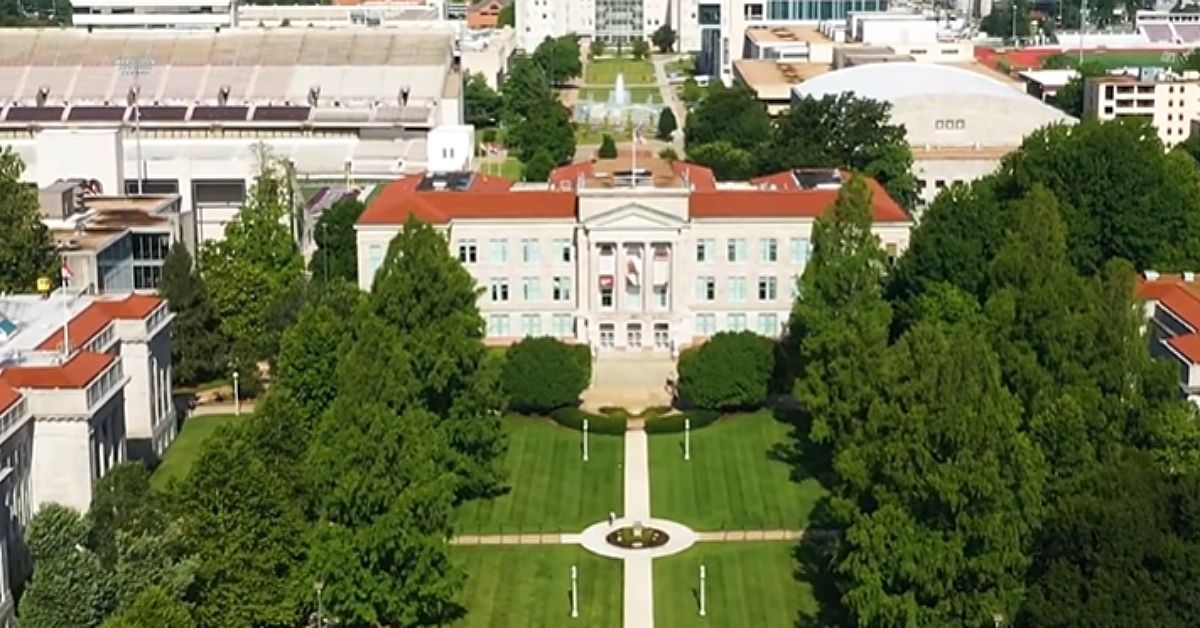
The report, Heartland for Hire, produced by geopolitical research firm Strategy Risks, alleges that Missouri State University operated an MBA and Executive MBA program beginning in 2001 that educated more than 1,500 Chinese executives, government officials and managers from state-owned enterprises. According to the report, some graduates later held positions at organizations connected to China’s defense sector.
Breaking: our report uncovers how Missouri State University used American taxpayer money to train sanctioned Chinese defense contractors. https://t.co/Wi0KtHY27n
— Isaac Stone Fish (@isaacstonefish) June 24, 2026
Among those cited is Aviation Industry Corporation of China (AVIC), which the U.S. Department of Defense has designated as a Chinese military company and which has been subject to U.S. sanctions and investment restrictions.
The report argues that federal oversight has concentrated primarily on research security, intellectual property theft and advanced scientific programs while overlooking executive education.
“Congressional and executive branch attention to American universities’ ties to the CCP has been focused almost entirely on three areas…”
The authors contend that executive training programs represent a separate category deserving greater scrutiny.
The report also examines admissions practices, institutional relationships, and whether tens of millions of dollars in taxpayer support may have helped fund the program.
— Strategy Risks (@StrategyRisks) June 24, 2026
Missouri State University disputed several of the report’s implications. In a statement, a university spokesperson said there was “no evidence of espionage, intellectual property theft, misconduct, false affiliations or complaints of harassment” involving students in the program and emphasized that participants completed “a conventional business curriculum.” The university also denied that taxpayer dollars funded the program and said all students complied with U.S. visa requirements. One of the report’s more notable claims concerns how participants were selected.
“One of the most significant features of this program is that the CCP—and not MSU—selected the students.”
The report alleges that Chinese government agencies, state-owned enterprises and affiliated organizations played the leading role in recruiting participants rather than the university using its traditional admissions process.
It also cites Chinese documents describing the initiative as a “China-U.S. state-to-state cooperation project” and identifies graduates who later worked for organizations that eventually appeared on U.S. restriction lists. While the report references Chinese recruiting materials suggesting portions of the program may have benefited from U.S. or state-supported subsidies, it also acknowledges that public records do not independently verify those funding claims.
Policymakers continue examining foreign influence in American higher education. Congressional committees have investigated partnerships involving the China Scholarship Council, lawmakers have proposed legislation restricting certain university relationships, and previous reports have examined collaborations between U.S. universities and Chinese research organizations.
At the same time, President Donald Trump recently said he does not support broadly banning Chinese students from studying in the United States, arguing such a move would unnecessarily strain relations with China. According to the Institute of International Education, more than 260,000 Chinese students attended U.S. colleges and universities during the 2024–25 academic year.