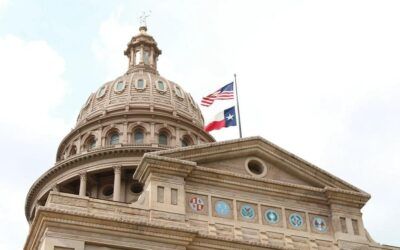
(The Center Square) – After several days of hearings and votes, the Texas State Board of Education voted late Friday to require a reading list for every grade level in public schools, including at least 200 Biblical texts.
Texas is now the first state to require public school students to read passages of the Bible as mandatory curriculum.
There are roughly 5.5 million students enrolled in Texas public schools, or roughly 11% of the total U.S. public school population.
The school board is composed of 15 members; 10 are Republicans. The majority have never been public school educators, The Center Square reported.
The mandatory reading list has been controversial as has been the SBOE’s attempt to overhaul state standards to transform how social studies is taught. The overhaul has received extensive backlash, including from educators, The Center Square reported. This week, a vote on revamping state standards for social studies for high school students was postponed until the fall.
Votes are ongoing Friday night regarding revamping social studies curriculum for grades K-8. The changes would go into effect in the 2030-2031 school year.
The SBOE passed its mandatory reading list by a 9-5 vote. It includes roughly 200 biblical passages, including about Noah’s Ark, David and Goliath, Daniel in the Lion’s Den, Moses, the Book of Lamentations, among others. The required texts are from news outlets, various translations of the Bible, from a Jewish Publication Society, among others.
The mandate comes from a law that was enacted in 2023, House Bill 1605, which directed the Texas Education Agency to require a new mandatory reading list be adopted for K-12 students.
HB 1605 required one literary work per grade level.
The SBOE has mandated up to 20 per grade, exceeding the legislative mandate, Texas House Democrats argue. The mandatory reading list will take up to 80% of English Language Arts instructional time annually, exceeding the legislative mandate. They also argue the mandate strips school districts of control over their own curricula.
They also take issue with the Biblical texts presented “almost exclusively” from Evangelical Protestant translations, “reflecting a clear denominational preference.”
It’s not just Democrats who have issues with the reading list.
Rabbi David Segal, policy counsel for the Baptist Joint Committee for Religious Liberty, points out what he argues are multiple errors in the text as well as how its presented.
He points to a mandatory seventh-grade text, Psalm 23, which is grouped with works by Jewish writers Anne Frank and Hannah Szenes, as well as George Washington, as problematic. A King James translation of Ecclesiastes for a mandatory eighth-grade reading text also appears to contradict the Ten Commandments text, now also required to be posted in classrooms.
Republican Mary Lowe with Families Engaged also pointed to past testimony given to the state Legislature and SBOE by theologians and Bible experts who “repeatedly challenged the integrity, application and literary placement” of the mandatory reading list. “I am a Christian and have great concern for the HOLY BIBLE being taught out of context and without reverence for the work as the inerrant word of GOD.”
Proponents argue the mandatory list is instructive and that the Bible should be taught in public schools.
HB 1605 also required the TEA to develop state-owned textbooks, referred to as Bluebonnet Learning, which includes Biblical instruction. In late 2024, the SBOE approved the Bluebonnet books, and educators and others started pointing out multiple errors.
There are so many errors in it — more than 4,200 — that fixing them is costing taxpayers $8.4 million. SBOE Vice Chair Pam Little, who has a background in publishing, said the volume of errors is unprecedented.
She told Fox 4 News that nearly 2,000 were factual errors and more than 1,000 were licensing image issues. These were among the 4,200 the SBOE approved to fix in February.
School districts receive incentives for electing to adopt using the Bluebonnet texts. Only less than one-third of Texas’ 1,200 school districts have chosen to do so.
The Freedom From Religion Foundation said it was “appalled” by the SBOE’s vote for a “state-mandated reading list that privileges Christian Scripture.”
“A mandatory public school reading list should never function as a bible lesson,” FFRF co-president Annie Laurie Gaylor said her organization’s website. “Texas is telling millions of children that one religion deserves the government’s seal of approval, while everyone else is an afterthought. That’s government-sponsored religious favoritism — and the First Amendment strictly forbids it.”
The FFRF and the FFRF Action Fund said they “will continue to oppose efforts that erode students’ and families’ constitutional rights. Religious freedom means that every student is free to practice, or not practice, religion without government pressure or favoritism. That guarantee is fundamental to both public education and American democracy.”
More than 10 years ago, the state Legislature passed a law allowing for Bible electives in the public school system, which took effect in the 2009-2010 school year. The ACLU of Texas published a “know your rights” fact sheet in response.