

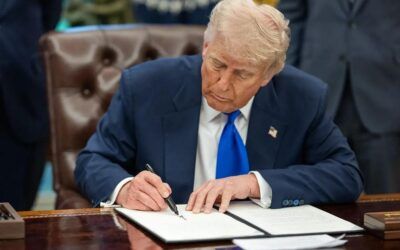
Every now and then, Washington’s past crawls out of the basement, dusts itself off, and asks a very inconvenient question: “Remember when you said this was temporary?”
That is exactly what happened when an old January 2010 Department of Homeland Security announcement began circulating again — a clip showing then-DHS Secretary Janet Napolitano announcing Temporary Protected Status for Haitians following the devastating earthquake in Haiti.
The part getting attention is not the existence of TPS itself. The program has been around for decades.
The part people are focusing on is the timeline. Napolitano said at the time:
“It will be good for 18 months from the date of the issuance. So that will be in July of 2011.”
That was the expectation presented when the policy was announced.
January 2010. Obama’s DHS Secretary Janet Napolitano announces that she signed the Haitian TPS order:
“It will be good for 18 months from the date of the issuance. So that will be in July of 2011.”
That’s how it was introduced. 16 years ago.
Full Clip Transcript:
“Lastly, as… pic.twitter.com/8EY3TrDqzq
— Western Lensman (@WesternLensman) June 29, 2026
Sixteen years later, the clip is being replayed as an example of one of Washington’s favorite magic tricks: turning “temporary” government programs into something that somehow develops a permanent address.
The original announcement was made after the January 12, 2010 earthquake in Haiti. Napolitano described TPS as “a kind of an intermediate immigration status that allows those who are here to remain and to work.”
She also explained the reasoning behind the decision:
“This in and of itself, is a form of support to Haiti and a form of economic assistance to Haiti and as they work, of course, many send remittances back home.”
The program applied to Haitians who were already in the United States before the earthquake.
Napolitano emphasized that requirement:
“To qualify, you must have been in the United States before January the 12th, the date of the earthquake.”
At the time, the policy was presented as a humanitarian response to an extraordinary disaster. And nobody disputes that Haiti was facing an extraordinary disaster. The earthquake killed hundreds of thousands of people, destroyed infrastructure, and created a crisis that demanded an international response.
The controversy now is about what happened afterward. Because the phrase “18 months” turned out to be one of those Washington phrases that apparently comes with invisible fine print.
Janet Napolitano, Obama’s DHS Secretary, gave Haitians Temporary Protected Status after the 2010 earthquake.
Temporary. Not permanent. Not a free pass to stay forever.
Sixteen years and endless extensions later, the open-borders left is throwing a tantrum because Trump is… pic.twitter.com/uyeIU2PcpB
— Gina Milan (@ginamilan_) June 28, 2026
TPS allows the government to designate countries experiencing conditions such as armed conflict, environmental disasters, or extraordinary and temporary circumstances. It allows eligible nationals already in the United States to receive protection from removal and work authorization during the designation period.
But immigration policy is not just about what lawmakers say today. It is also about whether Americans believe government words mean anything. If a program is announced as a short-term bridge, but that bridge is still standing 16 years later, people are going to ask whether the bridge became the destination.
That question is not limited to one party.
Republicans have long argued that temporary immigration programs frequently become permanent fixtures. Democrats and immigration advocates counter that reality on the ground can change, and ending protections abruptly can create instability for families and communities.
The argument is not really about whether Haiti suffered. It did.
The argument is about whether emergency policies should have an expiration date — and whether the government should actually enforce the expiration date when it arrives. Washington has a long history of temporary measures becoming permanent. Temporary taxes. Temporary agencies. Temporary spending programs. Temporary authorities. Somehow, “temporary” in government language often means “we’ll revisit this later,” and later has a funny habit of never arriving.
The resurfaced Napolitano clip is striking because it captures a moment when officials were trying to communicate a clear boundary: Eighteen months. Not sixteen years.










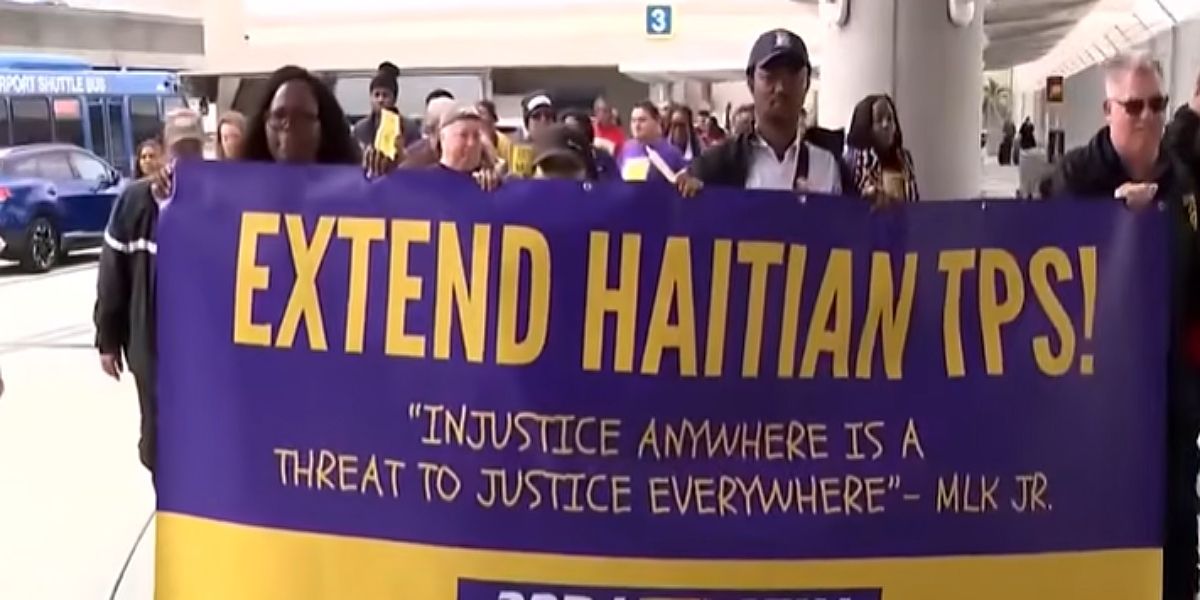
Notice the fancy pre-printed banner in SEIU colors -purple and yellow?
The Great Replacement and SEIU take-over from Obama forward.
Senator Bill Nelson (FL) and Senator Joe Biden (DE) it just doesn’t get any better than to watch the old videos show the grins from the past.
Cry me some Fn tears! Hey! Go back to your country and fix the shit hole! Don’t come here and make my country one!
SCREW THIS GRAY BOX BS, RETURN TO DISCUS OR KISS MY ASS GOOD BYE !!
Easy fix, No more temporary protected status for Anyone. While we’re at it, no more temporary anything. Make it permanent or leave it alone. That would have saved the fight over extended govt subsidies for the ACA during and after covid.
Remember that the majority of them did NOT come directly from haiti. They were originally from haiti but had been living in chili and outer third world shitholes south of us. When the dems did this TPS BULLSHIT, they were at least smart enough (in spite of an IQ of 3) to come here for the handouts. They were never legit refugees. The dems knew that too. Send ALL this filth packing. And funny how dems were apoplectic when Trump rightly called haiti a shithole. The dems had told us how wonderful it is. But now it’s too big of a shithole to send them back. I see people whining that these people are staffing hospitals to a large degree too. Sorry, but if a hospital has a their staff composed of them I damned sure will never go there.
16 years is not temporary.
For the same reasons untold tens of millions of illegal aliens remain in the US decades later. The feral gubmint cherry picks which immi laws they want to enforce and it seems like 8 USC 1325 (among others) is fairly low on the list. HeII, you can even be an immigration fraudster and remain a US Representative.