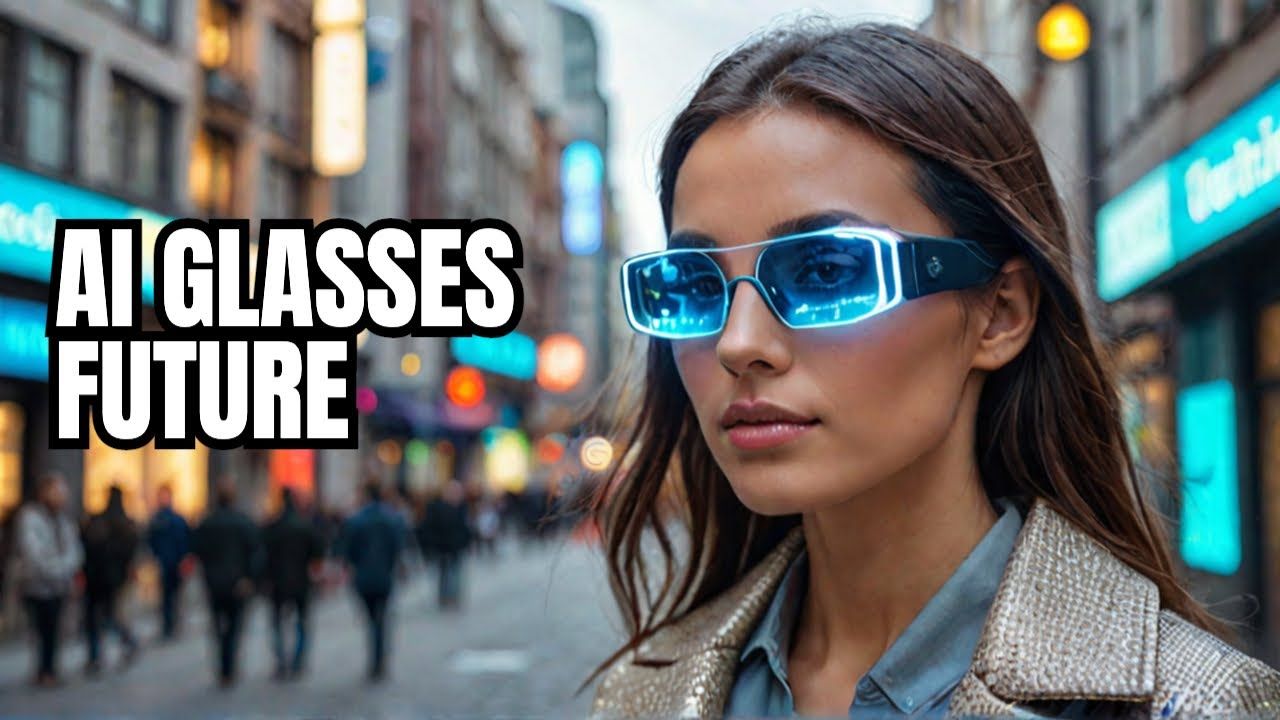
Qualcomm CEO Cristiano Amon says the next major leap in technology will come from AI-powered glasses that don’t just sit on your face — they actively understand the world around you.
His prediction is both exciting and a little unsettling, which is usually how the biggest technology shifts arrive.
“6G is going to transform all of us into walking cameras because we have the ability to, everything that we see, send it to AI models that will interact with us and get intelligence right away,” Amon said. “And that’s an exciting new device category.”
It’s a phrase that sounds like it came from a science-fiction movie written by someone who had too much coffee. Walking cameras. It is catchy. It is memorable. It is also a pretty accurate description of where Silicon Valley believes things are heading.
The idea is simple, instead of pulling a phone out of your pocket and asking it questions, your glasses become the interface. They see what you see. They hear what you hear. They provide information instantly.
Forgot someone’s name at a meeting? AI could remind you.
Standing in front of a landmark? Your glasses could tell you the history. Trying to assemble furniture? Your AI assistant could watch and guide you.
Sounds convenient.
Until you remember the tiny detail that the same device helping you remember your neighbor’s dog’s name is also potentially recording, analyzing, and processing the world around you.
Amon argued that glasses are uniquely positioned because they sit directly where humans naturally gather information.
“There’s a very interesting thing about glasses, and Meta is correct, and there’s many other companies investing in this,” he said.
He added: “As we humans start to interact with the computers the way we interact with ourselves, glasses is a very important real estate because it’s close to our eyes, our ears, our mouth.”
That phrase — “important real estate” — is exactly how the technology industry talks about your face. Your face is no longer just your face. It is a platform.
The tech giants have been chasing this idea for years. Meta Platforms, Google, and Apple have all explored smart glasses and wearable AI technology.
The smartphone revolution put the internet in everyone’s hand. The next revolution aims to put it in everyone’s field of vision.
And that changes the relationship between humans and machines.
The old model was: you ask, technology answers. The new model may become: technology watches, predicts, and suggests.
Supporters see a world where AI becomes a personal assistant available every second of the day. Critics see a society where people slowly trade privacy for convenience, one helpful feature at a time.
The funny thing about technology is that nobody ever says, “We’re going to create a device that will make you dependent on it.” They say things like “empowering,” “seamless,” and “frictionless.” Nobody ever marketed the smartphone as “the device that will make you check email at midnight while standing in your kitchen.”
Yet here we are.
Qualcomm, meanwhile, is trying to position itself beyond its traditional role as a company known primarily for smartphone chips. The company has expanded into artificial intelligence and data centers, announced a partnership with Meta, and said it plans to acquire AI startup Modular.
Amon acknowledged the company is changing. “I was reading a lot of the analyst reports from Investor Day, and there’s one headline that really, I really liked it and it caught my attention,” Amon said. “There’s a headline that said, ‘This is not your father’s Qualcomm anymore.’” He said that summed up the company’s transformation. This is not your father’s technology industry.
The computer used to sit on your desk. Then it went into your pocket. Now it wants to sit on your face.
The big question is whether people will embrace this future because it makes life easier — or whether they will eventually realize they handed over more of their daily existence than they intended.