

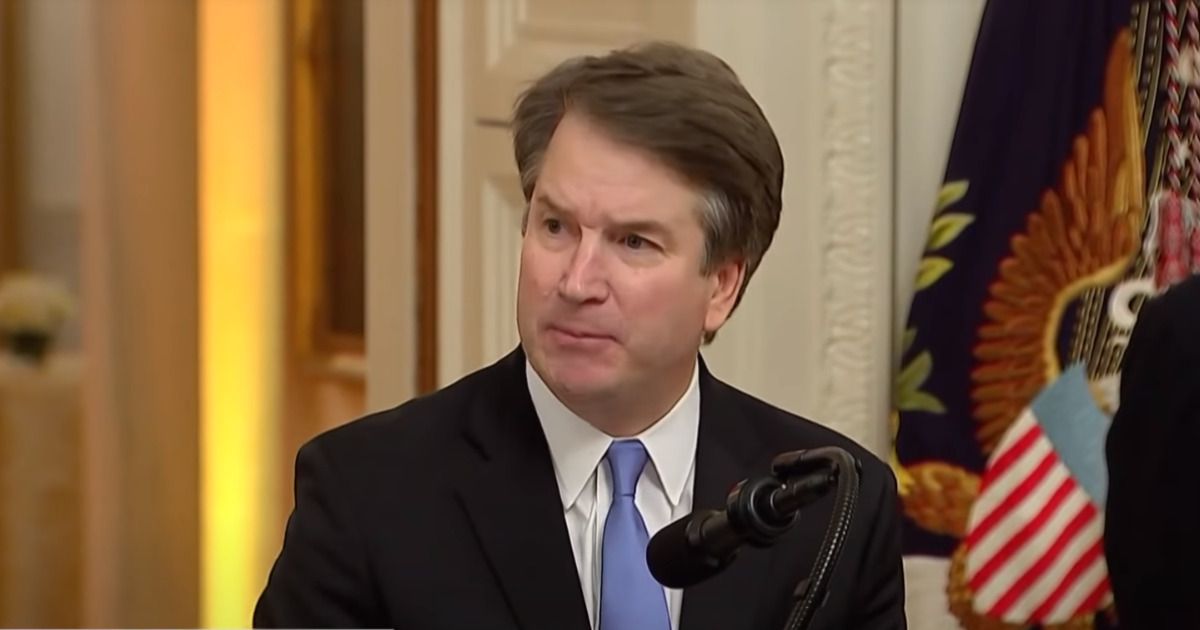

TDBS WIRE: SCOTUSblog: Analysis of the Supreme Court’s birthright citizenship ruling and Kavanaugh’s concurrence
President Trump lost a major Supreme Court battle this week over birthright citizenship. But buried inside the ruling was something many conservatives immediately seized upon, a possible roadmap for accomplishing through Congress what the White House could not accomplish through executive action.
The Court ruled against Trump’s executive order that sought to limit automatic citizenship for children born in the United States to illegal immigrants and certain temporary visa holders. The majority concluded that the order could not stand, preserving the long-standing interpretation of the 14th Amendment’s Citizenship Clause.
That headline generated predictable celebration from immigration activists and predictable frustration from conservatives. Yet the more interesting story may be found in the concurring opinion written by Justice Brett Kavanaugh.
Kavanaugh agreed that Trump could not simply rewrite existing law through executive action. At the same time, he suggested Congress could potentially revisit the issue legislatively.
“Congress could — consistent with the Fourteenth Amendment — amend” existing citizenship statutes or “otherwise enact new legislation establishing exceptions to birthright citizenship for children born to foreign citizens unlawfully or temporarily in the country,” Kavanaugh wrote, according to reports summarizing the opinion.
That single paragraph immediately electrified Republicans who have long argued that modern immigration realities bear little resemblance to the circumstances lawmakers faced when the 14th Amendment was ratified in the aftermath of the Civil War.
🚨 Justice Brett Kavanaugh just outlined what may be the GOP’s path forward on birthright citizenship.
His dissent argues that while President Trump’s executive order conflicted with existing federal law, Congress could amend that law or pass new legislation establishing… pic.twitter.com/yEzQkPvQUk
— Blindwolf 🇺🇸 (@BlindwolfOg) July 2, 2026
The current interpretation traces largely to the Supreme Court’s 1898 ruling in the case of Wong Kim Ark, which established broad birthright citizenship protections. Critics argue that decision was never intended to address mass illegal immigration, international birth tourism, or the global mobility that exists today.
Republican leaders wasted little time responding.
House Speaker Mike Johnson argued that birthright citizenship has “been abused” and suggested that a constitutional amendment may ultimately be necessary. Senator Rand Paul renewed his call for a constitutional amendment, writing that the issue is now more important than ever. Senator Mike Lee similarly declared, “The long fight for a constitutional amendment begins now.”
Months before the Supreme Court ruled, I saw this coming. I knew lasting change on birthright citizenship wouldn’t come from waiting on the courts, so I filed a constitutional amendment earlier this year. This decision proves real reform must go through the amendment process. https://t.co/YiQpljpui2
— Senator Rand Paul (@SenRandPaul) June 30, 2026
President Trump, however, believes Congress may not need to go that far. “No long and unwieldy Constitutional Amendment is necessary!” Trump wrote on Truth Social, urging lawmakers to begin work immediately on legislation addressing birthright citizenship.
Several existing proposals are already sitting in Congress, including legislation aimed at limiting automatic citizenship for children born to those in the country illegally and separate efforts targeting so-called birth tourism operations.
Meanwhile, the administration appears determined to keep pressure on the issue regardless of the Court’s ruling. The Department of Justice announced it will intensify efforts against birth tourism schemes and visa fraud cases involving foreign nationals who travel to the United States specifically to secure citizenship benefits for their children.
Acting Attorney General Todd Blanche described birth tourism as a growing industry and pledged aggressive enforcement of existing laws governing visa fraud and immigration abuse.
Whether Congress could successfully pass legislation restricting birthright citizenship remains an open question. Any such law would almost certainly trigger immediate constitutional challenges and could quickly find itself back before the Supreme Court. Still, conservatives see something important in Kavanaugh’s reasoning.
Let’s start with the obvious. The media wants this story to be, “Trump loses.” That’s the easy headline. The more important headline is that one of the Supreme Court justices who voted against Trump’s executive order essentially turned around and said, “If you want to do this, here’s the proper avenue.”
For decades, birthright citizenship has been treated as one of those topics you’re not even supposed to discuss. The moment somebody raises questions about it, the conversation usually ends with accusations, outrage, and a dozen cable news panels informing us that the debate itself is somehow illegitimate.
Well, now the debate is happening. Even Justice Kavanaugh is acknowledging that Congress has authority to revisit the statutory framework surrounding citizenship.
And let’s be honest about one thing. The people screaming that any discussion is unconstitutional are often the same people who spent years insisting the Constitution was a living document whenever they wanted judges to invent new rights. Suddenly everyone’s an originalist.
TDBS WIRE SOURCES:
- Fox News: Kavanaugh hands Republicans a new path after Trump birthright defeat
- New York Post: Supreme Court didn’t end the birthright-citizen battle — it just made it harder to resolve
- Reuters: Supreme Court rejects Trump bid to restrict birthright citizenship
- Associated Press: Supreme Court upholds birthright citizenship, rejecting Trump’s proposed limits
- PBS NewsHour: ‘What do states do with a newborn?’ Kavanaugh quizzes Trump lawyer on birthright order
- National Review: Conservatives assess next legal options after Supreme Court birthright ruling
- The Wall Street Journal: Supreme Court birthright citizenship decision leaves immigration debate to Congress
- SCOTUSblog: Analysis of the Supreme Court’s birthright citizenship ruling and Kavanaugh’s concurrence











dfer