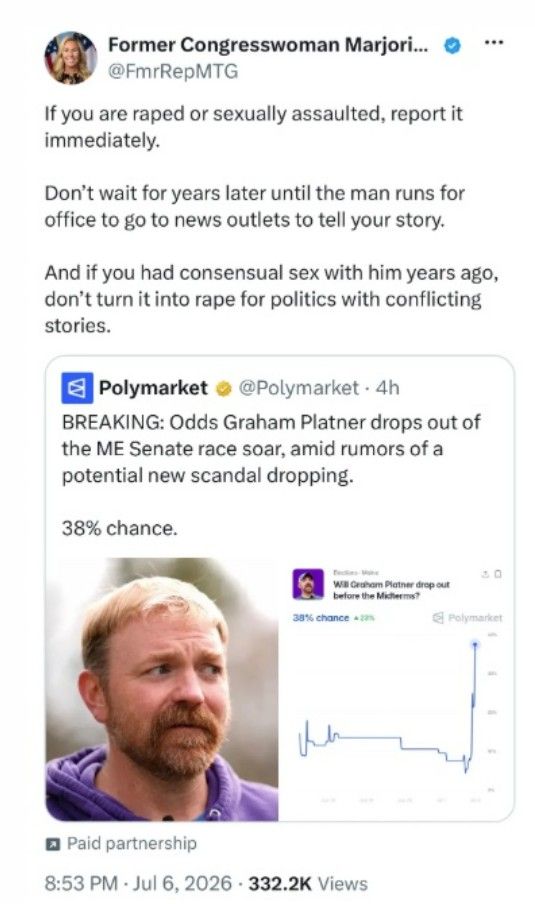
Former Rep. Marjorie Taylor Greene drew criticism Monday after deleting a social media post in which she questioned the timing of sexual assault allegations made against Maine Democratic Senate nominee Graham Platner.
The deleted post came after 41-year-old Maine resident Jenny Racicot publicly accused Platner of sexually assaulting her in 2021, allegations the Democratic nominee has categorically denied.
In the now-deleted message, Greene wrote, “If you are raped or sexually assaulted, report it immediately. Don’t wait for years later until the man runs for office to go to news outlets to tell your story.”
She also wrote, “And if you had consensual sex with him years ago, don’t turn it into rape for politics with conflicting stories.”
The post quickly generated backlash online, with critics arguing that Greene appeared to be dismissing allegations before all facts had been examined. Others defended her comments as raising questions about delayed reporting and the political timing of accusations against candidates.
After deleting the original post, Greene shifted attention to a separate issue, suggesting there may be a connection between criticism of Platner and opposition from pro-Israel lobbying groups.
“I do find it interesting that Platner is hated by AIPAC and rape accusations show up years later from a woman who dated him,” Greene wrote in a follow-up post.
She later added that she hoped “any woman who is raped or sexually assaulted is safe and gets justice” while reiterating her belief that prompt reporting is important.
The controversy unfolded as scrutiny intensified around Platner, who is challenging Republican Sen. Susan Collins in one of the nation’s most closely watched Senate races.
Racicot has detailed her allegations in interviews with multiple media outlets, including POLITICO and CNN. Platner has denied the claims, calling them “troubling, serious and false allegations” and insisting that “any accusation of non-consensual behavior is categorically untrue.”
The deleted Greene post became a story of its own as screenshots circulated online and critics questioned why it had been removed. Some social media users also noted that the original post reportedly included a paid partnership disclosure related to political prediction markets.
Neither Greene nor her representatives immediately offered a public explanation for deleting the original message.
The surest sign a politician regrets a tweet is when it mysteriously disappears.
In 2026, deleting a post doesn’t make it vanish. It just guarantees more people will see it.
The internet’s first law remains undefeated, screenshots are forever.