Michigan Democrats spent years warning voters that Republicans were supposedly the party of division. Then came Tuesday night’s Senate debate.
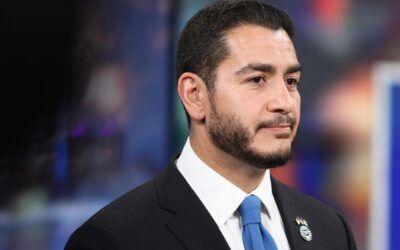
In one of the most important Senate races in the country, Rep. Haley Stevens and progressive activist Abdul El-Sayed delivered a televised reminder that the Democratic Party is fighting a bitter internal war over its future, its ideology, and who gets to control it.
The debate came just days after state Sen. Mallory McMorrow suspended her campaign, turning the August 4 primary into a direct showdown between Stevens, the establishment-backed congresswoman supported by Senate Democratic leadership, and El-Sayed, the Bernie Sanders and Alexandria Ocasio-Cortez favorite who has become a leading voice for the party’s far-left wing. The winner will face Republican Mike Rogers in November in a state President Donald Trump carried in 2024.
The sharpest moments came when the candidates traded accusations over campaign money, transparency and outside influence.
El-Sayed blasted Democratic leadership and pro-Israel political groups, declaring, “If you want your politics dictated by AIPAC or Chuck Schumer, then I’m not your guy.”
He repeatedly argued that corporate money and special interests have corrupted Democratic politics and accused party leaders of protecting a system that benefits insiders.
Stevens fired back hard.
“My opponent, Abdul, he said that transparency is key, but yet he hasn’t released his tax returns,” Stevens said during the debate. “Abdul, you talk about getting money out of politics and putting money in people’s pockets. But who is putting money in yours? What are you hiding?”
The exchange underscored a growing divide inside Democratic politics nationally. Stevens represents the traditional center-left coalition that party leaders believe can still compete in swing states. El-Sayed represents the activist wing that wants a more confrontational approach toward corporations, immigration enforcement, Israel and the Democratic establishment itself.
Foreign policy quickly became another flashpoint.
El-Sayed accused American politicians of being “bought off by AIPAC” and argued that U.S. policy in the Middle East is heavily influenced by pro-Israel interests. Stevens responded by emphasizing support for a two-state solution and defending Israel’s right to exist alongside a future Palestinian state.
Immigration also produced fireworks.
El-Sayed reiterated his long-standing support for abolishing ICE, while Stevens accused him of distorting her congressional record. When challenged over a House vote that included language supporting ICE, Stevens argued Republicans had attached the provision to legislation condemning an antisemitic terror attack in Boulder, Colorado.
“There was a bill on the House floor to condemn an antisemitic terrorist attack,” Stevens said. “Instead of bringing us together, Republicans put in a cynical point about thanking ICE.”
The debate highlighted just how far apart Democrats remain on issues that once united the party.
El-Sayed promoted Medicare-for-all, free childcare funded through taxes on wealthy Americans, stricter federal control over artificial intelligence and aggressive restrictions on corporate influence. Stevens emphasized manufacturing, bipartisan legislation and protecting Michigan jobs from Chinese competition.
“We can build affordable cars here in Michigan without having the Chinese come in and eat our lunch,” Stevens said. “Not on my watch.”
The race is increasingly viewed as a national proxy battle between the Sanders-AOC movement and Democratic leaders who fear progressive nominees could struggle in competitive states. With Republicans targeting the open Senate seat being vacated by retiring Sen. Gary Peters, Democrats are openly fighting over whether ideological purity or electability should guide the party’s future.
For now, Michigan voters are watching what may be the clearest example yet of a Democratic Party struggling to decide what it wants to become.