One of Gov. Ron DeSantis’ signature culture-war victories just suffered what may be its final legal defeat.
A federal appeals court ruled Tuesday that Florida’s controversial Stop WOKE Act violates the First Amendment rights of professors at public colleges and universities delivering a serious setback to a law that became a national symbol of the fight against progressive ideology in education.
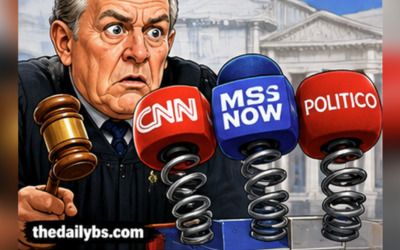
In a sharply worded opinion, a divided panel of the U.S. Court of Appeals for the 11th Circuit concluded that the state cannot prohibit professors from discussing certain viewpoints in university classrooms simply because elected officials disagree with them.
Judge Britt Grant, a Trump appointee, wrote that Florida’s law amounted to “a breathtaking assertion of power to ban unpopular ideas from public discourse.”
Grant went even further. “If the First Amendment offers any boundary of protection at all for public university classrooms, this statute crosses it,” she wrote.
The ruling affirms a lower court decision that had previously described portions of the law as “positively dystopian.” That earlier ruling blocked enforcement of the legislation almost immediately after it was signed into law in 2022. Since then, the state has spent years defending the measure through a series of appeals.
The legislation was one of DeSantis’ highest-profile efforts to combat what he described as ideological indoctrination in education and the workplace. Supporters argued the law protected students and employees from being forced to accept concepts rooted in critical race theory, identity politics and collective guilt.
The statute prohibited instruction suggesting individuals should bear responsibility, guilt or psychological distress because of their race, sex or national origin. At the time, DeSantis framed the issue as a battle against activist educators who were using classrooms to promote political ideology.
Groups including the ACLU, the Foundation for Individual Rights and Expression (FIRE), and the NAACP Legal Defense Fund maintained that the law effectively allowed politicians to determine which ideas could and could not be discussed in college classrooms.
The court largely agreed.
The majority opinion emphasized that universities exist precisely because controversial and unpopular ideas must be examined, debated and challenged. Students, the court wrote, are supposed to “puzzle through ideas that are good and bad, easy and hard, ideally getting ever closer to the truth.”
One notable twist in the ruling is that it was written by a judge appointed by President Donald Trump, not by a liberal jurist. That fact immediately complicated efforts by critics to dismiss the decision as partisan. Not everyone on the panel agreed.
Judge Barbara Lagoa, another Trump appointee and former Florida Supreme Court justice, issued a lengthy dissent defending the state’s authority to determine what ideas receive official endorsement in publicly funded institutions. “The First Amendment does not compel all viewpoints to be worthy of state-sponsored endorsement,” Lagoa wrote.
The ruling follows a similar legal defeat involving the law’s workplace training provisions, which were also struck down by federal courts. Legal observers say Florida could seek review by the full 11th Circuit or ultimately ask the U.S. Supreme Court to intervene. However, the language of Tuesday’s opinion suggests the state faces an increasingly difficult path forward.
For now, the law that became one of the most recognizable symbols of Florida’s anti-woke movement remains blocked and likely headed for the legal history books.
Conservatives sometimes win the argument and lose the lawsuit.
Let’s start with something that may surprise some readers.
I agree with DeSantis about the problem. The problem is real. For years, Americans watched universities transform from institutions dedicated to pursuing truth into ideological factories where students were often taught what to think instead of how to think.
The rise of critical race theory, diversity bureaucracies, speech codes, compelled pronouns and political litmus tests didn’t happen in people’s imaginations. It happened. Millions of parents saw it. Millions of students experienced it. Millions of taxpayers paid for it. The frustration that fueled laws like Stop WOKE didn’t emerge out of nowhere.
But here’s where things get tricky.
The answer to bad speech is usually not government-controlled speech. The answer to ideological conformity is not state-imposed conformity. And the answer to professors pushing one set of approved ideas is probably not politicians deciding which ideas may be discussed in a classroom.
Because once government gains the power to decide which viewpoints are acceptable, eventually the other side gets control of that power. And trust me, nobody wants Harvard activists writing the speech rules for America.
The opinion came from a Trump-appointed judge. That fact alone should force people to read the ruling instead of dismissing it. Conservatives should be very careful before cheering government restrictions on speech simply because the speech happens to be foolish.
But, Judge Barbara Lagoa’s dissent raises a point that deserves serious consideration. She argued that the First Amendment doesn’t require the government to officially endorse every viewpoint, and there’s some common sense in that. Public institutions aren’t neutral vending machines where every idea gets equal billing—they make choices all the time about curriculum, standards, and priorities. Taxpayers fund these institutions, and it’s not unreasonable for elected leaders to have some say in what gets promoted versus what gets challenged. The concern she’s highlighting is that if the state has no authority whatsoever to draw lines, then unelected bureaucracies and academic elites effectively become the only gatekeepers. That’s not exactly a recipe for balance either. So, while I still worry about government overreach, I understand the instinct behind her argument, there’s a difference between protecting free speech and forcing the state to sponsor ideas many Americans fundamentally disagree with.
One of the reasons Rush Limbaugh was so effective was because he trusted Americans to hear bad ideas and reject them. He didn’t need bureaucrats to protect listeners from nonsense. He exposed the nonsense. Then he laughed at it.
Maybe that’s still the better approach. Defeat bad ideas with better ideas. Expose indoctrination with facts. Challenge propaganda with truth. And let Americans make up their own minds.