

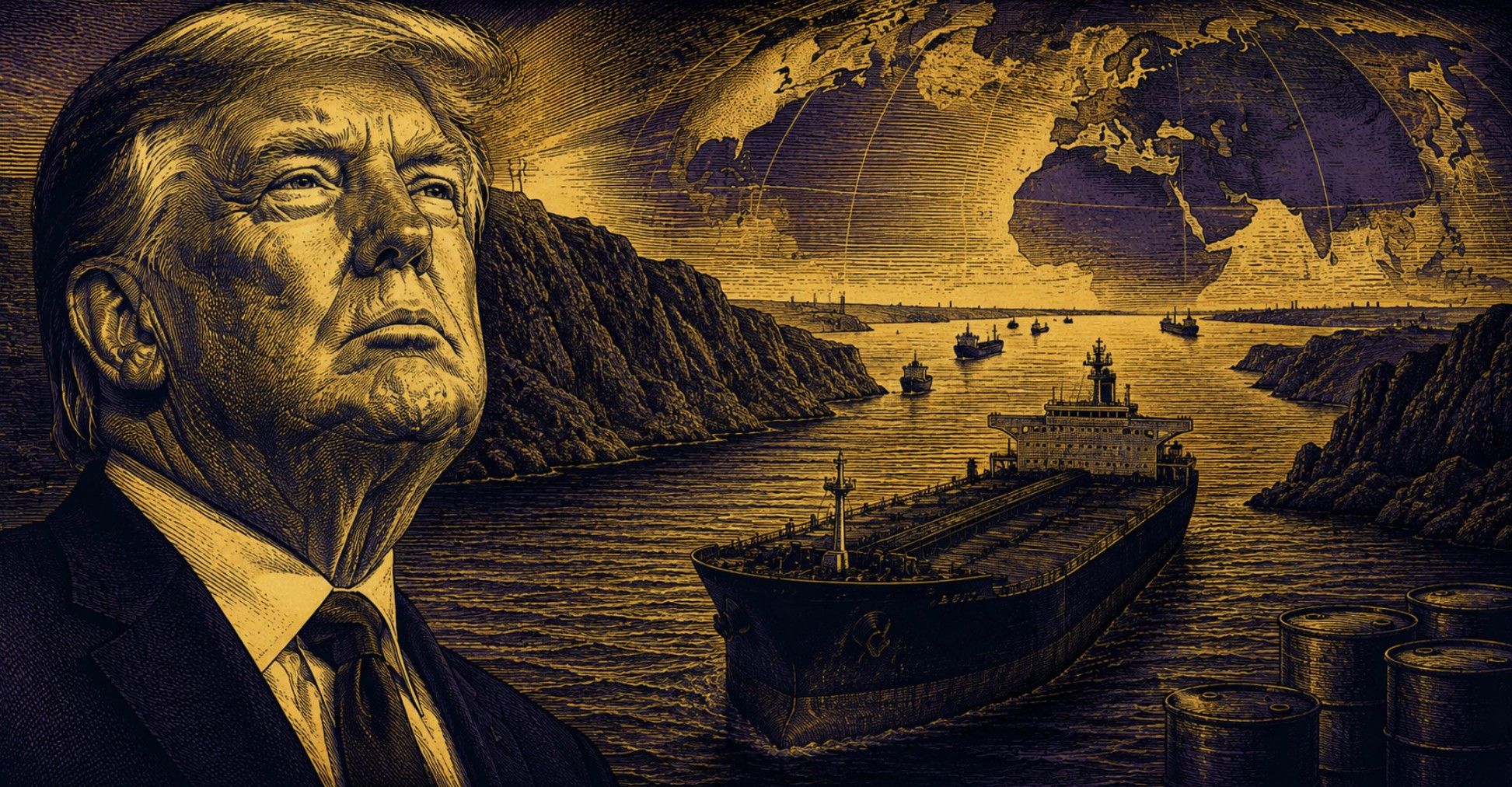
President Donald Trump is proposing something no modern American president has attempted before, charging the world for protection in one of the most important waterways on Earth.
As tensions with Iran continue to roil the Middle East, Trump announced that the United States should be compensated for securing commercial traffic through the Strait of Hormuz, the narrow maritime chokepoint through which roughly a fifth of the world’s oil supply traditionally moves. The president declared the United States the “Guardian of the Hormuz Strait” and proposed a 20 percent fee on cargo transiting the waterway.
The proposal comes after months of instability in the region.
Iranian attacks on shipping, threats against commercial vessels, naval confrontations, and the broader U.S.-Iran conflict have dramatically reduced traffic through the strait. Oil prices surged again this week as traders reacted to Trump’s announcement and growing fears that the conflict could further disrupt global energy supplies.
Trump’s argument is straightforward.
For decades, American taxpayers have funded the naval power that keeps international shipping lanes open. The U.S. Fifth Fleet, carrier strike groups, destroyers, surveillance aircraft, and other military assets have effectively underwritten global commerce while many nations benefiting from those protections contribute little to the cost.
Now Trump is asking a question few previous presidents were willing to ask publicly:
Why should American taxpayers continue footing the bill alone?
According to reports, the proposed fee would amount to roughly 20 percent of cargo value moving through the strait. Analysts estimate that a fully loaded supertanker carrying millions of barrels of oil could face fees exceeding $30 million per voyage under such a structure.
The plan immediately sparked debate among maritime lawyers, economists, and foreign governments.
Critics argue that international law generally protects freedom of navigation through major international waterways and that unlike the Panama Canal, the Strait of Hormuz is not an artificial waterway owned by a single nation. Supporters counter that the current situation is far from normal navigation. They note that American military forces have spent months conducting operations to reopen shipping lanes and protect commercial vessels from attack.
For years, Iran has been accused of effectively extracting its own unofficial fees by threatening commercial shipping and leveraging military control over portions of the strait. Iranian Foreign Minister Abbas Araghchi responded to Trump’s proposal by saying that compensation for providing security is reasonable while suggesting Iran could offer a lower fee structure itself.
Meanwhile, the administration appears to be keeping its options open.
Reports emerged Monday that Trump may be reconsidering the formal toll concept in favor of broader trade and investment arrangements with Gulf nations while maintaining America’s security role in the region. Even so, the underlying principle remains unchanged, countries benefiting from U.S. protection should share more of the cost.
Whether the toll is ultimately implemented or not, the proposal signals a dramatic shift in how Washington may approach global security commitments in the future.
The era of America providing protection for free may be coming to an end.
If America is going to be the world’s security company, shouldn’t somebody pay the invoice?
For generations, Washington’s foreign-policy establishment operated under a simple principle, America provides the aircraft carriers, the destroyers, the sailors, the pilots, the missiles, and the protection. Everybody else sends thank-you notes. Trump looked at that arrangement and asked a very Trump-like question: “Where’s the check?”
Now, is a 20 percent toll practical?
Maybe. Maybe not.
There are legitimate legal questions, logistical questions, and diplomatic questions. But the larger point is what matters. The Strait of Hormuz doesn’t stay open because of good vibes and United Nations resolutions. It stays open because somebody is willing to put warships there. And for decades, that somebody has been the United States. The foreign-policy crowd always tells us America’s military presence is essential to global commerce. Fine. Then global commerce can help pay for it. What really drives the establishment crazy is that Trump approaches geopolitics like a businessman. They see a sacred international order. He sees a service being provided.
And his instinct is the same one millions of Americans have when somebody asks for another favor: “Who’s paying for this?”
Love it or hate it, that’s a question Washington doesn’t ask nearly often enough.
And judging by the reaction, Trump may have hit a nerve.





This is a cause to celebrate! We have a president who recognizes the fiscal responsibility of our allies to CONTRIBUTE to the defense of their own countries.