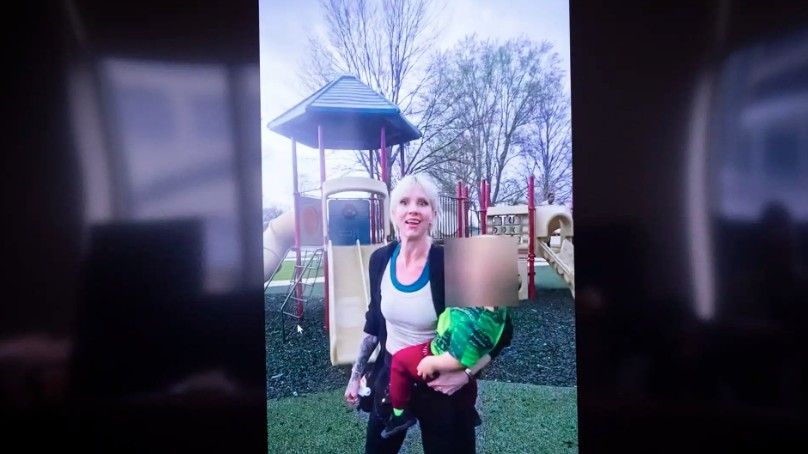
Video shown in court
BS BRIEF:
- An Olmsted County jury acquitted Shiloh Hendrix of disorderly conduct involving the Black child at the center of the viral playground controversy but convicted her on a separate count involving Sharmake Omar, the man who filmed and confronted her. The split came after roughly nine hours of deliberations and a contentious four-day trial in Rochester.
- Hendrix was sentenced to one year of probation, 200 hours of community service and a $1,000 fine, with a 90-day jail term suspended unless she violates probation. Her attorney, Brian Karalus, called the verdict “pathetic” and “sad” and said he intends to appeal.
- The coming appeal is expected to center on whether Hendrix was convicted merely for offensive language or for a broader course of threatening, abusive or disorderly conduct. Minnesota law permits punishment for certain conduct and “offensive, obscene, abusive, boisterous, or noisy” behavior when a person knows it will alarm, anger or disturb others—but courts must apply that law within the First Amendment’s protection of offensive speech.
MINNESOTA JURY CONVICTS SHILOH HENDRIX OVER PLAYGROUND TIRADE AS FIRST AMENDMENT FIGHT HEADS TO APPEAL
A Minnesota woman whose racist playground confrontation became a national spectacle has been convicted on one count of disorderly conduct—but acquitted on the charge involving the young Black child whose encounter first ignited the controversy.
An Olmsted County jury delivered the split verdict Thursday night after roughly nine hours of deliberations in the trial of 37-year-old Shiloh Hendrix. Jurors found Hendrix not guilty of disorderly conduct related to her alleged treatment of the child at Roy Sutherland Playground in Rochester’s Soldiers Field Park. However, they convicted her on the second count involving her confrontation with Sharmake Omar, the Black man who recorded the viral April 2025 video after challenging her repeated use of a racial slur.
The verdict immediately raised a difficult—and politically explosive—question: Did the jury punish Hendrix for conduct that crossed the legal line into disorderly behavior, or did Minnesota convict a woman for uttering a vile but constitutionally protected word?
Hendrix’s attorney, Brian Karalus, wasted little time signaling that the legal fight is far from over. Outside the courthouse, he blasted the outcome as “pathetic” and “sad,” saying he intends to appeal.
“It was like I was fighting the prosecutor and the judge,” Karalus said. “It was like I’m taking on two parties at the same time: the judge and the prosecutor. It was very bizarre.”
The criminal case stemmed from an April 28, 2025, confrontation at a Rochester playground. Hendrix was recorded repeatedly using the N-word during an argument involving a young Black child and Omar, who confronted her and began filming. Hendrix maintained the child had reached into a bag containing her own child’s belongings, while Omar and the boy’s family disputed portions of her account. The child was later reported to be on the autism spectrum.
The video spread rapidly online, sparking national outrage, protests and widespread demands that Hendrix face criminal charges.
At trial, jurors were asked to evaluate two distinct encounters—Hendrix’s behavior toward the child and her later confrontation with Omar. They acquitted her on the count involving the child but convicted her on the count involving Omar.
That distinction quickly became a focal point for conservative criticism. Critics argued the verdict suggested jurors were unconvinced the state had proven criminal conduct toward the child but nevertheless convicted Hendrix for angrily confronting the adult who recorded her while repeatedly using a racial slur.
Supporters of the prosecution countered that the case was never about criminalizing a single offensive word. Instead, they argued Hendrix’s shouting, hostile demeanor and continued confrontation constituted disorderly conduct intended to alarm or disturb Omar.
Karalus made the First Amendment the centerpiece of the defense. He never asked jurors to approve of Hendrix’s language. Instead, he argued that reprehensible speech is not automatically criminal speech.
“We can say a word is ugly and still defend another person’s right to say it,” he argued.
During closing arguments, Karalus told jurors, “The nature of this case, the fact that the government has decided to prosecute speech, that makes this anything but a typical disorderly conduct case.”
He added, “The state of Minnesota has decided to prosecute Ms. Hendrix for language.”
The defense maintained Hendrix’s remarks did not constitute a true threat, incitement or any other narrowly defined category of unprotected speech. Karalus urged jurors to distinguish between offensive behavior and criminal conduct, arguing that someone can behave disgracefully without violating the law.
Prosecutor Nicholas Shabel presented the case differently. He argued Hendrix’s speech could not be separated from her overall conduct, volume and physical demeanor during an increasingly volatile confrontation.
“Screaming at the child, her demeanor, her language all speak to this,” Shabel told jurors, arguing that Hendrix appeared prepared to escalate the encounter physically.
The state’s position was that jurors were not being asked to outlaw a word in isolation but rather determine whether Hendrix’s overall behavior violated Minnesota’s disorderly conduct statute.
Following the guilty verdict, District Judge Christa Daily sentenced Hendrix to one year of probation, a $1,000 fine and 200 hours of community service. She also received a 90-day suspended jail sentence that will only be imposed if she violates the conditions of her probation.
The trial itself was marked by repeated clashes between Judge Daily and Karalus. The defense attorney accused the judge of displaying hostility toward the defense, calling her “very temperamental and emotional” and claiming she was “100% pro-state.” Local court coverage documented frequent disputes over evidentiary rulings, witness questioning and Karalus’ courtroom conduct.
Following the verdict, the Rochester City Attorney’s Office issued a restrained statement.
“We acknowledge yesterday’s jury verdict convicting Shiloh Hendrix of disorderly conduct in relation to an incident that occurred at Roy Sutherland Playground at Soldier’s Field Park in April of 2025,” the office said.
“We respect the judicial process and appreciate the time, dedication, and service of the jurors, the court, and all parties involved.”
The case now appears headed toward what could become an even larger constitutional battle.
Minnesota’s disorderly conduct law does not simply criminalize offensive speech. The statute generally covers fighting, disturbing public assemblies or engaging in offensive, abusive, boisterous or noisy conduct when a person knows—or reasonably should know—that such conduct will alarm, anger or disturb others.
The Supreme Court, however, has repeatedly held that the First Amendment protects speech precisely because it is offensive, upsetting or unpopular. In Cohen v. California, for example, the Court overturned the conviction of a man who wore a jacket displaying a profane anti-draft message inside a courthouse, holding that government cannot criminalize words merely because they offend.
Speech loses constitutional protection only in narrow circumstances, including true threats, incitement likely to produce imminent lawless action and the limited “fighting words” doctrine. Those exceptions have been significantly narrowed over time.
That makes the basis for Hendrix’s conviction especially important.
If the conviction ultimately rests solely on the racial slur itself, legal experts expect a substantial First Amendment challenge. If, however, it rests on the jury’s conclusion that Hendrix’s overall conduct—including shouting, threatening behavior or an apparent willingness to provoke a physical confrontation—crossed into punishable disorderly conduct, prosecutors may have stronger constitutional footing.
The verdict form itself does not specify which statements or actions persuaded jurors, leaving an ambiguity that will likely become central to the appeal.
The verdict immediately sparked backlash among conservative commentators and free speech advocates. Daily Wire host Matt Walsh argued Hendrix was effectively convicted for saying something offensive to the man filming her, noting the apparent contradiction between acquitting her on the count involving the child while convicting her for the encounter most clearly captured on video.
Other commentators stressed that the United States has no general hate speech exception to the First Amendment.
“Either we have a First Amendment, or we don’t. There is no middle ground,” one widely shared reaction stated.
Critics also accused Minnesota officials of selective enforcement, pointing to racial and antisemitic slurs shouted during anti-ICE and anti-Israel demonstrations and questioning whether prosecutors would pursue similar disorderly conduct charges in those situations.
Those comparisons have not established that the incidents are legally identical, as each case involves different facts, victims and conduct. Still, allegations of selective enforcement are expected to become a major part of the political debate as the appeal moves forward.
Following the original viral video, Hendrix launched a GiveSendGo campaign titled Help Me Protect My Family, saying she had been doxxed, threatened and forced to consider relocating. The fundraiser ultimately collected nearly $900,000, transforming Hendrix from a broadly condemned figure into a symbol for many conservatives who viewed her as the target of cancel culture and government overreach.
The fundraising effort generated its own controversy. Some donations reportedly included racist or extremist messages, while Hendrix’s supporters insisted contributors were backing her legal rights—not endorsing her language.
Karalus says the defense intends to challenge the conviction on multiple fronts, including the jury instructions, evidentiary rulings, application of Minnesota’s disorderly conduct statute and whether the conviction violates Hendrix’s First Amendment rights.
No appellate court has yet ruled on the constitutionality of the verdict, nor has any appellate court affirmed the conviction.
For now, Hendrix remains convicted of one misdemeanor count and faces probation, community service and a fine. But with an appeal already promised, few expect the jury’s verdict to be the final word.
- Minnesota Public Radio — Woman filmed hurling racial slurs at a Rochester playground found guilty
- FOX 9 Minneapolis-St. Paul — Woman found guilty in Rochester racial-slur case
- KTTC Rochester — Verdict reached in Shiloh Hendrix disorderly-conduct trial
- ABC 6 News Rochester — Hendrix trial ends with split jury verdict
- City of Rochester — City Attorney’s Office responds to Shiloh Hendrix verdict
- KROC News Rochester — Rochester playground racial-slur case ends in split verdict
- New York Post — Minnesota mom acquitted of charge involving child but convicted over playground confrontation
- Twitchy — Conservatives react to Shiloh Hendrix disorderly-conduct verdict
- KTTC Rochester — Understanding Minnesota disorderly-conduct law before the Hendrix trial